The Pakistan spot-fixing scandal of 2010 remains one of the most shocking corruption cases in international cricket history. What appeared to be three ordinary bowling mistakes during a Test match against England at Lord’s turned into an international investigation involving secret recordings, illegal betting arrangements, a £140,000 cash payment and the imprisonment of three Pakistan cricket figures.
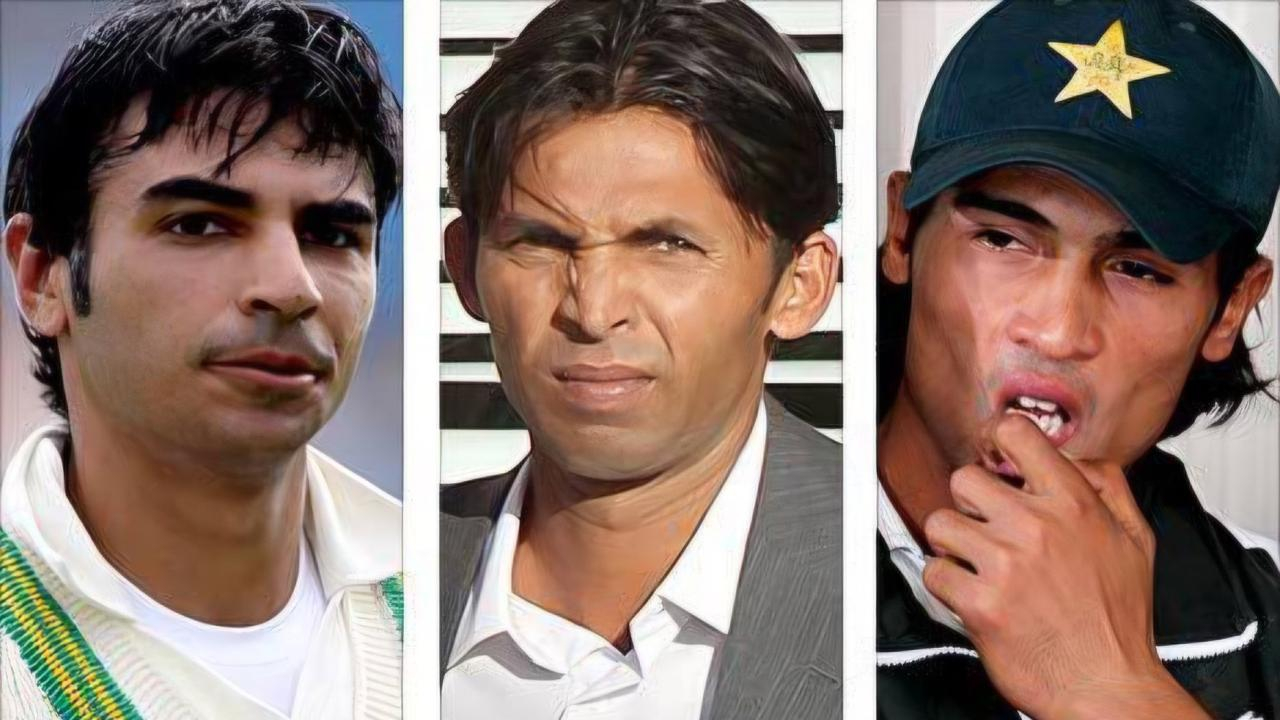
Former Pakistan captain Salman Butt, fast bowlers Mohammad Amir and Mohammad Asif, along with cricket agent Mazhar Majeed, became central figures in a controversy that damaged the reputation of Pakistan cricket and raised serious questions about the integrity of international sport.
The scandal came to light after an undercover investigation by British newspaper News of the World exposed an alleged arrangement to deliver three deliberate no-balls during the fourth Test between England and Pakistan in August 2010.
The revelations shocked cricket supporters because Mohammad Amir was only 18 years old and widely regarded as one of the most promising fast bowlers in world cricket. Salman Butt was leading Pakistan at the time, while Mohammad Asif was an experienced international bowler.
But how did three no-balls become the centre of such a massive controversy? How did the investigation expose the players, and what happened to them after the criminal court verdict?
Here is the complete Pakistan spot-fixing scandal full timeline, from the first undercover meeting to the eventual prison sentences.
What happened in Pakistan spot-fixing scandal 2010?
The controversy centred on the fourth Test between England and Pakistan at Lord’s, which began on August 26, 2010.
Before the match, Mazhar Majeed, an agent connected to several Pakistan cricketers, met an undercover journalist from News of the World. The journalist was working on an investigation into suspected corruption in international cricket.
During their conversations, Majeed claimed that he could arrange specific incidents during international matches through his connections with Pakistan players.
The proposed arrangement involved spot-fixing, a form of corruption in which someone deliberately manipulates a particular event within a sporting contest rather than necessarily fixing the final result.
In cricket, examples include deliberately bowling a no-ball, conceding a particular number of runs or manipulating an over at an agreed moment.
A deliberate no-ball can appear to be an ordinary bowling error. However, when the timing is agreed upon in advance, bookmakers can exploit that information through betting markets.
The undercover journalist was told that three no-balls would be delivered at specific moments during the Lord’s Test.
The investigation eventually established that Mohammad Amir would bowl two of them, while Mohammad Asif would deliver the third.
How News of the World exposed Pakistan spot-fixing
The News of the World investigation played a crucial role in bringing the scandal into the public domain.
An undercover reporter, Mazher Mahmood, approached Mazhar Majeed while posing as a businessman interested in cricket-related opportunities.
During their meetings in August 2010, Majeed discussed his alleged ability to influence incidents during Pakistan matches.
The conversations became increasingly serious as the agent discussed arrangements involving specific players and deliveries.
On August 19, 2010, Salman Butt was present during a meeting between Majeed and the undercover journalist. The journalist handed over an initial £10,000 payment in connection with a proposed fixing arrangement.
Further discussions followed over the next few days. One proposed arrangement involved a deliberately played maiden over, although that particular plan did not materialise.
Majeed subsequently discussed arranging three no-balls during the upcoming England-Pakistan Test at Lord’s.
The meetings were secretly recorded, providing investigators with important evidence about the discussions and the alleged agreement.
The most significant moment came on August 25, 2010, when the undercover journalist met Majeed and handed him £140,000 in cash.
This payment became a central part of the criminal investigation and later court proceedings.
The Mazhar Majeed £140000 spot-fixing scandal was no longer simply an allegation based on suspicious bowling. The undercover recordings and the events that followed gave investigators a detailed account of the operation.
August 26, 2010: The three deliberate no-balls at Lord’s
The fourth Test between England and Pakistan began at Lord’s on August 26, 2010.
Pakistan won the toss and elected to field, giving their fast bowlers the opportunity to carry out the alleged arrangement.
The first suspicious delivery came during the opening morning.
Mohammad Amir bowled a no-ball on the first delivery of the third over. The delivery matched the timing previously discussed by Majeed with the undercover journalist.
The second incident occurred when Mohammad Asif overstepped on the sixth delivery of the 10th over.
Both deliveries matched the information supplied before the match, raising serious questions about whether the incidents were accidental.
However, the third planned no-ball did not arrive on the opening day because rain interrupted proceedings.
The final delivery came on August 27, when Amir bowled another no-ball at the agreed moment.
This completed the three-delivery sequence that had been discussed before the Test.
For spectators watching the England vs Pakistan Lord’s Test 2010 controversy unfold, the deliveries initially looked like routine mistakes. Behind the scenes, however, they were connected to an alleged betting arrangement involving a substantial amount of money.
The case later became a textbook example of why spot-fixing is difficult to detect through ordinary match observation alone.
How Pakistan players fixed the Lord’s Test match
One important distinction needs to be understood when discussing this controversy: the players were convicted in connection with spot-fixing, not for fixing the entire result of the Lord’s Test.
The arrangement focused on predetermined incidents within the match.
The prosecution argued that the three no-balls were deliberately delivered at the agreed moments in exchange for corrupt payments.
Majeed had provided the undercover journalist with advance information about the planned deliveries. When the no-balls happened at the specified moments, the recordings and other evidence became central to establishing the conspiracy.
The scandal also exposed how betting syndicates could profit from seemingly insignificant moments in cricket.
A no-ball does not necessarily change the outcome of a match. Nevertheless, someone with advance knowledge of its timing could potentially exploit betting markets.
That was the central concern in the investigation.
August 28, 2010: Police searches intensify the investigation
The revelations quickly reached the authorities.
On August 28, police officers visited the hotel where the Pakistan team was staying and searched the rooms of players connected to the investigation.
Marked banknotes linked to the undercover payment were recovered during the searches.
Investigators found £2,500 in Salman Butt’s room and another £1,500 in Mohammad Amir’s room. Additional marked money was also recovered during searches connected to Majeed.
The discoveries added another significant dimension to the investigation.
The players were facing allegations that could threaten not only their international careers but also their freedom.
The Pakistan Cricket Board and the ICC came under pressure to respond as the scandal dominated international headlines.
Why Salman Butt was banned from cricket
Salman Butt was the captain of Pakistan’s Test team during the Lord’s match and became one of the most important figures in the investigation.
The prosecution alleged that Butt was involved in the conspiracy and played a role in coordinating the fixing arrangement.
During the criminal proceedings, Butt denied knowingly participating in corruption. He argued that Majeed had attempted to persuade him to manipulate incidents during matches but that he had rejected those requests.
Butt also maintained that he had not intentionally played cricket in a manner designed to benefit betting syndicates.
However, the prosecution challenged his explanation using secret recordings, communications and evidence concerning the planned no-balls.
Another important aspect of the case involved the captain’s knowledge of bowling arrangements and the sequence in which bowlers would operate.
On November 1, 2011, the jury found Butt guilty of conspiracy to accept corrupt payments and conspiracy to cheat.
The verdict explained why Salman Butt was banned from cricket and why the case became a major turning point in his career.
The ICC had already imposed a 10-year ban, with five years suspended subject to conditions, in February 2011.
Butt subsequently received a 30-month prison sentence from the British court in November 2011.
How Mohammad Amir got involved in spot-fixing
Mohammad Amir’s involvement was particularly shocking because of his age and reputation.
At just 18, he was already considered one of Pakistan’s brightest cricketing talents. His left-arm pace, ability to swing the ball and performances against leading international batters had attracted attention around the world.
However, the Lord’s investigation established that Amir had delivered two of the three deliberate no-balls.
Unlike Butt and Asif, Amir admitted his involvement in the criminal conspiracy.
On September 16, 2011, he pleaded guilty to conspiracy to accept corrupt payments and conspiracy to cheat.
His guilty plea became one of the most significant moments in the legal proceedings.
Amir later expressed regret over his involvement and spoke about the impact of the scandal on his family and career.
The ICC imposed a five-year ban on him in February 2011, while the British court sentenced him to six months in a young offenders’ institution in November 2011.
The Mohammad Amir spot-fixing case became a major talking point because it involved a teenager whose international career had appeared destined for success.
Why Mohammad Asif was banned from international cricket
Mohammad Asif was the other Pakistan bowler involved in the three-delivery arrangement.
The experienced fast bowler delivered one of the deliberate no-balls during the Lord’s Test.
His involvement was supported by the undercover recordings, communications and evidence presented during the investigation.
Asif denied the criminal allegations during his trial.
However, the jury found him guilty alongside Salman Butt on November 1, 2011.
The ICC had imposed a seven-year ban on Asif, with two years suspended subject to conditions.
He was subsequently sentenced to 12 months in prison by the British court.
The case ended his prospects of returning to the same position in international cricket that he had enjoyed before the scandal.
Pakistan cricket corruption case court verdict and prison sentences
The criminal proceedings took place at Southwark Crown Court in London.
The case relied on several forms of evidence, including secret recordings of Majeed’s meetings, text messages, financial evidence and the precise timing of the three no-balls.
Mohammad Amir and Mazhar Majeed pleaded guilty in September 2011.
Salman Butt and Mohammad Asif chose to contest the allegations, but the jury found them guilty on November 1, 2011.
On November 3, 2011, the court announced the prison sentences.
The punishments were:
- Salman Butt: 30 months in prison.
- Mohammad Asif: 12 months in prison.
- Mohammad Amir: Six months in a young offenders’ institution.
- Mazhar Majeed: Two years and eight months in prison.
The Pakistan cricketers jailed for spot-fixing in 2011 became a major international story.
The case also established that cricket corruption could result in criminal prosecution rather than simply disciplinary action from the sport’s governing body.
How much money was involved in Pakistan spot-fixing?
Money was a central element of the scandal.
The undercover journalist initially handed Majeed £10,000 during an earlier meeting on August 19.
The much larger payment followed on August 25, when £140,000 was handed over.
Majeed had discussed an arrangement involving £150,000, and the cash payment became a key piece of evidence in the prosecution’s case.
The money was intended to facilitate the alleged fixing arrangement involving the three no-balls.
Investigators later traced marked banknotes recovered during police searches to the undercover operation.
This financial evidence, combined with the recordings and the events at Lord’s, helped establish the prosecution’s case.
What happened to Salman Butt after spot-fixing?
After serving his prison sentence and completing the relevant ICC suspension period, Salman Butt became eligible to return to domestic cricket under the applicable conditions.
However, his international career never recovered.
The former Pakistan captain later remained involved in cricket-related activities, including domestic cricket and commentary work.
His name continues to be associated with one of the most notorious corruption controversies in Pakistan cricket history.
Mohammad Amir comeback after spot-fixing ban
Mohammad Amir’s story took a different direction.
After serving his five-year ICC ban, Amir gradually returned to competitive cricket.
He resumed domestic cricket in 2015 and made his international comeback in January 2016 against New Zealand.
His return attracted enormous attention because many supporters wanted to see whether the talented left-arm fast bowler could rebuild his career.
Amir eventually became part of Pakistan’s Champions Trophy-winning squad in 2017.
His performance against India in the final at The Oval was particularly memorable. He dismissed Rohit Sharma, Virat Kohli and Shikhar Dhawan, helping Pakistan secure a historic victory.
The comeback did not erase the controversy, but it demonstrated that Amir had managed to return to international cricket after one of the most damaging scandals in the sport.
A scandal that changed cricket’s fight against corruption
The 2010 Pakistan spot-fixing scandal exposed the vulnerability of international cricket to illegal betting operations.
It demonstrated that corruption did not always require a player to deliberately lose a match. Manipulating one delivery or one specific moment could be enough to exploit betting markets.
The case also highlighted the importance of stronger anti-corruption monitoring, player education and cooperation between sporting authorities and law enforcement agencies.
For Pakistan, the scandal damaged the reputation of its national team at a time when its cricketing future was already facing considerable challenges.
For the wider sporting world, it became a warning about the influence of betting syndicates and the risks associated with illegal gambling networks.
More than a decade later, the Lord’s incident remains an important example in discussions about cricket integrity.
Three no-balls changed the lives of three international cricketers and exposed an operation that had been carefully discussed before the match.
Follow ROKOCRICKET for more detailed cricket investigations, breaking sports news, historical controversies and exclusive cricket stories. Subscribe and stay tuned with ROKOCRICKET for the latest updates from the world of sports.