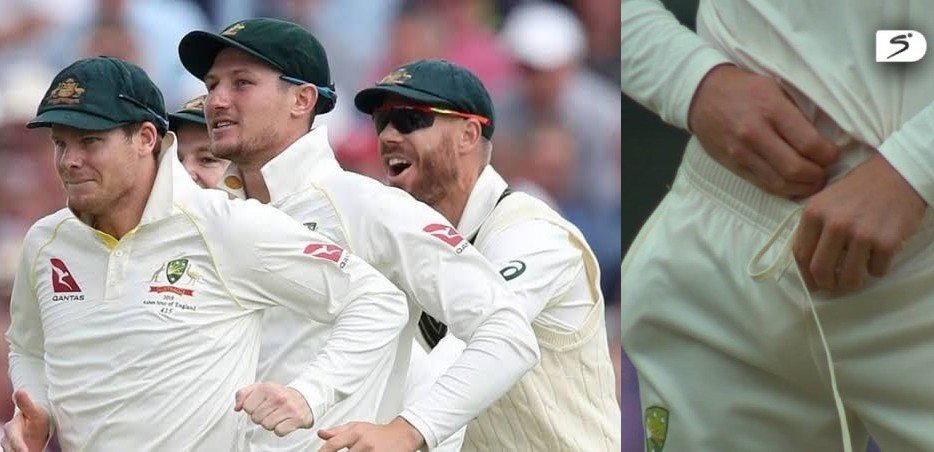

There are scandals in sport that disappear with the next season.
Then there are scandals that become part of a country’s sporting history.
Sandpaper Gate belongs firmly in the second category.
What happened at Newlands in Cape Town on March 24, 2018, was a relatively short episode during a Test match. But the consequences lasted for years. An Australian captain lost his position. A vice-captain received a lifetime leadership ban. A young opener’s international career was thrown into uncertainty. The head coach eventually resigned. Cricket Australia launched major reviews into its own culture and governance.
Most importantly, the incident damaged the reputation of one of the world’s most successful cricket teams.
Eight years later, Australia is again preparing to play Test cricket in South Africa. The return to Newlands inevitably brings the memories back.
But to understand why Sandpaper Gate still matters, it is necessary to go back to the beginning.
What was happening before the scandal?
Australia arrived in South Africa in 2018 for a four-Test series.
The first Test was played at Kingsmead in Durban, where Australia won by 118 runs. The second Test at Port Elizabeth went South Africa’s way, with the hosts winning by six wickets.
That left the series level at 1-1 heading into Newlands.
Steve Smith was Australia’s captain. David Warner was his vice-captain. Cameron Bancroft was the young opening batsman playing only his eighth Test.
The series had already been fiercely contested.
Australia’s aggressive approach to Test cricket was also attracting attention. The team had developed a reputation for hard-edged cricket, intense sledging and a determination to win at almost any cost.
The third Test therefore carried enormous importance.
Neither side wanted to leave Cape Town behind in a 2-1 hole.
What happened next became one of the most infamous days in modern cricket.
March 24, 2018: the day everything changed
The third day of the Newlands Test began with Australia in a strong position.
South Africa had been bowled out for 311 in their first innings. Australia responded with 255, leaving the hosts with a 56-run first-innings lead.
South Africa then began their second innings.
Australia needed wickets, and the condition of the ball was becoming increasingly important.
During the afternoon session, television cameras captured Cameron Bancroft holding a small yellow object and appearing to rub it against the ball.
The images immediately attracted attention.
Bancroft then put the object into his pocket and subsequently down the front of his trousers.
The incident had been caught on camera.
It was no longer something that could remain inside the Australian dressing room.
The umpires questioned Bancroft, and he was seen showing them what was described at the time as a sunglasses pouch.
The television pictures, however, had already created suspicion around the world.
The footage was replayed repeatedly.
Cricket had a scandal.
What did Bancroft initially say?
After play, Bancroft appeared before the media alongside Steve Smith.
Bancroft admitted that he had attempted to change the condition of the ball.
But the first explanation was not that he had used sandpaper.
He said he had used yellow sticky tape to collect small pieces of grit from the rough areas of the pitch and then used that material on the ball.
At the time, Bancroft said he had seen an opportunity to use tape and rough material from the pitch to change the condition of the ball.
The explanation quickly became one of the most important parts of the scandal because it was later shown to be false.
The object was not simply sticky tape.
It was sandpaper.
And that changed the story dramatically.
The moment the “yellow tape” story collapsed
Cricket Australia’s subsequent investigation established that Bancroft had used sandpaper.
The investigation found that David Warner had developed the plan to artificially alter the condition of the ball and had instructed Bancroft to carry it out.
Warner also demonstrated how Bancroft should use the sandpaper.
Bancroft then took the material onto the field.
The revelation was particularly damaging because the Australian players had initially presented a different version of events to the match officials and the public.
The scandal therefore involved two separate issues.
The first was ball tampering.
The second was the attempt to conceal what had happened.
That second part would become critical when Cricket Australia decided the punishments.
Why was sandpaper being used?
A cricket ball changes as a Test match progresses.
The condition of the ball can influence how it behaves in the air and off the pitch.
Fast bowlers can obtain conventional swing with a relatively new ball, while an older ball can potentially produce reverse swing under suitable conditions.
Changing the surface of one side of the ball can affect its aerodynamics.
That is why deliberately damaging or altering the ball with a foreign object is prohibited.
The Australian plan was designed to rough up the ball and potentially help it move through the air.
The issue was not simply that a player touched the ball with a piece of material.
The material was deliberately being used to artificially change the ball’s condition in order to obtain an advantage.
The ICC subsequently charged Bancroft with changing the condition of the ball in breach of the relevant playing conditions.
Who actually knew about the plan?
This became one of the biggest questions after the scandal broke.
Steve Smith’s initial reference to a “leadership group” created the impression that several senior Australian players might have known what was happening.
That led to intense speculation.
Pat Cummins, Mitchell Starc, Josh Hazlewood and Nathan Lyon were among the senior players who were part of Australia’s leadership group at various points around that era, but Cricket Australia’s investigation ultimately found that only Smith, Warner and Bancroft had prior knowledge of the plan.
The investigation did not find that the rest of the playing group or support staff had prior knowledge.
That distinction is important.
Darren Lehmann, Australia’s head coach, was also cleared of involvement.
What was Darren Lehmann doing with the walkie-talkie?
Another extraordinary part of the story involved Australia’s coach.
Television footage showed Lehmann using a two-way radio to communicate with Peter Handscomb, Australia’s 12th man.
Handscomb then went onto the field and spoke to Bancroft.
Because this happened around the same time that the television cameras had caught Bancroft with the object, suspicion immediately fell on Lehmann.
Many people wondered whether the coach had realised what was happening and was attempting to help the players.
Cricket Australia’s investigation, however, cleared Lehmann.
According to Cricket Australia chief executive James Sutherland, Lehmann had used the communication system to find out what was happening after seeing the television footage and becoming concerned. The investigation found that he did not know about the plan beforehand.
That finding was important because it separated the coach from the three players who had prior knowledge.
But Lehmann’s position would not survive the wider crisis.
What was Steve Smith’s role?
Steve Smith’s role was different from Warner’s and Bancroft’s.
The investigation did not find that Smith had created the plan.
It found that he knew about the potential plan and failed to prevent it.
More seriously, the investigation found that Smith directed Bancroft to conceal the evidence after the television cameras had caught him.
In other words, Smith’s responsibility extended beyond simply knowing something might happen.
He was captain.
He knew about the plan.
He failed to stop it.
And after the incident became visible, he was found to have directed the concealment of the sandpaper.
Cricket Australia also found that Smith had misled match officials and the public regarding the nature and extent of the plan.
That is why his punishment was much more severe than a simple one-match suspension.
What was David Warner’s role?
The investigation placed Warner at the centre of the plan.
According to Cricket Australia, Warner developed the idea of artificially changing the ball.
He enlisted Bancroft to execute it.
He showed Bancroft how it could be done.
He then failed to voluntarily disclose his involvement.
The investigation also found that Warner misled the match officials by concealing his knowledge and involvement.
These findings were central to the decision to impose a 12-month ban and a lifetime leadership restriction.
Warner later accepted the sanctions without appealing.
What happened to Cameron Bancroft?
Bancroft was the player caught on television.
He was also the youngest and least senior member of the trio.
He carried the sandpaper onto the field and attempted to use it on the ball.
After being spotted, he tried to conceal the object.
He then gave the initial explanation involving yellow tape and debris from the pitch.
The investigation found that Bancroft had carried out Warner’s instructions and participated in the attempt to hide the evidence.
He was therefore punished by both the ICC and Cricket Australia.
The ICC fined him 75 per cent of his match fee and gave him three demerit points. Cricket Australia later imposed a nine-month ban.
What happened immediately after the discovery?
The scandal exploded within hours.
Smith and Bancroft faced the media after the day’s play.
Smith admitted that the leadership group had discussed changing the condition of the ball.
He described the incident as a huge mistake.
However, his refusal at that stage to identify the other people involved intensified the scrutiny.
The story quickly moved beyond cricket.
Australian media outlets led with the scandal.
Politicians commented.
Former players weighed in.
Sponsors and commercial partners came under pressure.
The International Cricket Council began disciplinary action.
Cricket Australia launched its own investigation.
And the Australian team’s reputation was suddenly at the centre of a global sporting story.
Smith eventually lost the captaincy
The pressure became impossible to sustain.
Smith was removed as Australia’s captain.
David Warner also lost the vice-captaincy.
Tim Paine was appointed Australia’s Test captain for the fourth Test in Johannesburg.
Australia’s fourth Test squad also required emergency changes, with Matthew Renshaw, Glenn Maxwell and Joe Burns brought into the group.
The transformation was remarkable.
Only days earlier, Smith had been the leader of one of the world’s strongest Test teams.
Now he was flying home.
The ICC punishment
The ICC acted before Cricket Australia’s much larger sanctions were announced.
Steve Smith was suspended for one Test and fined 100 per cent of his match fee.
Cameron Bancroft was fined 75 per cent of his match fee and received three demerit points.
The ICC action was separate from the much heavier Cricket Australia punishment that followed.
The distinction matters because the players were facing disciplinary consequences from two different bodies.
Cricket Australia’s punishment
On March 28, Cricket Australia announced its sanctions.
Steve Smith: 12-month ban
David Warner: 12-month ban
Cameron Bancroft: nine-month ban
Smith was also barred from leadership for a period after his suspension.
Warner was initially ruled ineligible for any future leadership role.
Bancroft also faced a leadership restriction.
All three were required to undertake 100 hours of voluntary community cricket work.
The bans applied to international cricket and Australian domestic cricket, although they were allowed to play certain club-level cricket during their suspensions.
The punishment also had financial consequences.
Smith and Warner lost their places in the 2018 IPL after their contracts were terminated for that season. Cricket Australia’s reporting at the time put their IPL contracts at around A$2.4 million each.
Why did Darren Lehmann resign?
The coach initially remained in his position after the scandal.
The investigation had cleared him of prior knowledge.
But the damage around the Australian team was enormous.
On March 29, Lehmann announced that he would step down at the conclusion of the fourth Test.
His reasoning was that Australian cricket needed to move forward and that his departure could help the team begin a new chapter.
Lehmann’s resignation demonstrated just how far the consequences of the Newlands incident had travelled.
The scandal had started with a piece of sandpaper.
It had now removed Australia’s captain, vice-captain and coach from their previous positions.
The emotional return home
The images of Smith and Warner returning to Australia became almost as memorable as the footage from Newlands.
Smith held an emotional press conference after arriving home.
He apologised and broke down while speaking to reporters.
Warner also faced a large media gathering after returning to Sydney.
The scale of the attention showed how deeply the scandal had affected Australian cricket.
These were not anonymous players.
Smith was one of the world’s best batsmen and Australia’s Test captain.
Warner was one of Australia’s biggest sporting personalities.
Bancroft was a young player whose international career had suddenly been transformed.
All three were now defined, at least temporarily, by what happened at Newlands.
The cultural review that followed
Cricket Australia did not treat the scandal simply as three players breaking a rule.
It also launched an examination of the culture surrounding Australian cricket.
The independent Ethics Centre review eventually produced a 145-page report containing 42 recommendations.
The review examined whether Australian cricket had created an environment in which winning was valued so highly that players could feel pressure to cross ethical boundaries.
It criticised aspects of Australian cricket’s culture, including aggressive on-field behaviour and the failure to adequately challenge unacceptable conduct.
However, the review did not conclude that Cricket Australia had simply ordered players to win at all costs. Instead, it described a much more complicated mixture of organisational culture, player behaviour, leadership and governance.
That distinction is important.
Sandpaper Gate was not officially explained as the result of one simple instruction from Cricket Australia’s management.
The review found a broader cultural problem that required attention.
The players did not appeal their bans
Smith, Warner and Bancroft had the right to appeal their Cricket Australia punishments.
They ultimately chose to accept the sanctions.
The three players were required to serve their respective suspensions.
That meant Australia had to rebuild its Test batting line-up without two of its most important batsmen.
The bans also created a long period in which the players had to live outside international cricket.
Their careers were effectively put on hold.
How did the three players return?
Cameron Bancroft’s nine-month suspension expired in December 2018.
He was named in the Perth Scorchers squad for a Big Bash League match immediately after his ban ended.
Smith and Warner returned to cricket after their 12-month bans.
Smith eventually returned to the Australian Test team and became one of the most successful batsmen of his generation.
Warner also returned to international cricket and played a major role in Australia’s subsequent success across formats.
The three players therefore did not have identical post-scandal careers.
Bancroft found his route back into Australian cricket considerably more difficult.
Smith and Warner eventually returned to the highest level and became major contributors to Australian cricket again.
What happened to Warner’s lifetime leadership ban?
One of the longest-lasting punishments from Sandpaper Gate was Warner’s leadership ban.
For years, Warner was permanently excluded from leadership positions in Australian cricket.
That changed in October 2024.
An independent review panel unanimously determined that Warner had met the requirements to have the lifetime leadership ban modified.
The panel said Warner had shown genuine remorse and had changed his behaviour since the original sanction.
The ban was therefore lifted, allowing him to take leadership roles in Australian cricket again.
Later that year, Sydney Thunder appointed Warner as captain for the Big Bash.
It was a remarkable development considering that his original punishment had said he would never again be considered for a leadership role.
Why Sandpaper Gate remains different from ordinary ball-tampering stories
Ball tampering has existed in cricket for decades.
Players have been accused of using everything from fingernails and bottle tops to mints, zips and other objects to influence the condition of a ball.
But Sandpaper Gate became different because of the combination of circumstances.
It involved Australia’s captain and vice-captain.
It happened during a high-profile Test series.
Television cameras caught the act.
The player attempted to hide the object.
The initial explanation was later shown to be false.
The investigation revealed that the plan had been discussed before it was carried out.
And the consequences reached the leadership, coaching structure and wider culture of Australian cricket.
That combination turned a ball-tampering offence into a global sporting scandal.
What did Sandpaper Gate change in Australian cricket?
The immediate change was leadership.
Tim Paine replaced Smith as Test captain.
The Australian team subsequently entered a different era.
The scandal also changed the way Cricket Australia examined player behaviour.
The culture review produced dozens of recommendations concerning governance, accountability, leadership and the standards expected from Australia’s national teams.
Australian cricket also had to confront its relationship with sledging and aggressive behaviour.
The Ethics Centre review highlighted concerns that aggressive on-field conduct had become normalised and that some players were reluctant to challenge teammates when they behaved badly.
In that sense, Sandpaper Gate was not just about sandpaper.
It became a debate about what Australian cricket wanted its national team to represent.
The legacy of Steve Smith
For Smith, the scandal became one of the defining chapters of his career.
His return was not immediate or easy.
But he rebuilt his career through performances.
Over time, he went from banned captain to one of Australia’s senior Test players again.
That is why his eventual return to Newlands carries so much symbolism.
The stadium is where his captaincy collapsed.
It is also where one of the most difficult periods of his professional life began.
The legacy of David Warner
Warner’s story is different.
He was identified by Cricket Australia’s investigation as the person who developed the sandpaper plan.
That finding resulted in a 12-month suspension and the strongest leadership punishment of the three.
Yet Warner rebuilt his international career.
He remained a major part of Australia’s batting for years, won major trophies and eventually retired from international cricket.
His successful 2024 leadership-ban review added another chapter to the story.
It did not erase the original punishment.
Instead, it demonstrated that the sanction could eventually be reviewed after years of subsequent conduct.
The legacy of Cameron Bancroft
Bancroft’s story is perhaps the most complicated.
He was the player actually caught on camera.
He served a nine-month suspension and returned to domestic cricket at the end of 2018.
But his position in Australian cricket was never the same.
The scandal became permanently associated with his name.
He continued playing professional cricket and remained determined to rebuild his career, but his return to the Australian Test side proved much harder than it had appeared before Newlands.
His experience became a reminder that the consequences of a single decision can continue long after a suspension ends.
Was Sandpaper Gate the worst scandal in Australian cricket?
That depends on how scandals are measured.
Australian cricket has experienced controversies involving player behaviour, doping, betting, sledging and administration.
But Sandpaper Gate stands apart because of the people involved and the institutional consequences.
It happened during a Test match, in front of television cameras, and involved the captain and vice-captain.
Three players were suspended.
The captaincy changed.
The coach resigned.
Cricket Australia’s culture was investigated.
The players lost major professional opportunities.
And the incident remained part of the public conversation years later.
It became a defining moment in Australian sporting history.
Why Newlands still matters
This is ultimately why Australia’s return to Newlands remains significant.
The ground itself has not changed the history.
The players have.
Steve Smith is no longer the young captain who walked into that press conference in 2018.
David Warner has retired from international cricket.
Cameron Bancroft is no longer the inexperienced Test opener who stood beside Smith after being caught on camera.
Pat Cummins, Josh Hazlewood, Mitchell Starc and Nathan Lyon have continued their own long international careers.
But the location remains the same.
Newlands is where Australia’s 2018 campaign became a crisis.
It is where a piece of sandpaper became one of the most recognisable objects in modern cricket.
And it is where the phrase Sandpaper Gate entered the sport’s vocabulary.
The most important lesson from the scandal was not simply that ball tampering is illegal.
It was that the pressure to win can never justify deliberately crossing the line — and that attempts to hide a mistake can make the consequences considerably worse.
The Newlands scandal lasted only moments on the field.
Its consequences lasted years.
And that is why, even long after the bans expired and the players returned, Sandpaper Gate remains one of cricket’s most discussed controversies.
As Australia returns to South Africa and eventually Newlands, the story will inevitably be revisited.
But this time, the players will walk into the stadium carrying the experience of what happened before.
For Australian cricket, Newlands is no longer simply a beautiful Test venue.
It is a permanent reminder of the day the line between aggressive cricket and unacceptable conduct was crossed.
Stay tuned with ROKOCRICKET for more detailed cricket history, breaking news, Test match stories and the biggest moments from the world of cricket. Subscribe to ROKOCRICKET and stay connected for more stories behind the game.