Lala Amarnath: India’s First Test Centurion Who Fought England, Led India Against Pakistan and Inspired Two Sons
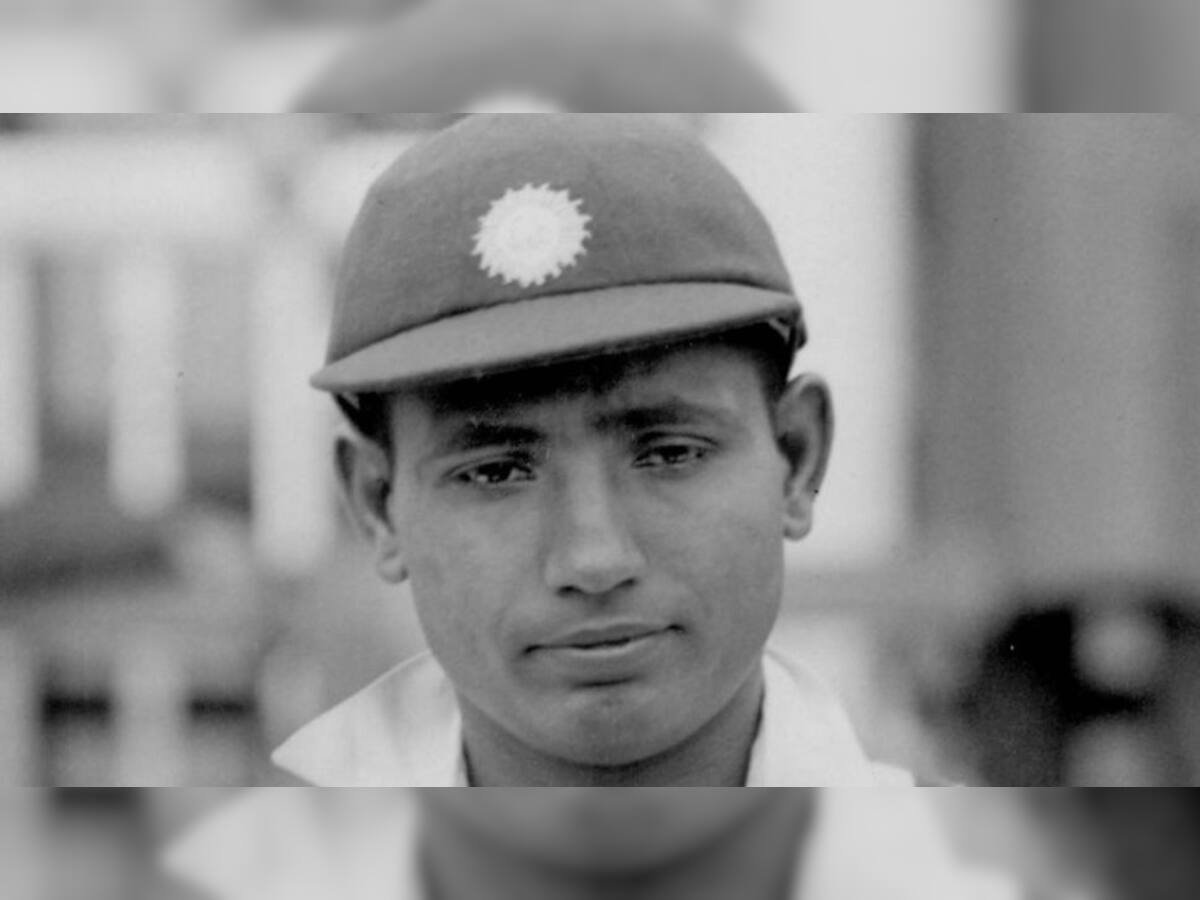
Lala Amarnath India’s first Test centurion and Indian cricket legend
11 September is a special date in Indian cricket history. On this day in 1911, Lala Amarnath was born in Lahore. More than a century later, his name still carries a different kind of weight. He was not just India’s first Test centurion. He was a fearless batter, a clever all-rounder, a captain, selector, coach, commentator and, above all, one of the most outspoken personalities Indian cricket has ever produced.
There are some cricket careers that can be understood by looking at a scorecard.
Lala Amarnath’s cannot.
His Test numbers may look modest by modern standards, but numbers alone cannot explain why his name remains so important in the history of Indian cricket. He played only 24 Tests, but his journey covered some of the most important moments of the sport’s early years in India.
He scored India’s first Test century. He was sent home from an England tour following a dispute with captain Maharajkumar of Vizianagram, better known as Vizzy. He returned to international cricket after a gap of roughly 12 years and made a significant impact with both bat and ball.
He captained India on its first tour of Australia after independence and later led the country in its first official Test series against Pakistan.
And the story did not end with him.
His sons, Surinder Amarnath and Mohinder Amarnath, also represented India, giving the country one of its most recognizable cricketing families.
That is why, whenever the early history of Indian cricket is discussed, Lala Amarnath’s name refuses to stay in the background.
The boy from Lahore who became a cricket pioneer
Lala Amarnath was born in Lahore in 1911, at a time when cricket in India was still a very different world from the sport millions follow today.
There were no packed international calendars, no franchise leagues, no social media and certainly no superstar culture surrounding cricketers.
Indian cricket was still trying to establish itself.
For young Amarnath, cricket eventually became much more than a game. It became the stage on which he would challenge established ideas about Indian players and what they could achieve against the strongest sides of the era.
His talent became increasingly obvious during domestic cricket.
In the 1933-34 season, playing for Southern Punjab against the touring MCC side, Amarnath produced a century, scoring 109. It was the sort of performance that demanded attention.
Soon, the biggest opportunity of his young career arrived.
India were about to play their first home Test against England.
For Indian cricket, it was a historic occasion. For Amarnath, it would become the moment that permanently put his name into the record books.
The innings that changed Indian cricket forever
India faced England at the Bombay Gymkhana Ground in 1933.
The home team found itself under pressure, but Amarnath refused to simply defend and wait for the danger to pass.
He attacked.
His batting was aggressive and confident, and he eventually reached a century in only 117 minutes.
With that innings, Lala Amarnath became the first Indian batter to score a Test century.
It was an extraordinary achievement for Indian cricket.
The result of the match was disappointing for India, who went on to lose, but the defeat could not take away from what Amarnath had accomplished.
He had become the first Indian to score a Test hundred.
More importantly, the manner in which he did it made an impression.
Amarnath was not afraid of the English attack. Instead of allowing the occasion to overwhelm him, he played with intent and aggression.
That attitude became one of the defining characteristics of his career.
For Indian fans watching their country compete at Test level, his century was more than a personal milestone. It was a statement.
India might still have been finding its feet in international cricket, but players like Amarnath were showing that Indian cricketers could fight back.
The first Indian Test century therefore became one of the foundation stones of the country’s cricketing history.
And remarkably, this was only the beginning of a career that would contain far more drama.
When a disagreement with the captain changed his career
Today, disagreements between players and captains are usually discussed on television and social media within minutes.
In the 1930s, things worked very differently.
During India’s 1936 tour of England, Amarnath was one of the team’s most important players. But his relationship with captain Maharajkumar of Vizianagram, popularly known as Vizzy, became strained.
A dispute involving the batting order eventually became serious enough for Amarnath to be sent home from the tour.
It was a huge blow.
For any cricketer, being removed from an international tour is difficult. For Amarnath, the consequences were even greater because the episode had a lasting impact on his international career.
He was kept away from Test cricket for approximately 12 years.
Think about that for a moment.
A player who had already become India’s first Test centurion suddenly found himself outside the Test team for more than a decade.
For many cricketers, such a setback might have marked the end.
For Amarnath, it became another chapter.
He continued to play domestic cricket and remained productive. Instead of allowing the controversy to completely destroy his career, he continued proving himself with the bat.
One of the clearest examples came in 1938-39, when he scored a magnificent 241 for the Hindus against The Rest.
The innings served as a reminder of the talent that had made him a star in the first place.
His international comeback, however, would have to wait.
The comeback was about much more than batting
When Amarnath finally returned to Test cricket on India’s 1946 tour of England, he was no longer simply the young batter who had made history in Bombay.
He had evolved.
He could contribute with the ball as well, and at Lord’s he produced one of the most memorable bowling performances of his career.
England’s batting lineup contained some of the biggest names in world cricket.
Amarnath dismissed Len Hutton, Cyril Washbrook, Denis Compton and Wally Hammond.
These were not ordinary wickets.
Hutton, Compton and Hammond were among England’s premier batsmen, and taking them out demonstrated just how much Amarnath had developed as an all-round cricketer.
His bowling was based on control and accuracy. He could bring the ball into the batter and create problems without relying entirely on pace.
For India, that versatility was valuable.
Amarnath could make a contribution with the bat, provide useful overs with the ball and influence the game in ways that a specialist batter could not.
His comeback therefore carried a deeper message.
The player who had been forced away from Test cricket for years had returned and was still capable of competing against some of England’s best players.
The Australia challenge and the Don Bradman era
In 1947, another major responsibility came Amarnath’s way.
India were preparing for their first tour of Australia, and after Vijay Merchant withdrew, Amarnath was appointed captain.
It was an intimidating assignment.
Australia were led by the legendary Don Bradman, arguably the greatest batter the sport had ever seen. The Australian side was packed with quality, experience and confidence.
India faced a huge challenge.
The five-Test series did not go India’s way, but Amarnath’s tour was not without memorable performances.
His own Test numbers were below what he would have wanted, yet he demonstrated his class in matches outside the Tests.
Against Victoria, he scored a magnificent 228.
The innings attracted the attention of Australian cricketing figures, including Neil Harvey, who regarded the performance highly.
That knock showed that Amarnath remained capable of producing enormous scores even when facing one of the strongest cricketing environments in the world.
The Australia tour was difficult for India, but it was also an important step in the country’s development.
And Amarnath was right in the middle of it.
Then came Pakistan — and another piece of history
If Amarnath’s first Test century gave him a permanent place in Indian cricket history, his role in the first official Test series against Pakistan added another remarkable chapter.
In 1952-53, Amarnath was appointed captain of India.
The opponent was Pakistan.
The political history surrounding the two countries meant that a cricket series between them carried significance far beyond sport.
This was the first official Test series between India and Pakistan.
India won the series.
For Amarnath, it was another historic achievement as captain.
The man who had scored India’s first Test century nearly two decades earlier was now leading India in one of the country’s most significant early international contests.
His career had come full circle in an extraordinary way.
He had gone from being a young batsman trying to establish himself against England to becoming one of the senior figures responsible for leading India in a historic series.
But his relationship with the cricket establishment remained complicated.
Amarnath was known for speaking his mind, and his straightforward personality did not always sit comfortably with administrators.
His disagreements with influential officials were part of the wider story of his career.
He was not the sort of personality who would quietly accept every decision.
That quality could make him difficult to handle, but it was also part of what made him Lala Amarnath.
His numbers were solid, but his impact was much bigger
Amarnath finished his Test career with 24 matches.
He scored 878 runs at an average of 24.38, with one century and four half-centuries.
With the ball, he took 45 wickets at an average of 32.91.
In first-class cricket, however, his record was far more substantial.
Across 186 first-class matches, he scored 10,426 runs and took 463 wickets.
Those numbers provide a much better indication of how complete a cricketer he was.
He was not simply India’s first Test centurion.
He was a genuine all-rounder who could change the direction of a game with either discipline.
Still, judging Amarnath entirely by statistics would miss the point.
Cricket in his era was not the statistical machine it is today. There were fewer matches, fewer opportunities and completely different playing conditions.
There was also a different expectation from players.
A cricketer was often expected to contribute beyond what happened between the boundary ropes.
And that is precisely where Amarnath’s importance grew.
The selector who helped shape another famous Indian victory
Retirement did not mean the end of Amarnath’s influence.
He remained involved in Indian cricket and eventually became a selector.
One of the decisions associated with him came during India’s 1959-60 home series against Australia.
The Kanpur Test became famous because of the performance of off-spinner Jasu Patel.
Patel produced a sensational bowling display and played a major role in India’s historic victory.
Amarnath was closely associated with the decision to give Patel his opportunity.
It was another example of his cricketing eye continuing to influence Indian cricket after his playing days were over.
For Amarnath, the game was never simply about his own batting average.
He had become part of the machinery that helped identify and develop India’s next generation.
That transition from player to selector, coach and cricket personality helped extend his influence for decades.
The Amarnath family produced another generation of Indian cricketers
Perhaps the most fascinating part of the Lala Amarnath story is what happened after his own playing career.
His cricketing legacy continued through his sons.
Surinder Amarnath represented India and made a memorable start to his Test career by scoring a century on debut.
Then came Mohinder Amarnath, who went on to enjoy a much longer and more celebrated international career.
Mohinder played 69 Tests and 85 ODIs for India.
He became one of India’s most respected all-rounders and played a particularly important role during the country’s historic 1983 World Cup campaign.
That meant the Amarnath name remained prominent in Indian cricket across different generations.
It is rare enough for one family to produce multiple international cricketers.
The Amarnaths went a step further.
The father was a pioneer of Indian Test cricket, while his sons later represented the country on the biggest stage.
In many ways, it was a cricketing legacy being passed from one generation to the next.
A personality who never stopped speaking his mind
There is another side to Lala Amarnath that statistics cannot capture.
He was outspoken.
He was direct.
And he was not afraid to give his opinion.
His personality made him a fascinating figure long after he had stopped playing international cricket.
He continued to remain connected with the sport through different roles, including coaching, selection and commentary.
For fans, that meant Amarnath remained a recognizable voice in Indian cricket.
He had lived through too many eras to become irrelevant.
He had seen Indian cricket before independence, played for the country after it became independent, captained India against Australia and Pakistan, and watched the sport evolve over several decades.
His knowledge came from experience rather than theory.
That helped make his opinions particularly interesting.
Former India player Mushtaq Ali also spoke about Amarnath’s colourful and lively personality, reflecting the impression he made on people around him.
His reputation for speaking plainly became almost as famous as his cricket.
And that is probably why his name still feels larger than his statistical record.
From colonial-era cricket to modern Indian cricket
The biggest way to understand Amarnath’s importance is to look at the era in which he played.
He was born before India’s independence.
He made his Test debut when Indian cricket was still searching for international recognition.
He became India’s first Test centurion against England.
He experienced a bitter dispute on an England tour.
He spent years away from Test cricket.
He returned and took major English wickets at Lord’s.
He captained India in Australia against Bradman’s side.
He later led India against Pakistan in the first official Test series between the two nations.
Then, after retirement, he continued influencing the sport as a selector and other cricketing roles.
Few Indian cricketers of his generation had such a broad connection with the development of the game.
His career effectively mirrors the growth of Indian cricket itself.
From a sport still trying to establish its identity to a nation increasingly confident in international competition, Amarnath was there through much of that transformation.
Why Lala Amarnath still matters today
Modern cricket fans are surrounded by statistics.
Strike rates, averages, rankings, hundreds, sixes, win percentages and countless other numbers are available instantly.
That makes it easy to look at an old player’s statistics and assume that they tell the whole story.
Amarnath is a perfect example of why that approach can be misleading.
Twenty-four Tests do not adequately describe his career.
One century does not adequately describe his batting.
Forty-five wickets do not adequately describe his value as an all-rounder.
His record needs to be viewed alongside the circumstances in which he played.
He was one of the pioneers who helped establish Indian cricket.
His first Test century came when every major achievement by an Indian player carried enormous symbolic importance.
His performances against England showed that Indian players could fight back against established cricketing powers.
His comeback demonstrated remarkable resilience.
His captaincy against Australia placed him at the centre of one of India’s earliest major overseas challenges.
His leadership against Pakistan became part of cricket history.
And his work after retirement helped influence the careers of other players.
That is a legacy far greater than a single statistic.
The man behind the milestone
There is a tendency to remember famous cricketers through one defining moment.
For Amarnath, that moment is obvious.
The first Indian Test century.
But reducing his story to that one innings would be unfair.
He was a player who experienced triumph and disappointment, conflict and comeback.
He knew what it meant to be dropped, sent home and kept away from Test cricket.
He also knew what it meant to return to Lord’s and dismiss some of England’s greatest batters.
He captained India during a historic period and later watched his own sons represent the country.
That journey makes his story remarkably human.
There were no guarantees.
His career did not follow a smooth upward line.
Instead, it moved through setbacks, arguments, comebacks, achievements and reinvention.
Perhaps that is why his story continues to connect with cricket fans.
A legacy that survived generations
Lala Amarnath died in 2000, but his name has never disappeared from Indian cricket history.
Whenever India’s first Test century is discussed, his name appears.
Whenever the early years of India-Pakistan Test cricket are revisited, his captaincy becomes part of the conversation.
Whenever India’s pioneering all-rounders are discussed, his career deserves attention.
And whenever cricketing families are mentioned, the Amarnaths have an obvious place.
His sons Surinder and Mohinder carried the family name into another generation of Indian cricket.
That makes the story even more special.
A young man from Lahore became India’s first Test centurion. Decades later, his sons would also wear the India cap.
It is difficult to write the history of Indian cricket without crossing paths with the Amarnath family.
Lala Amarnath was there when Indian cricket was still finding its voice.
And perhaps fittingly, he found his own voice too.
He was fearless with the bat, useful with the ball, demanding as a captain and outspoken away from the field.
He did not always make life easy for administrators or teammates.
But cricket history is rarely made by people who simply follow the script.
Amarnath’s career was complicated, occasionally controversial and full of unexpected turns. Yet that is precisely what makes it memorable.
He was not just the man who scored India’s first Test century.
He was one of the men who helped Indian cricket discover its confidence.
And more than 90 years after that historic century, the story of Lala Amarnath remains a reminder that the foundations of Indian cricket were built by players who had to fight for recognition long before the sport became the global phenomenon it is today.