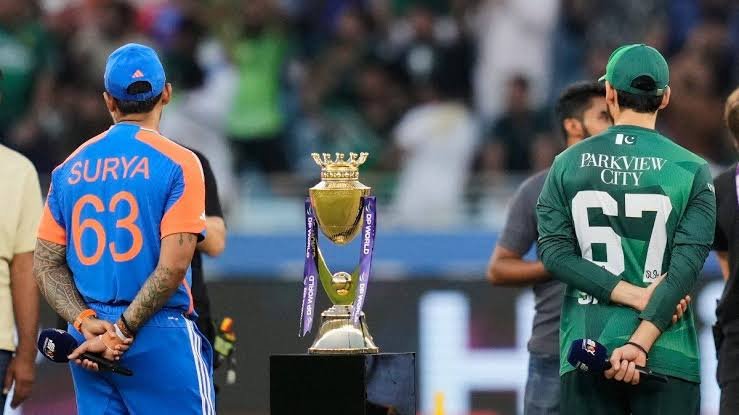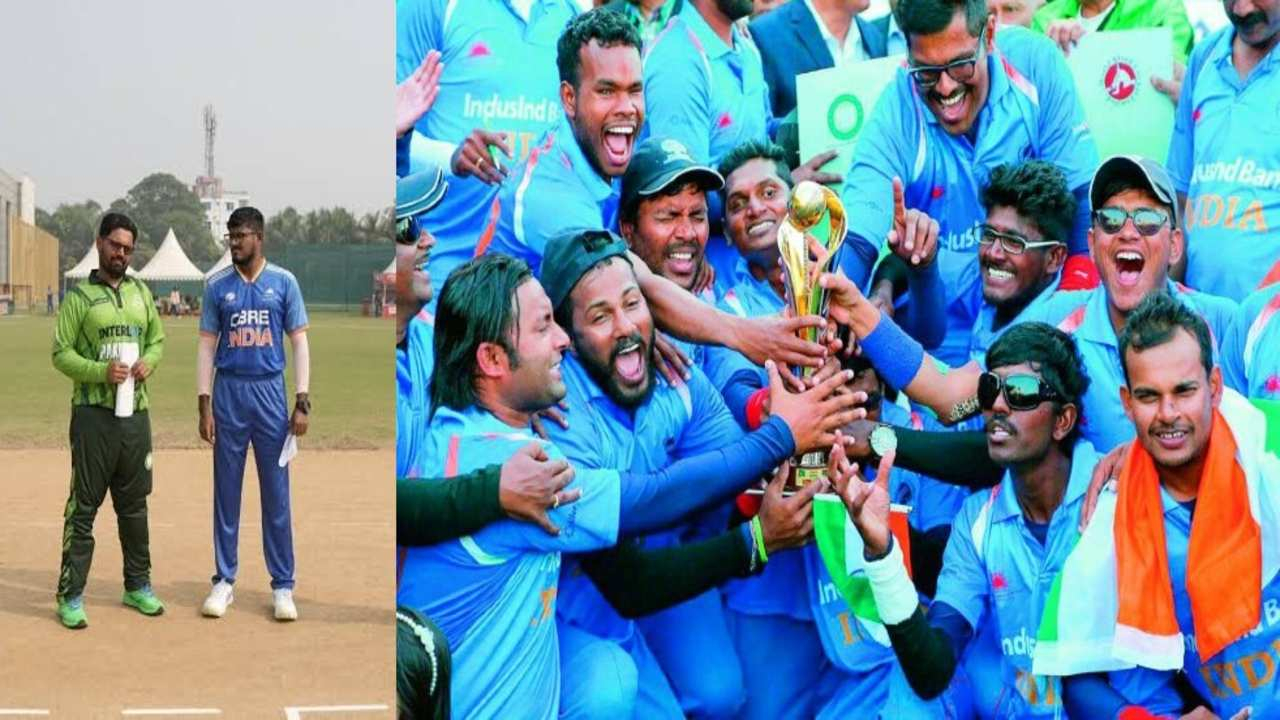
The Indian blind cricket team refused to attend the trophy presentation ceremony at the Men’s Asia Cup for the Blind 2026 in Dhaka after Pakistan were declared champions following a rain-abandoned final. The controversial decision sparked an immediate protest from the Indian players, who believe the tournament regulations were not followed and that both finalists should have been recognised as joint winners.
The India vs Pakistan blind cricket Asia Cup final was washed out due to persistent rain, preventing the two teams from competing for the championship. However, the match officials awarded Pakistan the trophy based on their superior position in the tournament standings and run-rate calculations. India strongly opposed the decision and boycotted the presentation ceremony to register its protest.
The controversy has now escalated beyond the result itself, with the Cricket Association for the Blind in India (CABI) questioning the decision-making process of the World Blind Cricket Council (WBCC). The Indian cricket body has demanded that the governing council withdraw Pakistan’s sole-winner status and officially recognise both teams as joint champions.
Why India boycotted the blind cricket Asia Cup presentation ceremony
The main disagreement revolves around the interpretation of Section 27 of the Men’s Blind Cricket Asia Cup 2026 technical regulations.
According to CABI, the relevant section specifically addresses the circumstances of a tied final, and its interpretation supports declaring both teams joint winners when the championship match cannot produce a result.
CABI claimed that it had raised the matter with the WBCC Technical Committee, which initially agreed that India and Pakistan should share the title. However, the Indian association alleged that the decision was subsequently overturned following the intervention of the Technical Committee’s director and Pakistan Blind Cricket Council (PBCC) president Sultan Shah.
In a statement released on November 20, CABI strongly criticised the decision to award Pakistan the championship without the final being played.
The association also questioned how an initial agreement to declare joint winners could be reversed, arguing that the process raised concerns about transparency, impartiality and the credibility of international blind cricket administration.
“The trophy was awarded to Pakistan without the final being played. WBCC President and Pakistan Blind Cricket Council President Sultan Shah overruled the WBCC Technical Committee’s decision to declare joint winners, forcing the match referee to announce the same decision.”
These are allegations made by the Indian association. The WBCC’s complete response to the accusations had not been established in the available reporting at the time of publication.
Indian captain T Durga Rao questions the final decision
Indian captain T Durga Rao also expressed his disappointment over the decision and explained why the players refused to accept Pakistan being declared the outright champions.
In a video statement released by CABI, Rao said the match referee informed the Indian team that Pakistan would be declared winners because of their superior run rate, while India would finish as runners-up.
The Indian captain said his team immediately opposed the announcement because he believed the decision went against the established regulations and previous practices in similar situations.
“In the final, the referee called us and informed us that based on the run-rate, they are declaring Pakistan as the winners and us as the runners-up,” Rao explained.
He further added that India had never witnessed such a decision in similar circumstances and maintained that both teams should have been recognised as joint winners.
“This is completely against the rules. That is what we are opposing,” the Indian captain said.
The Indian players subsequently stayed away from the presentation ceremony rather than participating in the celebrations after Pakistan were awarded the trophy.
Pakistan’s position in the tournament standings
While India’s protest centres on the interpretation of the final’s playing conditions, Pakistan had enjoyed an impressive campaign throughout the competition.
Pakistan entered the final with a strong record, having won all three of their league matches. Their performances placed them ahead of India in the tournament standings, with reports highlighting their superior points tally and net run rate.
According to available tournament reporting, Pakistan finished the league stage with six points and a net run rate of +4.611. India had four points and a net run rate of +4.400.
Pakistan had also defeated India in their league-stage meeting, securing a narrow one-wicket victory in a closely contested encounter.
Those results formed the statistical basis behind Pakistan’s stronger position before the final. However, the central question raised by CABI is whether league-stage standings and run rate could determine the championship when the final itself was abandoned without a result.
This distinction is important. Net run rate is commonly used to separate teams in league standings, but the regulations governing an abandoned final must determine how the championship is awarded. The disagreement over those regulations has become the biggest talking point of the tournament.
CABI chairman calls the decision unfair
CABI chairman Mahantesh G. Kivadasannavar also launched a strong criticism of the decision, describing it as an injustice to the Indian players.
He questioned why the Technical Committee’s reported initial agreement to declare joint winners was overturned and demanded that the original position be restored.
According to Kivadasannavar, a championship should be decided through transparent sporting procedures rather than disputed administrative decisions.
He also made it clear that CABI would not recognise Pakistan as the sole champions unless the governing council reconsidered its decision.
The association has demanded that the WBCC immediately withdraw the declaration and officially recognise India and Pakistan as joint winners of the Men’s Blind Cricket Asia Cup 2026.
CABI has also indicated that it will pursue appropriate avenues to challenge the outcome.
India-Pakistan blind cricket controversy could have wider consequences
The dispute has raised questions about the administration of international blind cricket and the importance of clearly communicated tournament regulations.
The controversy is particularly significant because blind cricket provides an international platform for visually impaired athletes to compete at the highest level. Decisions involving championship titles therefore carry considerable importance for players, teams and the wider sporting community.
There could also be consequences for future India-Pakistan fixtures. According to a report by India Today, CABI general secretary Shailendra Yadav indicated that India would not play Pakistan in future matches until the issue was resolved.
That would represent a significant development if the position is formally maintained, particularly given the importance of India-Pakistan contests in international blind cricket.
For now, Pakistan have been awarded the Men’s Asia Cup for the Blind 2026 trophy, while India continue to challenge the decision. The dispute is far from settled, with CABI insisting that both finalists deserve joint-champion status.
The focus will now be on whether the World Blind Cricket Council responds to India’s allegations and provides a clear explanation of the regulations used to determine the winner.
Stay tuned with ROKOCRICKET for the latest cricket news, breaking updates and developments from the world of sports. Subscribe to ROKOCRICKET to follow every major story.