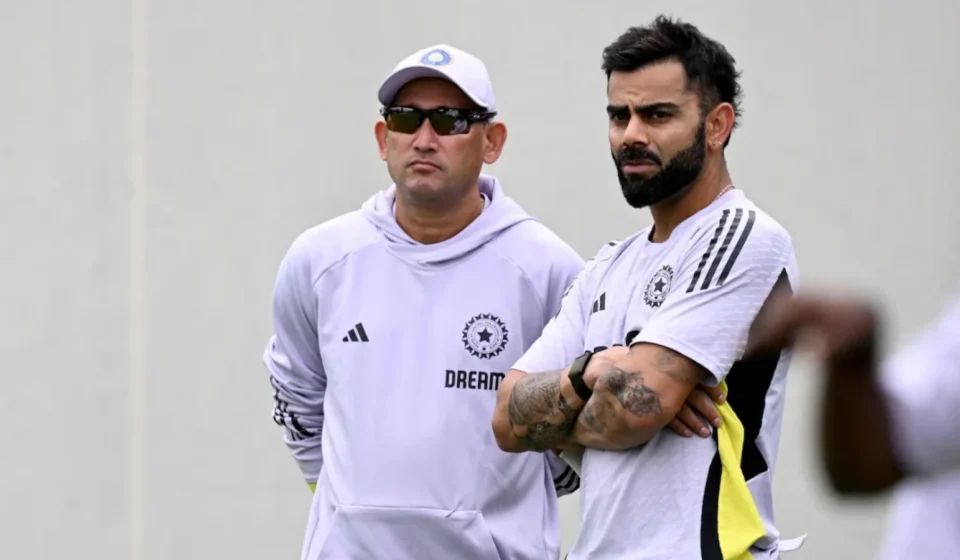

Wasim Jaffer has questioned the circumstances surrounding Virat Kohli’s Test retirement, suggesting that the former India captain may have been unhappy with the way he was treated by the Ajit Agarkar-led selection panel. Jaffer believes Kohli could have continued playing Test cricket for longer, particularly with India preparing for a challenging five-match series in England.
Kohli’s decision to retire from Test cricket in May 2025 came as a major surprise to Indian cricket fans. The announcement arrived just weeks before India’s England tour, leaving supporters wondering whether the star batter had decided to walk away entirely on his own terms or whether circumstances within Indian cricket had influenced his thinking.
Speaking on his YouTube channel, former India opener Jaffer offered a blunt assessment of the situation. While he stopped short of claiming to know Kohli’s exact reasons, his comments reignited the debate over the former captain’s exit from the longest format.
“It felt like Virat was a bit bitter about the way he was treated,” Jaffer said, highlighting Kohli’s enormous popularity and arguing that the batter still had more to offer Indian Test cricket.
The remarks have once again placed the spotlight on Ajit Agarkar, who was serving as India’s chief selector when Kohli announced his retirement.
Why Virat Kohli’s Test retirement shocked Indian cricket
Kohli announced his retirement from Test cricket on May 12, 2025, ending a career that had lasted 14 years. According to the BCCI’s official figures, he finished with 9,230 runs in 123 Tests at an average of 46.85, including 30 centuries and 31 half-centuries.
Those numbers underline the scale of his contribution. Kohli was not simply one of India’s most successful batters; he was also the captain who helped change the team’s approach to Test cricket, particularly its emphasis on fitness, aggression and fast bowling.
His retirement was especially difficult for fans to understand because India were about to begin a five-Test tour of England. Kohli had reportedly been preparing for the series, making his sudden departure from the format all the more unexpected.
Jaffer’s latest comments have revived questions about whether the situation could have been handled differently. His argument is not just about the number of runs Kohli might have scored in the years ahead. It is also about the way a senior player of his stature was managed during a significant transition for Indian cricket.
What was Ajit Agarkar’s role in the Virat Kohli retirement debate?
Agarkar was India’s chief selector when Kohli announced his decision. Reports surrounding the retirement suggested that discussions about the team’s future, including its leadership plans and selection expectations, had added to the uncertainty before the England tour.
However, it is important to distinguish between speculation and confirmed facts. Jaffer expressed his view that Kohli appeared unhappy with the way events were handled, but he also acknowledged that the full explanation would only be known if Kohli himself chose to share it.
Agarkar had offered a different account in May 2025. Speaking after Kohli’s retirement, he said the batter had contacted him in early April and expressed a desire to finish his Test career. Agarkar indicated that the decision had come from Kohli and needed to be respected.
That account is central to the debate. While Jaffer believes the handling of the situation could have been better, Agarkar’s public explanation presented the retirement as Kohli’s own decision.
Neither perspective, on its own, establishes that Kohli was forced to retire. Without a direct explanation from the former India captain that confirms otherwise, claims about the precise reasons behind his decision should be treated cautiously.
The numbers Kohli left behind in Test cricket
Kohli’s retirement also ended his pursuit of several significant milestones. His final Test tally left him within reach of the 10,000-run mark, a landmark achieved by only a handful of Indian batters.
| Test career statistic | Kohli’s record |
|---|---|
| Matches | 123 |
| Runs | 9,230 |
| Batting average | 46.85 |
| Centuries | 30 |
| Half-centuries | 31 |
Source: BCCI’s official retirement tribute.
Kohli needed 770 more runs to reach 10,000 Test runs. Five additional centuries would also have taken him to 35, placing him among a select group of batters in Test history.
These milestones explain why many supporters believe he could have continued playing. However, career statistics alone cannot determine whether retirement was the right decision for an individual player. Form, personal priorities, fitness, expectations and the demands of international cricket all influence such a choice.
Kohli’s final Test series, against Australia at the start of 2025, was a difficult one. He scored 190 runs across five matches at an average of 23.75. The numbers were below his usual standards, but they represented only one series in a much longer career.
Could Kohli have played more Test cricket?
Jaffer clearly believes the possibility was there. He pointed to Kohli’s popularity, his influence on crowds and the apparent preparations for the England tour as reasons to question the timing of his retirement.
Kohli’s presence also carried significance beyond his individual batting performances. His intensity and competitive approach had become closely associated with India’s Test identity, while his record as captain helped establish high expectations around the team’s overseas performances.
Still, there is a difference between believing a player had more cricket left in him and knowing that he wanted to continue under the circumstances at the time.
The debate also raises a broader question about how Indian cricket manages experienced players during periods of transition. Selection panels must plan for the future, assess recent performances and make difficult decisions. At the same time, clear communication can help prevent uncertainty from overshadowing a player’s achievements.
Jaffer’s criticism appears to focus heavily on that second point. He has not dismissed the value of bold selection decisions, but he believes certain situations involving senior players could have been handled more diplomatically.
For fans, the unanswered question remains whether a different approach might have kept Kohli in Test cricket for another series or even another season. There is no definitive answer, and it would be unfair to present that possibility as an established fact.
Wasim Jaffer’s verdict puts the spotlight back on Indian cricket
The discussion around Kohli’s retirement has returned at a time when the legacy of Agarkar’s tenure as chief selector is also being assessed. India’s achievements in white-ball cricket during his time in the role form an important part of that evaluation, but individual selection decisions continue to attract scrutiny.
Jaffer’s remarks have added another perspective to an episode that remains emotionally significant for supporters of Indian cricket. His comments suggest that, in his view, the process surrounding Kohli’s exit could have been managed better, even if the final decision belonged to the player.
Ultimately, Kohli’s Test career should be remembered for its achievements rather than defined solely by the circumstances of his retirement. His 9,230 runs, 30 centuries and contribution to India’s changing Test mentality remain substantial parts of his legacy.
Whether Kohli eventually speaks in detail about his decision may determine how much more clarity emerges. Until then, the suggestion that he retired because he was unhappy with his treatment remains an interpretation offered by Jaffer, not a confirmed explanation from Kohli himself.
Stay tuned to ROKOCRICKET for the latest cricket news, major selection developments and exclusive insights from the world of Indian cricket. Subscribe and join the conversation: do you think Virat Kohli could have played more Test cricket for India, or was May 2025 the right time for him to step away? Share your opinion in the comments.