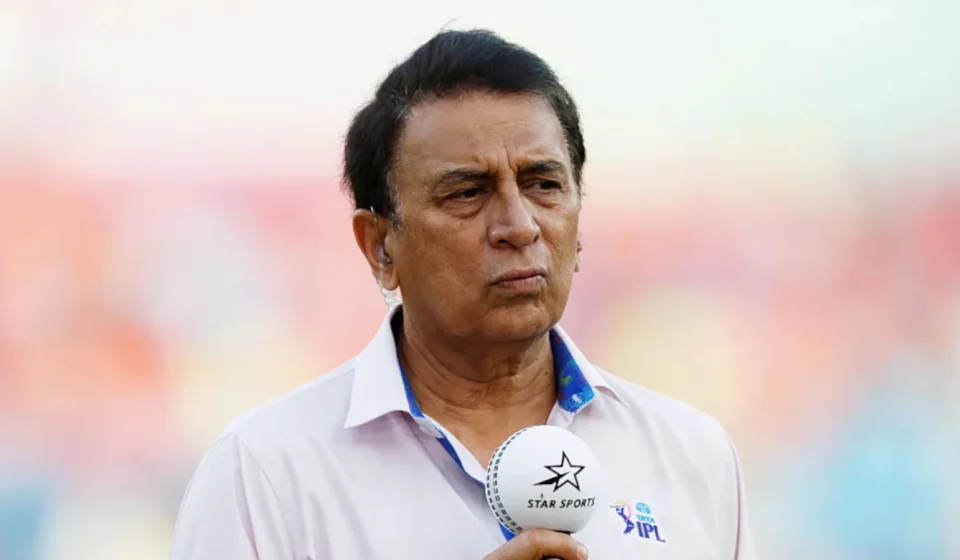

Sunil Gavaskar has raised concerns over the Board of Control for Cricket in India’s scheduling of India A matches alongside the Ranji Trophy, warning that the overlap could weaken domestic competition and make it harder to judge the true quality of players.
The former India captain believes India A fixtures are essential for identifying cricketers capable of succeeding at the international level. However, he has questioned why these matches need to be played when the country’s premier first-class tournament is underway, forcing several leading domestic players to miss important games for their state teams.
The latest scheduling clash has once again brought the focus on the balance between India’s development pathway and domestic cricket. With the Ranji Trophy serving as a crucial platform for players hoping to break into the national team, the absence of key performers can affect both the quality of matches and the fairness of the competition.
Why Sunil Gavaskar is unhappy with the BCCI’s Ranji Trophy schedule
The Ranji Trophy season began on Sunday, coinciding with the final day of the India A match against Australia A. The overlap meant that several players representing India A were unavailable for their respective state sides.
Among those affected were Rajat Patidar, Devdutt Padikkal and Ruturaj Gaikwad. All three have featured prominently in Indian domestic cricket and remain important names in the country’s wider selection picture.
Their absence raises a straightforward question: should players be forced to choose between representing India A and helping their state teams in the Ranji Trophy?
India A matches provide an opportunity for promising cricketers to test themselves against strong opposition and demonstrate their readiness for international cricket. At the same time, state teams depend on their leading players to compete effectively across a long domestic season.
When the two schedules overlap, neither objective is served as well as it could be. State teams lose experienced performers, while the Ranji Trophy becomes less representative of the strength each side would otherwise possess.
The concern becomes even more significant when the missing players are among the leading performers in domestic cricket. Their participation can influence team balance, results and the development of younger players who benefit from playing alongside experienced professionals.
Gavaskar questions the standard of domestic cricket
In his column for Mid-Day, Gavaskar discussed how the standard of competition in the Ranji Trophy’s Elite Division has improved, with teams that were previously less competitive now capable of winning the tournament.
He described that development as encouraging but pointed to another problem: the limited involvement of established India internationals in domestic competitions.
Gavaskar’s argument is that domestic statistics do not always tell the complete story of a player’s ability. Batters can accumulate impressive run totals and bowlers can finish seasons with remarkable wicket tallies, but those numbers need to be assessed in the context of the opposition and the quality of the competition.
He observed that some of the leading run-scorers and wicket-takers in the Ranji Trophy have struggled after earning opportunities with India. While some players disappear from the selection picture quickly, others remain on the fringes without establishing themselves at the highest level.
That does not mean domestic performances lack value. Instead, Gavaskar’s concern is that selectors need stronger evidence of how players perform against high-quality opposition before deciding whether they are ready for international cricket.
India A tours can help bridge that gap by exposing players to demanding conditions and competitive opponents. However, those opportunities should complement the Ranji Trophy rather than disrupt it.
India A’s New Zealand tour adds to the scheduling debate
The issue could become more pressing later this month, with India A scheduled to travel to New Zealand for three multi-day matches against New Zealand A.
According to the BCCI’s announcement, the series will begin in Lincoln from October 24 to 27, followed by a match in Christchurch from October 31 to November 3. The final game will take place in Lincoln from November 7 to 10. <Cite refs={[“turn113123search0″,”turn113123search2”]}/>
The squad includes established domestic performers and players with international experience, including Yashasvi Jaiswal, KL Rahul, Devdutt Padikkal and Sai Sudharsan. Dhruv Jurel has been named captain. <Cite refs={[“turn113123search0″,”turn113123search2”]}/>
Their selection reflects the importance of India A cricket in preparing players for bigger responsibilities. But it also reinforces Gavaskar’s central argument: the BCCI needs to plan its calendar so that opportunities at one level do not unnecessarily come at the expense of another.
A carefully designed schedule could allow players to represent their states before joining India A, or provide sufficient gaps between assignments. Such coordination would require the board to consider international commitments, travel, recovery and the needs of state associations.
The challenge is not simply to avoid clashes on paper. It is to ensure that players receive meaningful opportunities across the domestic and national development systems.
Gavaskar questions the expansion of the Ranji Trophy
Gavaskar also expressed reservations about the decision to include every state and Union Territory in the Ranji Trophy following recommendations associated with the Lodha Committee.
He argued that the expansion brought teams into the competition without all of them having the infrastructure and playing strength required to compete consistently at the highest level.
According to Gavaskar, some newer teams recruited players who could not secure places in their home-state sides. Although these cricketers were capable performers, he felt the gap between the Elite and Plate divisions remained significant.
He pointed out that batting and bowling records were being set in the Plate Division, raising questions about how those numbers should be compared with performances against stronger opposition.
His comments touch on an important distinction in domestic cricket: participation and competitiveness are not necessarily the same thing.
Expanding a tournament can create opportunities for more players, strengthen cricketing structures in developing regions and give emerging teams a platform to improve. At the same time, a competition needs clear standards, suitable infrastructure and a pathway that helps teams become more competitive over time.
The challenge for the BCCI is to maintain both objectives without diminishing the value of the Ranji Trophy’s records or the achievements of players competing in different divisions.
What should the BCCI do next?
Gavaskar’s criticism raises a practical question for Indian cricket administrators: how can the board strengthen India A cricket without weakening domestic first-class cricket?
The first step would be to coordinate the two calendars more carefully. India A fixtures are valuable, but the Ranji Trophy should not routinely lose key players because of avoidable scheduling overlaps.
The BCCI could also review how domestic performances are assessed across divisions. Rather than dismissing records from the Plate Division, selectors can consider opposition strength, match conditions, consistency and performances against higher-ranked teams when assessing players.
For emerging cricketers, the ideal pathway should combine regular opportunities in state cricket with exposure to stronger opposition through India A tours. Both serve different purposes, and neither should be treated as a substitute for the other.
Ultimately, the Ranji Trophy remains one of India’s most important routes into international cricket. Its value depends on the quality of competition, the opportunities it offers and the confidence selectors place in performances delivered over an entire season.
Gavaskar’s comments are a reminder that scheduling decisions can have consequences well beyond a few missed matches. They can affect team results, player development and the credibility of domestic statistics used in selection discussions.
Whether the BCCI revisits its scheduling approach remains to be seen. However, the debate deserves attention as India prepares for another busy season of domestic and international cricket.
Stay tuned to ROKOCRICKET for the latest cricket news, domestic cricket updates, team announcements and expert opinions. Subscribe to ROKOCRICKET and join the conversation: Should the BCCI prioritise the Ranji Trophy schedule when planning India A matches? Share your views in the comments.