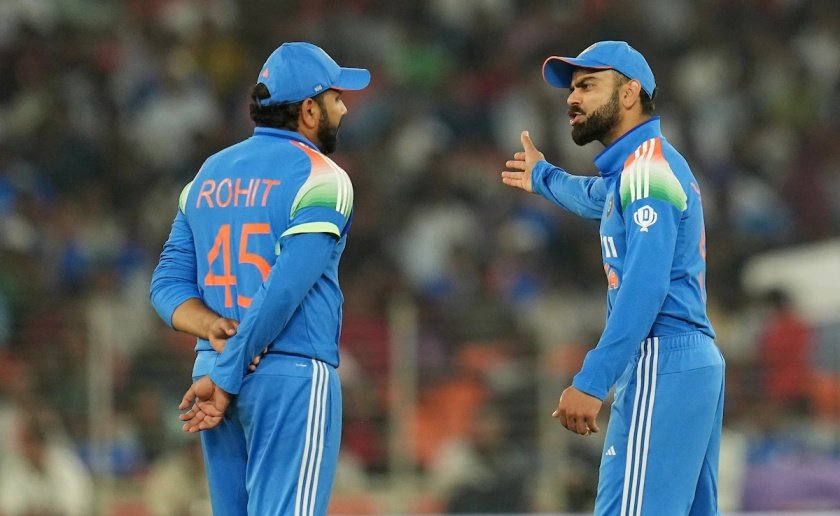

Rohit Sharma and Virat Kohli remain two of the biggest names in Indian cricket, even after stepping away from Test and T20 International cricket. With both superstars now focusing on the One Day International (ODI) format for India, fans are curious about one important question: how much does the Board of Control for Cricket in India (BCCI) pay them?
The answer may surprise some cricket followers. Despite their legendary status and enormous contribution to Indian cricket, Rohit and Kohli are no longer in the highest category of the BCCI’s central contracts. Under the 2025–26 contract structure, both players are placed in Grade B, which carries an annual retainer of ₹3 crore each.
That means their central contract alone provides them with a substantial guaranteed annual income, even though they are no longer representing India in all three international formats. However, this is not the complete picture of their earnings. Match fees, Indian Premier League (IPL) contracts, brand endorsements and business investments can add considerably to their overall income.
Rohit Sharma and Virat Kohli receive ₹3 crore annually
The BCCI announced its annual player contracts for the 2025–26 season on February 9, 2026. One of the biggest changes was the removal of the Grade A+ category, which had previously been the highest level in the central contract system.
Rohit Sharma and Virat Kohli, who previously held top-tier contracts, were placed in Grade B after retiring from Test cricket and T20 Internationals.
Under the reported salary structure, Grade A players receive ₹5 crore annually, Grade B players receive ₹3 crore, and Grade C players receive ₹1 crore.
For Rohit and Kohli, the Grade B retainer means an annual payment of ₹3 crore each under the central contract arrangement. This amount is not calculated according to the number of ODIs they play during the year. Instead, it is an annual retainer associated with their contract category.
In simple terms, their central contract does not mean they receive ₹3 crore for playing a certain number of matches. It is the annual payment linked to their grade, separate from applicable international match fees and other sources of income.
Their move to Grade B has attracted attention because both players have been among the most influential cricketers of their generation. Nevertheless, central contracts are structured around the board’s grading system rather than a player’s popularity alone.
Why were Rohit Sharma and Virat Kohli moved to Grade B?
The change reflects the restructuring of the BCCI’s central contracts and the two players’ current international roles.
Earlier, the Grade A+ category carried an annual retainer of ₹7 crore. Rohit and Kohli were among the players in that category, alongside other leading Indian internationals.
However, the BCCI removed Grade A+ from its revised contract structure. The highest category became Grade A, with an annual retainer of ₹5 crore under the reported salary arrangement.
For the 2025–26 season, only three Indian men’s cricketers were placed in Grade A: Shubman Gill, Jasprit Bumrah and Ravindra Jadeja.
Rohit and Kohli were included in Grade B alongside players such as Hardik Pandya, Rishabh Pant, KL Rahul, Mohammed Siraj and Washington Sundar.
Their lower contract category does not diminish their achievements or their importance to Indian cricket. Both remain experienced players with considerable influence in the dressing room, and their performances in ODIs continue to attract attention from fans and selectors.
It is also important to distinguish a contract grade from selection for a particular match. A central contract does not guarantee a place in every playing XI, nor does a lower grade automatically mean a player has lost his place in the national team’s plans.
Shubman Gill, Jasprit Bumrah and Ravindra Jadeja earn ₹5 crore
While Rohit Sharma and Virat Kohli receive ₹3 crore annually under their Grade B contracts, three Indian cricketers occupy the highest category in the revised structure.
Shubman Gill, Jasprit Bumrah and Ravindra Jadeja are the three players listed in Grade A for the 2025–26 season. Their annual central retainership is ₹5 crore each under the reported payment structure.
Gill’s elevation to the top category reflects his growing responsibilities in Indian cricket, while Bumrah continues to be one of the team’s most important fast bowlers. Jadeja, meanwhile, brings extensive experience as an all-rounder across international cricket.
The removal of Grade A+ also means that the earlier ₹7 crore annual retainer associated with that category no longer applies under the revised three-tier system.
Here is a simple breakdown of the reported annual central contract payments:
- Grade A: ₹5 crore per year
- Grade B: ₹3 crore per year
- Grade C: ₹1 crore per year
These figures refer to central retainerships, not the total amount a cricketer earns from every source.
Do Rohit and Kohli earn extra money for every ODI?
Yes. Central contract payments and international match fees are separate components of a cricketer’s earnings.
Under the established BCCI international match-fee structure, Indian men’s players have received ₹6 lakh for a Test match, ₹3 lakh for an ODI and ₹1.5 lakh for a T20 International. These rates should be distinguished from any subsequent revisions that may apply.
Since Rohit and Kohli now focus on ODI cricket for India, their international match fees depend on the matches they play. For example, at a rate of ₹3 lakh per ODI, playing 10 matches would amount to ₹30 lakh in ODI match fees, in addition to the annual central retainer.
This is an illustration based on that established rate, not a confirmation of how many matches either player will play or their final earnings for a particular season.
Their total earnings from Indian cricket therefore depend on their contract, matches played and any applicable payments or bonuses. It would be inaccurate to suggest that the ₹3 crore retainer is the only money they can earn from representing India.
IPL contracts and endorsements add to their earnings
The financial picture becomes even more interesting when their income outside international cricket is considered.
Both Rohit Sharma and Virat Kohli have built substantial commercial profiles through the Indian Premier League, advertising campaigns, sponsorships and other professional ventures.
IPL contracts are separate from BCCI central contracts. A player’s IPL earnings depend on the terms of his franchise agreement, rather than his grade in the national team’s annual retainership system.
Endorsements can also be a major source of income. Kohli has been associated with several prominent consumer brands, while Rohit has developed a strong presence in advertising and sports marketing. The amounts earned from individual campaigns can vary according to the agreement and its duration.
Both cricketers have also been involved in business and investment activities. However, their precise annual earnings from private investments and endorsements are not fully disclosed, so estimates circulating online should not automatically be treated as verified figures.
For this reason, the BCCI contract offers only one part of the answer when fans ask how much these superstars earn.
Will Rohit Sharma and Virat Kohli play the 2027 ODI World Cup?
Another major talking point is whether the two experienced batters will feature in the 2027 ODI World Cup.
Both have retired from Test cricket and T20 Internationals, leaving ODI cricket as their international format. Their experience, batting records and ability to perform under pressure make them important names in discussions about India’s future ODI plans.
However, participation in the 2027 World Cup cannot be considered guaranteed. Selection will depend on fitness, form, team requirements and decisions made by the selectors and team management closer to the tournament.
For Indian supporters, the prospect of watching both players at another World Cup remains exciting. Their experience could prove valuable in a major tournament, but the final squad will be determined through the selection process.
The bottom line
Rohit Sharma and Virat Kohli receive an annual central retainer of ₹3 crore each under the reported Grade B salary structure for the 2025–26 season. Shubman Gill, Jasprit Bumrah and Ravindra Jadeja are in Grade A, with an annual retainer of ₹5 crore each.
The key point is that central contract payments are not the same as total cricket earnings. Match fees, IPL contracts, endorsements and business ventures can all contribute to a player’s overall income.
Stay tuned to ROKOCRICKET for the latest cricket news, player salary updates, team announcements and developments ahead of the 2027 ODI World Cup. If you enjoy our cricket coverage, subscribe and keep following us for more updates.