Pranav Soorma wins Asian Para Games gold with record-breaking discus throw
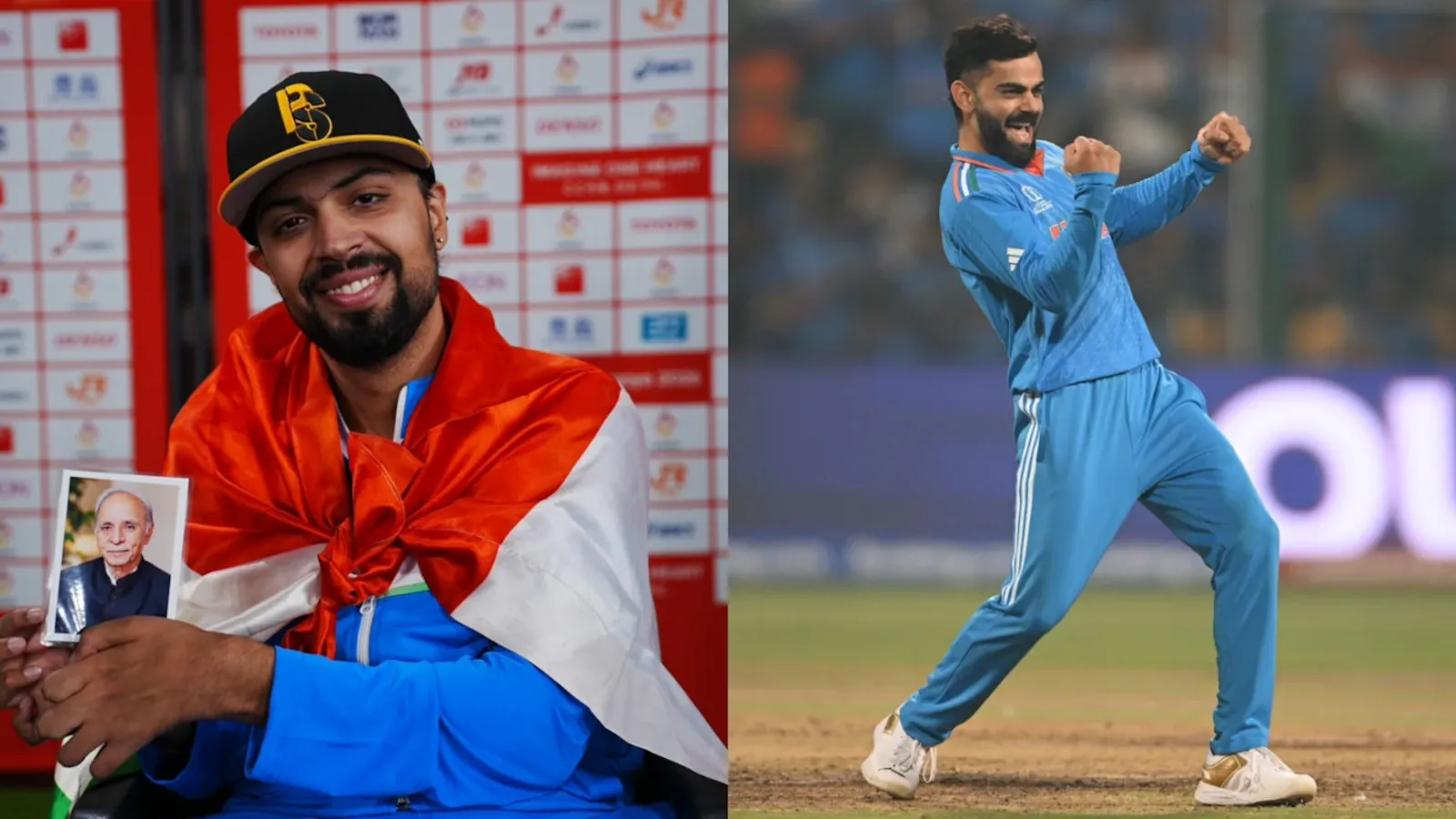
Pranav Soorma celebrates his Asian Para Games gold medal after setting an Asian record in the combined F51 F52 F53 discus throw event.
India’s Pranav Soorma delivered a memorable performance at the Asian Para Games, winning gold in the combined F51/F52/F53 discus throw event with an Asian record. The Indian para-athlete also drew an amusing comparison with cricket superstar Virat Kohli, describing his achievement as being similar to a batter who unexpectedly takes a wicket after bowling.
Soorma secured the gold medal with a throw of 11.66 meters on his fourth attempt, setting a new continental record in an event he was contesting at a major international competition for the first time. His compatriot Ram Ratan Singh finished second with a best effort of 10.35 meters, giving India a memorable one-two finish.
The result was particularly significant for Soorma, who had already established himself as a successful para-athlete through his performances in the club throw. Competing in the discus throw presented a different technical challenge, but the Indian athlete’s preparation and determination helped him produce a record-breaking performance on the international stage.
Pranav Soorma compares his gold medal to Virat Kohli taking a wicket
Following his victory, Soorma used a cricket analogy to explain the feeling of achieving something special in an unfamiliar discipline. His comparison immediately connected his sporting achievement with one of India’s most recognizable cricket stars, Virat Kohli.
“When we play cricket, a batsman sometimes bowls. Like Virat Kohli does batting very well. But after a long time, he bowls an over in which he gets (a batter) out,” Soorma said after winning the gold medal.
The comparison captured the significance of his achievement. Kohli is widely recognized for his batting, while his occasional bowling spells can produce unexpected moments. Similarly, Soorma has built his reputation primarily through the club throw, but he demonstrated that he could also excel in the discus throw when the opportunity arrived.
For an athlete entering a major competition in a relatively unfamiliar event, winning gold while setting an Asian record was a remarkable result. It also highlighted the importance of versatility, patience and preparation in elite para-athletics.
Soorma’s performance was not simply about winning another medal for India. It showed how athletes can expand their capabilities by taking on new challenges and applying the same commitment that helped them succeed in their principal events.
Asian record highlights Soorma’s hard work in discus throw
The 32-year-old athlete recorded 11.66 meters on his fourth attempt to secure the top position. Although the discus throw is his secondary event, Soorma had spent considerable time preparing for the challenge.
He explained that the competition represented a major milestone because he had never contested the discus throw at such a significant event before.
“It’s a new event for me. I am competing in this event (discus) for the first time in such a big event. I am very happy to do my personal best and break the Asian record,” he said.
Soorma also made it clear that the club throw remains his preferred discipline. However, he decided to participate in both events, giving himself an opportunity to compete for additional success.
“My pet event is club throw, this (discus) is my second event. This time I am participating in both the events, discus throw and club throw,” he added.
Preparing for two technically different throwing events required patience and focused training. According to Soorma, he spent the previous year working hard and practising extensively to improve his discus performance.
His Asian-record throw provided a strong reward for that preparation. The result also demonstrated that athletes can make significant progress in a secondary discipline when they dedicate sufficient time to developing the required technique.
For India, the achievement added another encouraging chapter to the country’s para-athletics story, with Soorma proving that experience in one event can provide a foundation for success in another.
Why discus throw is technically different from club throw
Although both events involve throwing an implement for distance, the club throw and discus throw demand different techniques. Athletes must adjust their grip, release mechanics and control to suit the equipment.
Soorma explained that applying adhesive and maintaining the correct grip are important parts of his preparation. However, the process differs between the two disciplines.
“Club throw and discus throw are technically very different games,” he explained.
He added that the club requires adhesive to help secure it to the fingers, while discus throw involves applying it across the hand. Maintaining the correct grip and releasing the implement at the right moment are important technical considerations.
In throwing events, distance depends on several factors, including the athlete’s technique, release angle, speed and control. For para-athletes competing from a seated position, executing the movement within the limits of their classification adds another layer of complexity.
Soorma’s success therefore reflected more than physical strength. His ability to adapt to a new throwing technique and deliver his best performance when it mattered most played a crucial role in securing the gold medal.
The fact that he achieved an Asian record in his first major discus competition made the result even more notable.
Ram Ratan Singh completes India’s one-two finish
India’s success was strengthened by Ram Ratan Singh, who won the silver medal with a throw of 10.35 meters on his second attempt.
The 31-year-old joined Soorma on the podium, ensuring that India claimed the top two positions in the combined event. Their performances highlighted the country’s growing presence in para-athletics and its ability to produce competitive athletes across different throwing disciplines.
Iran’s Alireza Hemami finished with the bronze medal after recording a throw of 20.20 meters in the fourth round. His distance was considerably longer than the marks recorded by the two Indian athletes, but the combined event used a classification-adjusted scoring system to determine the final positions.
This distinction is essential to understanding the result. The competition brought together athletes from different impairment classifications, meaning that the longest raw distance did not automatically determine the winner.
The final standings were based on the Raza Point System, which adjusts performances according to the athletes’ classifications. As a result, Soorma and Singh finished ahead of Hemami despite recording shorter distances.
Understanding the F51, F52 and F53 classifications
Para-athletics uses sport-specific classifications to ensure that athletes with different impairments can compete under a structured system. In combined throwing events, competitors from different classes may be grouped together when there are not enough participants for separate competitions.
F51, F52 and F53 are classifications associated with athletes who have significant physical impairments affecting their throwing performance. The exact impact varies according to the classification, including limitations involving the trunk, arms and hands.
Athletes in these classes generally compete in a seated position in throwing events. Their functional abilities can differ substantially, which is why classification-adjusted scoring can be necessary when multiple classes compete together.
The Raza Point System converts performances into standardized points after accounting for classification-related differences. This approach allows results to be compared more fairly across athletes who face different functional limitations.
Consequently, a longer throw does not necessarily translate into a higher final position in a combined classification event. The official result depends on the applicable scoring system rather than distance alone.
Understanding this system helps explain why Soorma won gold, Singh claimed silver and Hemami finished third despite producing the longest measured throw among the three medalists.
Stay tuned to ROKOCRICKET for more updates, inspiring stories and breaking news from Indian cricket, para-sports and the wider sporting world. Subscribe to stay informed about the athletes making headlines and the performances putting India on the international sporting map.