Manchester’s football landscape has rarely offered a sharper financial contrast. Manchester City have just been found guilty by an independent Premier League commission of serious financial-rule breaches involving a scheme that allegedly overstated sponsorship income by £830.69 million. At almost the same time, Manchester United’s latest accounts have put the spotlight on a very different problem: the enormous cost of carrying debt.
The City ruling relates to nine seasons between 2009-10 and 2017-18. The commission found that City recorded £949.94 million from Abu Dhabi-linked sponsorship arrangements during that period, but concluded that £830.69 million of the money was actually provided by Abu Dhabi United Group, the club’s owner, rather than the sponsors themselves. The commission described the arrangements as part of a “disguised funding scheme”. City deny wrongdoing and have appealed the decision.
The United story is less dramatic on the surface, but the numbers are difficult to ignore.
The club’s latest financial filing showed revenue of £677.6 million for the year, while interest payments rose to £37 million. United have also revealed that total debt has reached approximately £1.15 billion after further borrowing. The scale of that figure becomes clearer when compared with the £667 million reported in comparable accounts in 2021.
That is the financial legacy Manchester United continue to carry.
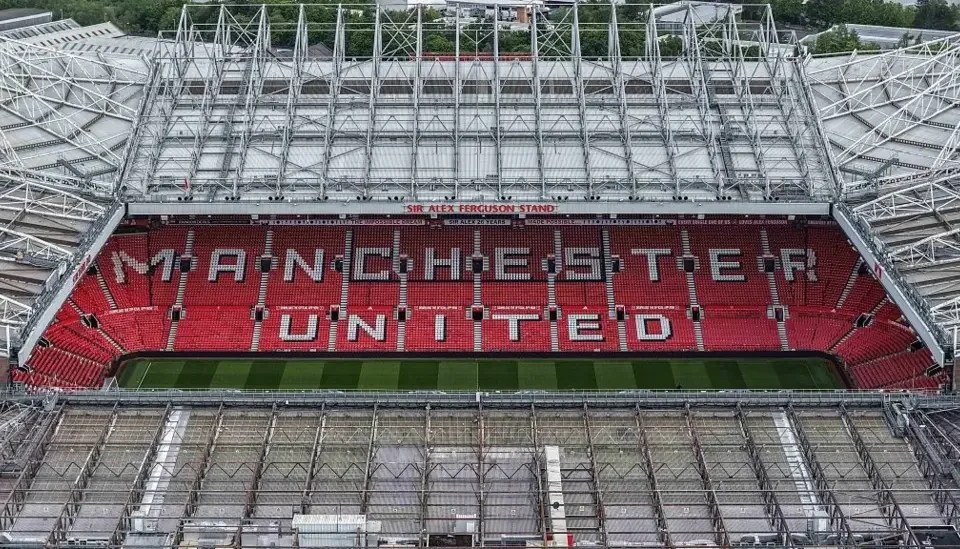
The £852m question hanging over Old Trafford
According to calculations by football finance analyst Swiss Ramble, Manchester United’s net interest payments since the Glazer family’s leveraged takeover in 2005 have reached around £852 million.
That figure is important because interest is money that does not directly improve the squad, training facilities or stadium. It is simply the cost of servicing previous borrowing.
This is where the comparison with Manchester City becomes particularly uncomfortable for supporters.
City’s rise was fuelled by enormous investment from their ownership group. United, under the leveraged ownership model introduced by the Glazers, have spent a significant portion of their own income servicing debt.
The two ownership models are obviously not identical, and one should not be used to excuse the other. City’s independent commission ruling is a separate matter, and the club is appealing it. But the timing has inevitably encouraged supporters to compare the financial paths taken by the two Manchester clubs.
City were accused of disguising owner funding as sponsorship income. United, meanwhile, have had to absorb the cost of debt accumulated under their ownership structure.
The result is two completely different financial stories behind the same city.
United are earning huge money, but the pressure has not disappeared
There is another reason the latest United figures deserve attention.
The club generated record revenue of £677.6 million and expects revenue to potentially reach as much as £760 million in 2026-27. On the surface, those are numbers that demonstrate the commercial strength of one of football’s biggest brands.
United have also returned to the Champions League after finishing third in the Premier League under Michael Carrick.
That European return could provide another major financial boost.
But revenue alone does not solve every problem.
United have confirmed additional player commitments of £191.7 million since 30 June, including deals involving Carlos Baleba, Andrey Santos and Youri Tielemans, along with academy recruitment. The club also borrowed another £90 million, taking overall debt to roughly £1.15 billion.
There are further transfer obligations in the background too, including potential payments linked to performance clauses.
United therefore have to manage several expensive projects simultaneously: the first-team squad, existing transfer liabilities, debt repayments, interest costs and the proposed new stadium.
That is why Omar Berrada’s message about maintaining a “disciplined approach” matters.
The club cannot simply spend its way out of every problem.
The transfer market exposes another weakness
United’s recent transfer spending has attracted plenty of attention, but their sales record may be even more revealing.
When the 2026 summer window closed, United had spent around £148 million while generating only £47 million from player sales.
For a club trying to operate sustainably, that imbalance is significant.
United have struggled to consistently generate major transfer income since selling Romelu Lukaku to Inter Milan for £74 million in 2019. Only a handful of subsequent player sales have produced more than £25 million, including Mason Greenwood, Scott McTominay, Rasmus Hojlund and Alejandro Garnacho.
That explains why the club has increasingly focused on developing young players with future value.
Recent exits involving players such as Radek Vitek, Toby Collyer, Tyler Fredricson and James Overy were not necessarily designed simply to maximise an immediate transfer fee. Sell-on clauses and buy-back arrangements can give United a second opportunity to benefit if those players develop elsewhere.
It is a sensible strategy, but it also shows how important player trading has become to modern football finance.
United need their academy to produce footballers who can either contribute to Carrick’s team or generate meaningful transfer income.
Champions League qualification is more than a football target
This is perhaps the most important point in the entire financial picture.
For United, Champions League football is not simply about prestige.
It is a financial necessity.
The difference in prize money between European competitions can be substantial, while Champions League participation also brings additional broadcasting, matchday and commercial opportunities.
United’s commercial agreements can also contain performance-related clauses. Their Adidas deal, for example, includes an annual reduction if the club fails to qualify for the Champions League.
That makes the team’s third-place finish under Carrick especially valuable.
The club’s wage bill has also remained enormous. United’s wage costs were around £302 million in 2025-26, down from £313 million the previous year when they were among the Premier League’s highest spenders.
Interestingly, the wage-to-turnover ratio was around 45%, a relatively strong figure compared with many competitors.
So this is not simply a story about uncontrolled spending.
United have actually made progress in reducing costs and improving their underlying financial performance. Their 2026 results also showed the impact of restructuring and cost-cutting measures, while adjusted EBITDA improved significantly during the year.
The problem is that the historic debt burden has not disappeared.
The new stadium adds another layer of uncertainty
United are also pursuing plans for a new 100,000-capacity stadium.
The ambition is enormous, but so is the price of delivering it.
The club has already spent £63.5 million on land connected to the proposed development, while the precise financing structure for the stadium remains unresolved.
For supporters who would rather see money invested directly into Carrick’s squad, the debate is understandable.
But the stadium could ultimately become one of the biggest commercial opportunities in the club’s history if it is financed and executed successfully.
That is the gamble United’s leadership now faces.
Spend enough to remain competitive. Keep wages under control. Reduce transfer liabilities. Service the debt. Protect commercial revenues. Finance a new stadium. And, above all, qualify for the Champions League.
That is an extremely difficult balancing act.
Manchester City’s verdict has unintentionally highlighted United’s problem
The irony is that Manchester City’s financial case has indirectly brought renewed attention to Manchester United’s own finances.
City’s commission ruling concerns alleged manipulation of sponsorship income and financial reporting during the period from 2009-10 to 2017-18. City have strongly rejected the findings and lodged an appeal, meaning the legal process is not finished.
United face no equivalent finding in the material discussed here.
Their issue is different: the financial consequences of years of borrowing, combined with a transfer model that has not generated enough sales revenue to offset expenditure.
That distinction matters.
Yet from a Manchester football perspective, the contrast is fascinating.
One club had an ownership model capable of injecting vast sums into the football operation. The other has spent years carrying substantial financial obligations created by its ownership structure.
Now, United have to prove that their enormous commercial power can finally translate into sustained sporting success without creating another mountain of financial problems.
Carrick’s team will face Tottenham at Old Trafford on 10 October with United sitting 12th and looking to climb the table. The immediate football target may be simple: win matches and move upward.
The bigger target is obvious.
Champions League football must become a regular part of Manchester United’s future again.
Because for a club carrying more than £1 billion of debt, European qualification is not just about playing against Europe’s best.
It is part of the financial plan.
Stay tuned with ROKOCRICKET for more football finance stories, Premier League updates and the numbers behind the biggest clubs in world football. Subscribe and follow us for the latest developments.
The ROKO CRICKET author is a passionate cricket enthusiast and sports writer dedicated to bringing readers closer to the game they love. With a keen interest in cricket history, match analysis, player stories, records, rankings, and the latest developments, the author focuses on delivering informative and engaging content in a simple, reader-friendly style. From iconic moments of the past to breaking cricket updates, every story aims to offer useful insights while keeping fans connected to the sport. At ROKO CRICKET, the author believes cricket is more than just numbers and scores—it is about the stories, emotions, rivalries, and unforgettable moments that make the game special.