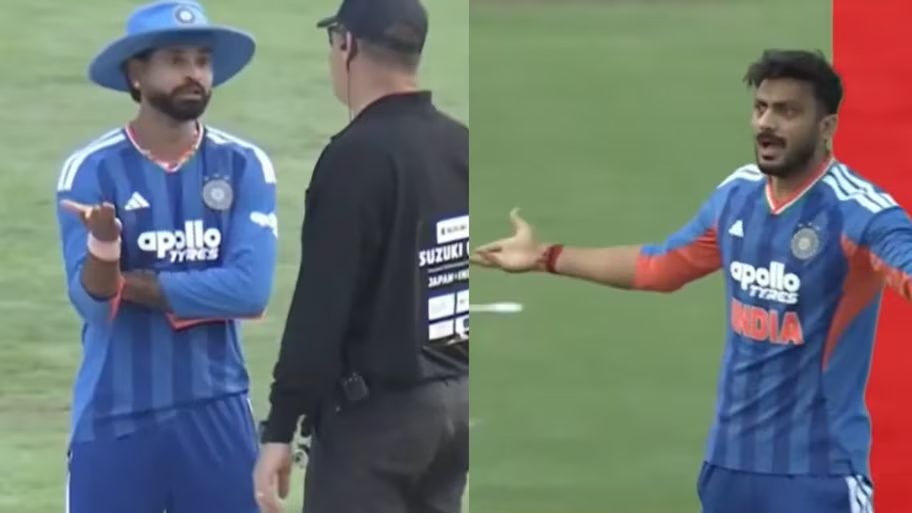
India vs japan: umpire changes wide call as shreyas iyer and axar patel get involved in dramatic final over

India vs Japan T20 Match: India survived a huge scare in a rain-shortened five-over thriller at Sano International Cricket Ground, beating Japan by just two runs. The match ended with a dramatic umpiring moment involving Axar Patel’s wide delivery, Shreyas Iyer and Japan batter Alex Shirai-Patmore.
The India vs Japan T20 match was supposed to be a historic occasion and a useful final warm-up for the Asian Games 2026. Instead, it turned into a contest that went right down to the final delivery.
India, the reigning T20 world champions, were expected to dominate Japan in the first-ever men’s T20I meeting between the two countries. But rain changed the entire complexion of the game. The match was reduced to just five overs per side, turning every delivery into a potentially decisive moment.
India eventually defended 32 runs, with Japan finishing on 30/3. The two-run victory gave India a narrow escape and provided Japan with plenty of credit for pushing one of the world’s leading T20 sides to the limit.
India manage only 32 runs
After winning the toss, India captain Shreyas Iyer chose to bat first. The decision was unusual because the match had been reduced to five overs per side following rain and a wet outfield. Iyer became the first captain from a Full Member side to elect to bat first in a five-over T20I, according to reports.
India’s batting, however, never really got going.
Abhishek Sharma was dismissed for a duck, while Ishan Kishan managed only three runs. Sanju Samson contributed nine from seven deliveries, but Japan’s bowlers kept finding ways to restrict India’s scoring.
Iyer was the main contributor with the bat. The Indian captain scored 16 runs from 12 balls, including one four, before being dismissed in the final over of the innings.
India eventually posted 32/4 from their five overs. For a side packed with international experience, it was a surprisingly low total, although the wet conditions and shortened format made batting difficult. The official scorecard confirms India’s 32/4, with Iyer top-scoring and Japan’s Charlie Hara-Hinze taking two wickets.
Japan therefore needed 33 runs from 30 balls to complete what would have been one of the biggest upsets in their cricket history.
Japan give India a massive scare
Japan did not look overawed by the occasion.
Captain Kendel Kadowaki-Fleming led the chase from the front, scoring 12 runs from 12 balls. Benjamin Ito-Davis added nine from eight deliveries, keeping Japan in the hunt deep into the innings.
India’s spinners eventually became the difference.
Washington Sundar picked up two wickets, while Axar Patel bowled two overs for only seven runs. Ravi Bishnoi also played his part as India relied heavily on spin to defend the tiny target.
But with eight runs required from the final over, the match was still very much alive.
That is when the biggest drama of the afternoon unfolded.
Why did Shreyas Iyer and Axar Patel react to the umpire?
Iyer handed the ball to Axar Patel for the final over. Japan needed eight runs from six balls, meaning even a single extra delivery could have changed the equation completely.
Axar began the over effectively, but the pressure increased when a delivery was called wide.
The most talked-about moment came on another delivery aimed towards the leg side while Alex Shirai-Patmore attempted a reverse-style shot. The umpire initially signalled wide.
Indian players, including Iyer and Axar, immediately reacted to the decision. The Indian captain appeared to question the call, while the situation became increasingly heated as both sides waited for the final decision.
Then came the surprise.
The wide call was reversed and the delivery was declared legal.
The incident quickly became the biggest talking point of the match, with fans questioning how an on-field decision could be changed after the signal had already been made.
However, there is an important technical point here. Under the Laws of Cricket, an umpire can reverse a decision if they realise it is incorrect, provided the ball has not become dead. Therefore, it would be inaccurate to state as a confirmed fact that the umpire changed the decision simply because Iyer or the Indian players put pressure on him. The exact circumstances of the reversal became a major subject of discussion, but the law itself permits such a correction before the ball is dead.
Axar Patel holds his nerve
With the target still within Japan’s reach, Axar had to keep his composure.
The experienced all-rounder conceded only two runs from the final over itself according to the match report, while the scorecard records him with 2-0-7-0 overall. Japan finished on 30/3, two runs short of India’s 32.
The final moments were tense because Japan remained in contention until the last ball. Shirai-Patmore could manage only a leg bye from the final delivery, ending Japan’s hopes of a historic victory.
India had survived.
For Japan, it was a narrow defeat but a performance that will be remembered. The team showed that it could compete with a side containing established international players, particularly in a format where every ball has enormous value.
A historic match before the Asian Games
The India vs Japan T20I was much more than a warm-up game.
It was the first-ever men’s T20I meeting between India and Japan and was played at the Sano International Cricket Ground in Tochigi Prefecture. The fixture was also linked to celebrations marking 75 years of India-Japan diplomatic relations.
For India, the match was intended to provide preparation ahead of the men’s cricket tournament at the Asian Games. India entered the Asian Games directly at the quarter-final stage, while Japan were scheduled to compete in the group stage.
The narrow result also gave India a reminder that shortened T20 matches can quickly become unpredictable. A total of only 32 looked defendable, but Japan came within two runs of pulling off a memorable upset.
India also reached a significant T20I milestone with the victory, becoming the first team to register 200 men’s T20I wins, according to reports.
What this result means for Shreyas Iyer
The victory against Japan adds another win to Iyer’s record as India’s T20I captain, but the earlier part of his captaincy journey was far from smooth.
In July, Iyer’s first seven T20Is as captain had produced no wins, with India suffering a difficult run against England before finally breaking the sequence against Zimbabwe.
That makes the Japan victory another useful step in his leadership journey.
Still, the main lesson from Sano is not simply the result. India were pushed hard by a developing Japanese side, and the final over showed how quickly pressure can build in a five-over game.
Japan may have lost the match, but their performance will give the team plenty of confidence going forward. For India, the two-run win keeps the momentum intact before the Asian Games, while also highlighting areas that will need attention once the competition becomes more serious.
The dramatic wide-ball decision will probably remain the most discussed moment from this historic encounter. But for Indian fans, the most important number on the scoreboard was simple: India 32, Japan 30.
Stay tuned with ROKOCRICKET for more updates, match stories, cricket records and Asian Games 2026 coverage. Don’t forget to subscribe and share your views on the dramatic final over.