Bhuvneshwar Kumar replaced by Kulwant Khejroliya as Krunal Pandya takes charge of India’s Hong Kong Sixes squad
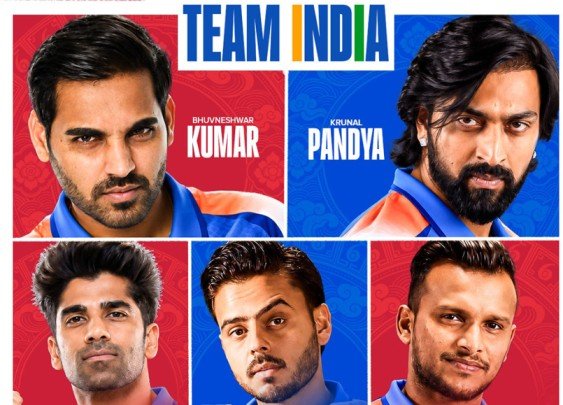
India squad for Hong Kong Sixes 2026
India have made a significant change to their squad for the Hong Kong Sixes 2026 tournament, with Bhuvneshwar Kumar missing out and Krunal Pandya taking over the captaincy. Left-arm fast bowler Kulwant Khejroliya has been named as Bhuvneshwar’s replacement for the six-a-side competition, scheduled to take place from October 30 to November 1.
Bhuvneshwar was originally expected to lead India in Hong Kong. However, his selection for India’s upcoming T20I assignments against New Zealand means he will not be available for the tournament. Krunal has now been handed the responsibility of leading the seven-member Indian squad, which will look to make a stronger impression after a disappointing campaign last year.
The change brings an experienced domestic and IPL campaigner into the team. Khejroliya, a left-arm fast bowler who has featured in the Indian Premier League, offers India another pace option in a format where wickets, variations and quick decision-making can make a decisive difference.
India’s updated squad for Hong Kong Sixes 2026
India will compete with a seven-member squad led by Krunal Pandya. The updated lineup includes a mix of established domestic performers and players with IPL experience.
India squad: Krunal Pandya (captain), Shashank Singh, Nitish Rana, Rahul Tewatia, Rahul Tripathi, T. Natarajan and Kulwant Khejroliya.
The squad has several players capable of changing a match within a few overs. Shashank Singh and Rahul Tewatia bring aggressive batting and all-round abilities, while Nitish Rana and Rahul Tripathi offer experience in pressure situations. T. Natarajan provides a left-arm pace option, with Khejroliya adding further variety to the bowling attack.
Krunal’s appointment is another important development. The all-rounder has experience leading teams in domestic cricket and the IPL, and his ability to contribute with both bat and ball could prove valuable in a competition where every player must make an impact quickly.
India will need more than individual talent, though. The short format rewards teams that adapt immediately, avoid unnecessary dot balls and use their limited overs efficiently.
Why Bhuvneshwar Kumar will miss the tournament
Bhuvneshwar’s absence is linked to his international commitments rather than a reported injury or a loss of place in the squad. The experienced swing bowler has been selected for India’s upcoming T20I series against New Zealand and is expected to remain with the senior national setup.
His inclusion in India’s plans is particularly notable because it marks a return to the international setup after an extended absence. Bhuvneshwar has built his reputation on his ability to move the new ball, control his line and length, and deliver under pressure at the death.
Those qualities could have made him a useful leader for India in Hong Kong. However, the national team’s schedule takes priority, leaving the selectors with the task of finding a replacement who can suit the demands of the six-a-side game.
Khejroliya now has an opportunity to make the most of that opening. His left-arm angle can create different challenges for batters, especially when they are trying to attack from the first delivery. In a format where conventional defensive plans rarely work for long, bowlers who can vary their pace and hit difficult lengths can be particularly effective.
For Bhuvneshwar, meanwhile, attention will turn to his international commitments and the chance to contribute to India’s T20I campaign.
India face a tough challenge after last year’s disappointment
India will be eager to put their previous Hong Kong Sixes campaign behind them. Last year’s team included experienced names such as Dinesh Karthik and Robin Uthappa, but India failed to progress beyond the group stage and suffered a disappointing defeat against Kuwait.
That result highlighted the unpredictable nature of the competition. A team can have players with impressive international and IPL records and still struggle if it fails to adjust to the six-over format.
Hong Kong Sixes is not simply a shortened version of a conventional T20 match. With only six players on each side and six overs available per innings, there is little time to recover from a slow start. Batters must identify scoring opportunities immediately, while bowlers need to think beyond simply maintaining a tight line.
India’s updated squad features active players who can approach the tournament with an aggressive mindset. The challenge will be turning individual experience into a coordinated team performance.
Krunal’s leadership will be crucial in that regard. He will have to manage bowling options carefully, identify favourable matchups and ensure that the team does not lose momentum after a wicket. In a competition this short, even one expensive over can change the outcome.
What makes Hong Kong Sixes different?
The Hong Kong Sixes is a fast-paced cricket tournament featuring six players per team and six overs per innings. The 2026 competition is scheduled for October 30 through November 1, with 12 teams expected to participate.
India have been placed in Group C alongside Pakistan and the United Arab Emirates. The India-Pakistan fixture on October 30 is expected to attract considerable attention, although the result will depend on how quickly both teams adapt to the unusual demands of the format.
The tournament’s rules encourage attacking cricket. Each side fields six players, and an innings lasts only six overs. A batter who reaches 50 runs must retire, allowing another batter to take over. This rule discourages one player from dominating the entire innings and gives more members of the batting lineup an opportunity to contribute.
The format also has a distinctive rule for the final wicket. If a team loses five wickets, its last batter continues batting, while the player dismissed fifth acts as a runner. This keeps the contest alive and can produce unusual finishes.
These conditions make strike rotation, boundary hitting and smart running between the wickets especially important. Bowlers must also be prepared to change their plans quickly because batters are likely to attack rather than wait for scoring opportunities.
Can Krunal Pandya lead India to a turnaround?
Krunal’s appointment gives India a fresh leadership option ahead of a tournament where tactical decisions carry unusual importance. His experience as an all-rounder should help him understand the balance between attacking with the bat and managing the bowling resources.
The presence of T. Natarajan and Kulwant Khejroliya also gives India two left-arm pace options, while the rest of the squad provides several possible combinations for aggressive batting and all-round contributions.
India’s first major challenge will be their group-stage meeting with Pakistan. A strong start could build confidence, but the team cannot afford to underestimate the UAE or any other opponent in a format known for sudden momentum shifts.
The immediate goal will be to improve on last year’s group-stage exit and give the squad a realistic chance of progressing further in the competition.
Bhuvneshwar Kumar’s withdrawal changes both the leadership structure and the bowling personnel, but it also creates an opportunity for Khejroliya to demonstrate his value on a prominent stage. Krunal, meanwhile, will be expected to bring clarity and composure to a team that needs to make every over count.
Follow ROKOCRICKET for the latest cricket news, squad updates, tournament previews and match analysis. Subscribe and stay tuned as India prepare for the Hong Kong Sixes 2026 and their highly anticipated clash with Pakistan.