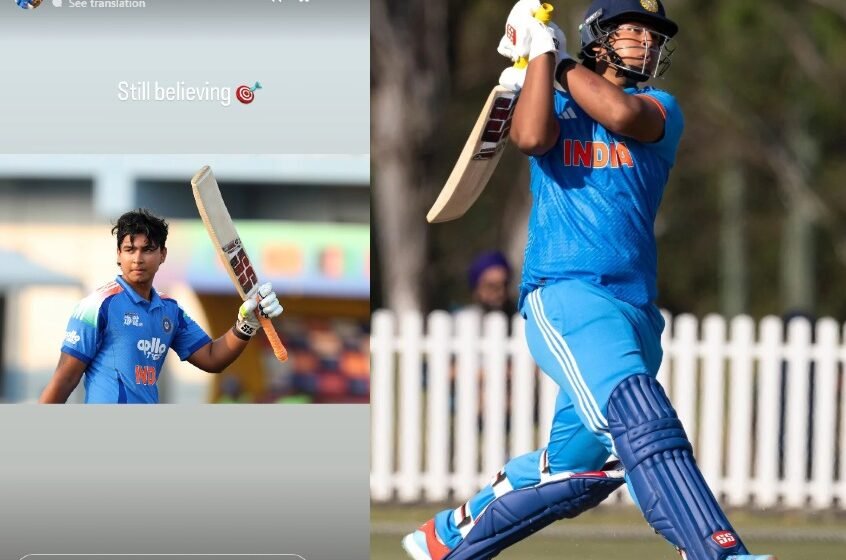

Vaibhav Sooryavanshi is still waiting for his opportunity in India’s T20I series against the West Indies, and his latest social media post has caught the attention of cricket fans. The 15-year-old opening batter, who has attracted considerable attention for his fearless approach to batting, has remained on the bench for the first four matches as head coach Gautam Gambhir and the team management have continued with Sanju Samson and Abhishek Sharma at the top of the order.
With the five-match series level at 2-2, the focus has shifted to India’s team selection for the decisive fifth T20I. Sooryavanshi’s chances of making his debut in the series have become a talking point, particularly after he shared a brief but suggestive message on social media: “still believing.”
The post did not directly mention his selection or the team management. However, its timing has encouraged fans to interpret it as a message of patience and determination while he waits for his chance to represent India on the field.
For a young cricketer hoping to establish himself at the international level, spending several matches outside the playing XI can be frustrating. Yet Sooryavanshi’s situation also highlights the difficult decisions facing India’s management as it balances the development of emerging talent with the demands of winning an important series.
Gautam Gambhir explains why Sooryavanshi must wait
Gambhir has made his position clear. The India head coach believes Sooryavanshi possesses exceptional potential, but he does not want the management to make unnecessary changes to a combination built around established performers.
Sanju Samson and Abhishek Sharma have been preferred as India’s opening pair, leaving Sooryavanshi without a place in the starting lineup. Gambhir’s explanation suggests that the decision is based on team balance, previous performances and the management’s confidence in players who have already delivered at the highest level.
Speaking about Samson, Gambhir pointed to the wicketkeeper-batter’s achievements and his ability to perform in major tournaments.
“Someone doesn’t become Player of the Tournament in the World Cup without having talent,” Gambhir said, explaining why Samson continues to command the team’s trust.
The coach also acknowledged how difficult selection decisions can become when talented players compete for limited positions. He explained that returning to a successful combination was important, rather than judging established players solely on a short run of disappointing performances.
Gambhir’s comments reflect a familiar challenge in international cricket. A player can possess enormous potential and still struggle to find a place when the team has experienced alternatives in the same role.
For Sooryavanshi, the message is straightforward: his opportunity will come, but he must remain prepared until the management decides the time is right.
Why Sanju Samson and Abhishek Sharma remain ahead
The competition for India’s opening positions is central to Sooryavanshi’s current situation. Samson brings international experience, wicketkeeping ability and a record of performing in high-pressure competitions. Abhishek, meanwhile, offers an aggressive approach that can put opposition bowlers under pressure during the powerplay.
Together, the pair provide a combination the team management has been reluctant to disrupt. Opening partnerships are particularly important in T20 cricket because teams have only 20 overs to build an innings, and the first six overs can significantly influence the final score.
Changing the opening combination is therefore not simply a matter of giving another player an opportunity. It can affect the batting order, the roles assigned to other players and the team’s overall strategy.
Gambhir’s argument is that a few failures should not automatically erase the contributions of players who helped India achieve success in major tournaments. That approach gives experienced cricketers time to regain form instead of placing them under immediate pressure after every disappointing innings.
However, the same policy creates a difficult situation for younger players. Without opportunities in the playing XI, they cannot demonstrate whether their skills will translate into international success.
Sooryavanshi’s supporters will naturally want to see him bat against international opposition. The management, on the other hand, must decide whether the final match is the right occasion to make that change.
Why Vaibhav Sooryavanshi’s wait matters
Sooryavanshi’s rise has generated excitement because of his age, confidence and attacking batting style. He represents the kind of young talent that can become an important part of India’s future if his development is managed carefully.
But potential and international readiness are not the same thing. Training with the senior team, observing experienced players and understanding international match preparation can all contribute to a youngster’s development, even when opportunities on the field are limited.
At the same time, match experience remains essential. Young batters learn how to respond to different bowling plans, pressure situations and changing conditions by facing them in actual games. A place in the playing XI would give Sooryavanshi a chance to experience those challenges firsthand.
The key question is whether India can provide that opportunity without compromising its immediate objectives. With the series tied 2-2, the final match carries additional importance. A victory would secure the series, while a defeat would leave the team with questions about its selections and execution.
That makes the management’s decision more complicated than a straightforward choice between an established player and a promising teenager.
VVS Laxman’s approach adds another dimension
Another point of interest is the difference in Sooryavanshi’s opportunities under VVS Laxman, who has coached India sides on occasions when Gambhir has been unavailable for other assignments.
The contrast has drawn attention because young players often benefit from different coaching approaches and selection priorities. One coach may prefer continuity and experience, while another may be more willing to experiment with emerging players in particular circumstances.
However, different selections do not necessarily indicate a disagreement between coaches. Team composition, the opposition, tournament objectives and player availability can all influence decisions.
In Gambhir’s case, his public explanation indicates that he values continuity and believes established performers should receive sufficient backing. That does not mean Sooryavanshi lacks the ability to succeed; it means the coaching staff has chosen to prioritise its preferred combination for the current series.
For the teenager, the challenge is to remain ready and make the most of any opportunity that eventually arrives.
Will Sooryavanshi play the fifth T20I?
The fifth and final T20I offers India one last chance to make a change during the series. With the contest level at 2-2, the management must weigh the benefits of maintaining its existing opening pair against the possibility of introducing Sooryavanshi.
His social media message has added another layer to the discussion, but it should not be treated as confirmation that he will play. Neither the phrase “still believing” nor the public debate surrounding his selection establishes what the final team will be.
If India retains Samson and Abhishek, Sooryavanshi will have to continue waiting. If the management decides to include him, the match could provide a valuable first opportunity to show what he can offer at this level.
Whatever the decision, his long-term progress should not be judged by a single selection call. Consistent preparation, patience and the ability to learn from senior teammates can be just as important as an immediate breakthrough.
For Indian cricket fans, the anticipation is understandable. Sooryavanshi has become a name many supporters want to see in action, but international selection remains a competition in which talent must meet the team’s requirements.
His “still believing” message may be brief, yet it captures the mindset required during such a wait. The next step depends on the team management, and the fifth T20I will reveal whether India is ready to give the young batter his opportunity.
Stay tuned with ROKOCRICKET for the latest India cricket news, team selection updates, match analysis and emerging-player stories. Subscribe and keep following the action as India prepares for the decisive clash against the West Indies.