Vaibhav Sooryavanshi set for India comeback as Ishan Kishan ruled out of 2nd T20I vs New Zealand
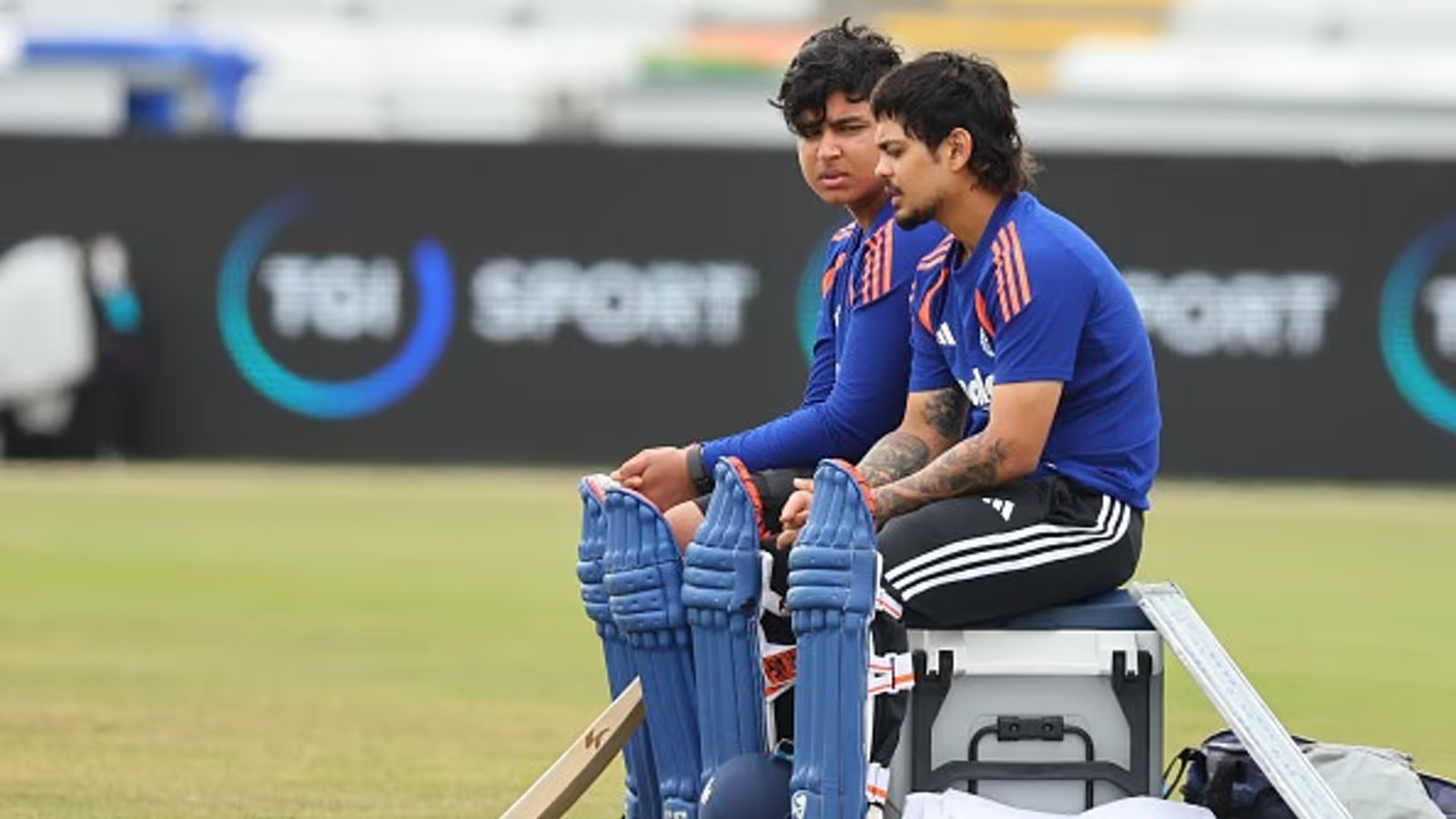
Vaibhav Sooryavanshi and Ishan Kishan ahead of India vs New Zealand 2nd T20I in Christchurch on October 24, 2026
India’s teenage batting sensation Vaibhav Sooryavanshi could finally get an opportunity in the playing XI after spending the last six matches on the bench. The 15-year-old is among the strongest contenders to replace Ishan Kishan, who has been ruled out of the second T20I against New Zealand due to a right adductor strain.
The second India vs New Zealand T20I will be played at Hagley Oval in Christchurch on October 24, 2026. India head into the contest with a 1-0 lead in the five-match series after securing a thrilling four-wicket victory in the opening match.
Kishan’s absence has opened the door for Sooryavanshi, whose explosive batting has attracted considerable attention since his international debut. India batting coach Sitanshu Kotak indicated that the youngster could come into the side if Kishan was unavailable, making him a leading candidate for Saturday’s encounter.
However, India’s final combination will depend on how the team management wants to structure its batting order.
Ishan Kishan injury opens the door for Vaibhav Sooryavanshi
The Board of Control for Cricket in India confirmed on Friday that Kishan would miss the second T20I after suffering a low-grade strain in his right adductor during the series opener. The medical team is monitoring his recovery, although no specific return date has been announced.
The injury also explains why Kishan did not bat at his usual No. 3 position in the opening match. Tilak Varma was promoted to No. 3, while Kishan came in at No. 5 after India lost a wicket.
The wicketkeeper-batter had a brief outing, scoring just one run off three deliveries before being dismissed by Mitchell Santner. His absence now leaves the management with an important selection decision ahead of the second match.
Speaking about the possible replacement, batting coach Kotak said Sooryavanshi could step in if Kishan was unable to play, describing the teenager as one of the strongest contenders.
That assessment has increased expectations of a return for the young left-hander, who has not featured in India’s playing XI since the Asian Games 2026 final against Pakistan.
For Sooryavanshi, this could be an important opportunity to demonstrate that he can make an impact at international level, even when the conditions and demands of the match are unfamiliar.
Why has Vaibhav Sooryavanshi been sitting on the bench?
Despite his impressive performances, Sooryavanshi has struggled to find a regular place in India’s T20I side because of the form of the established opening pair.
Abhishek Sharma and Sanju Samson have continued to deliver at the top of the order, leaving the team management with little reason to make an unnecessary change. Both batters played important roles in India’s successful chase in Christchurch.
Samson was the standout performer in the first T20I, smashing 67 runs off just 33 balls. Abhishek also provided an aggressive start, scoring 29 off 12 deliveries.
Their performances helped India chase down New Zealand’s target of 226 runs with four wickets and two balls remaining.
With the opening combination performing well, captain Shreyas Iyer had previously indicated that Sooryavanshi would need to wait for his opportunity.
Iyer explained that the teenager was still very young and would have further chances to establish himself. He also pointed out that the regular openers had been scoring consistently, making immediate changes difficult.
The captain’s comments reflected India’s challenge of balancing a promising young talent with the need to maintain a winning combination.
Kishan’s injury has now created an opening that was not available during the previous matches. Nevertheless, Sooryavanshi’s inclusion is not simply about replacing an injured player. The management must also decide where he fits into the batting order.
If selected, the teenager could return to the opening position, potentially requiring another adjustment elsewhere in the lineup.
Vaibhav Sooryavanshi’s T20I record shows his explosive potential
Sooryavanshi has already made an encouraging start to his international career. Since making his T20I debut against England in July 2026, the youngster has demonstrated an ability to score quickly and put pressure on opposition bowlers.
In eight T20I appearances, he has accumulated 246 runs at an average of 30.75 and a strike rate of 186.36. His tally includes two half-centuries, 22 boundaries and 18 sixes.
These numbers underline his aggressive approach in the shortest format. His high strike rate is particularly valuable in modern T20 cricket, where teams increasingly look for batters who can accelerate from the beginning of an innings.
However, international cricket presents a different challenge from domestic and age-group competitions. Bowlers can exploit unfamiliar conditions, vary their pace and target weaknesses more consistently.
The New Zealand tour could therefore provide Sooryavanshi with valuable experience if he gets an opportunity. Playing on overseas pitches would help him develop his understanding of bounce, movement and match situations.
For India, the decision is also about preparing a young batter for the future without putting unnecessary pressure on him to deliver immediately.
Asian Games success strengthened Sooryavanshi’s case
Sooryavanshi’s last appearance for India came during the Asian Games 2026 campaign, where he opened the innings alongside Abhishek Sharma.
He scored 38 runs against Sri Lanka in the semifinal before making 15 in the final against Pakistan. India went on to win the gold medal, giving the teenager another significant achievement early in his career.
Those performances demonstrated that the team management had already trusted him in important matches. His aggressive style also offered India an alternative opening option alongside its established batters.
Since then, however, he has remained outside the playing XI during the five-match T20I series against the West Indies and the opening game against New Zealand.
His prolonged absence has inevitably raised questions about how India intends to manage his development while maintaining a settled top order.
The second T20I could offer an answer, although selection alone will not determine his long-term place in the side.
If Sooryavanshi plays, the focus will be on how he handles the New Zealand attack and whether he can translate his natural attacking instincts into an effective international innings.
India vs New Zealand 2nd T20I: What to expect
India will aim to extend their series lead to 2-0 when the teams return to Christchurch on Saturday. After successfully chasing 226 in the opening match, the visitors have already demonstrated their ability to handle a demanding target under pressure.
New Zealand, meanwhile, will look to address the bowling issues that allowed India to complete the chase. Restricting Abhishek Sharma and Sanju Samson during the powerplay could be crucial if the hosts want to level the series.
India’s batting combination will be one of the biggest talking points before the match. While Kishan’s injury has forced a change, the management must decide whether to bring in Sooryavanshi directly or rearrange the middle order to maintain its preferred balance.
The teenager’s selection would also give India an opportunity to assess another opening option in overseas conditions, potentially providing useful experience for future international assignments.
The remaining matches are scheduled for October 27 in Wellington, October 30 in Auckland and November 1 in Hamilton.
For now, Sooryavanshi’s potential inclusion is the major talking point ahead of the second T20I. After six consecutive matches on the sidelines, the youngster could finally get the chance to showcase his talent again.
Will Vaibhav Sooryavanshi make the most of this opportunity if he gets the nod against New Zealand? Stay tuned to ROKOCRICKET for the latest India cricket team news, playing XI updates, match previews and live cricket developments.