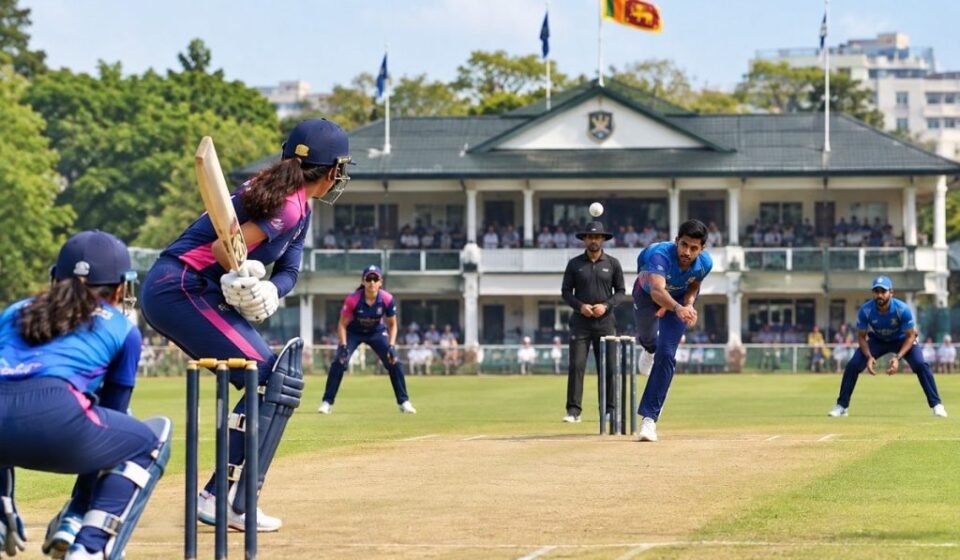

A new chapter in cricket is set to begin in Sri Lanka this November, with the launch of Test Twenty, an innovative format designed to bring boys’ and girls’ cricket together on one scoreboard. The inaugural tournament will be held at the Sinhalese Sports Club (SSC) in Colombo from November 14 to 29, introducing a competition in which the performances of both teams contribute equally to the final result.
The concept offers a fresh approach to the traditional structure of cricket. Instead of competing separately for individual team victories, boys’ and girls’ sides representing the same continent will work towards a shared target. Their combined runs will determine whether their team wins or loses, making cooperation between the two squads a central part of the competition.
According to the tournament announcement, 160 young cricketers from across the world will take part in the inaugural edition. The players will be divided into four continental teams, with each squad comprising 20 boys and 20 girls. The organisers describe Test Twenty as cricket’s fourth format, with a focus on equal participation, international exposure and opportunities for emerging talent.
How the new Test Twenty cricket format will work
The defining feature of Test Twenty is its combined scoring system. In each match, the girls’ XI will face the opposing girls’ XI, while the boys’ XI will play against the corresponding boys’ side. However, the runs scored by both groups will be added together to produce a single team total.
This means neither the boys’ nor the girls’ team can win the overall contest independently. Both performances will carry equal weight in determining the outcome.
The format also introduces what the organisers call the Parity Rule. Under this system, runs scored by one group directly influence the result of the other group’s match through the combined team score. A strong performance by either XI can therefore make the difference between victory and defeat for the entire continental team.
For young players, the concept presents a different kind of responsibility. A batter’s contribution, a bowler’s spell or a crucial fielding effort will matter beyond the immediate contest on the field. Every run becomes part of a wider team effort, creating an incentive for both squads to support one another throughout the match.
The toss will also have an additional role. Besides deciding which team bats first, it will determine whether the girls’ match or the boys’ match is played first.
Red-ball cricket in daylight, white-ball action under floodlights
One of the most distinctive elements of Test Twenty is the way each match will move between two playing conditions within a single day.
Every match will consist of 80 overs, divided into two 40-over sessions. The opening session will take place in daylight, with players wearing traditional white clothing and using a red ball. The second session will be played under floodlights, with coloured kits and a white ball.
The change is intended to bring two familiar styles of cricket into one competition while giving the tournament its own identity. The first half will have the traditional appearance of red-ball cricket, while the floodlit session will introduce the look and feel associated with white-ball matches.
Importantly, the scores will carry forward from the first session into the second. There will be no reset when the format switches from red-ball to white-ball cricket. Every run scored across both sessions will count towards the final combined total.
The structure could make the closing overs particularly important. A team that establishes an early advantage will still need to maintain its performance under lights, while a side trailing on the scoreboard will have an opportunity to reduce the gap during the second session.
For spectators, the format promises a changing atmosphere during the same match. It also presents a demanding challenge for players, who must adjust to different conditions while keeping the team’s overall objective in sight.
Colombo to host the inaugural tournament
The Sinhalese Sports Club in Colombo will provide the setting for the first Test Twenty tournament. The opening ceremony is scheduled for November 14, with the final set for November 29. November 30 has been kept as a reserve day.
All matches are scheduled to be broadcast live on Sony Sports Network, giving the competition a television platform as it introduces the new format to cricket audiences.
Sri Lanka’s selection as host is significant for a tournament built around the development of young cricketers. School cricket has a strong following across the island, and the organisers believe the country’s enthusiasm for the game makes it a suitable location for the inaugural edition.
Test Twenty founder Gaurav Bahirvani expressed his gratitude to Sri Lanka Cricket and the SSC for supporting the tournament and welcoming young players from different parts of the world.
Bahirvani said the project began as an idea intended to give young cricketers a format and competition of their own. He also highlighted the organisers’ commitment to giving girls’ cricket an equal place in the event, including opportunities to play under floodlights during prime-time broadcast slots.
Under the proposed schedule, some evenings will feature the girls’ teams in the spotlight, while others will showcase the boys. The central principle, however, will remain unchanged: both sides contribute to the same result.
160 players selected from a global talent pool
The inaugural tournament has been designed as an international showcase for emerging cricket talent. According to the announcement, thousands of young cricketers from five continents put themselves forward for consideration.
The selection process has included on-ground and online trials conducted over approximately 300 days. The tournament’s Global Selection Committee has subsequently selected the players who will form the competition’s first group of participants.
The committee is chaired by Rajkumar Sharma, the Indian coach widely known for his role in developing Virat Kohli during his formative years. The final player draft, scheduled for later in October, will determine the allocation of the 160 selected cricketers across the four continental teams.
The final squads will comprise 80 girls and 80 boys, establishing an equal split between male and female participants from the outset.
The project also has an advisory board featuring former South African captain AB de Villiers, former Australian batter Matthew Hayden and former West Indies captain Sir Clive Lloyd. Mike Fordham is leading tournament operations.
The involvement of experienced figures from different cricketing backgrounds gives the initiative a mix of playing, coaching and administrative experience. However, the tournament’s long-term impact will ultimately depend on the opportunities it creates for participants and the support it receives from broadcasters, cricket authorities and audiences.
Can Test Twenty create a new pathway for young cricketers?
The launch of a new cricket format naturally raises questions about its future. Test Twenty will need to establish its identity, attract a consistent audience and demonstrate that its structure can provide meaningful opportunities for young players.
Its combined scoring system is the most significant departure from conventional cricket. By tying the boys’ and girls’ performances together, the format aims to make equality part of the competition itself rather than treating it as a separate initiative.
The model could also encourage greater attention towards young female cricketers, particularly if the tournament delivers on its promise of prominent broadcast exposure. Regular television coverage can help emerging players build recognition, while international competition can provide valuable experience against unfamiliar opponents.
At the same time, the first edition will be an important test of the format’s practical appeal. Viewers will need to understand the combined scoreboard and Parity Rule, while players and coaching staff will have to adapt their strategies to a structure in which individual and collective performances are closely connected.
The tournament’s organisers will be hoping that the unusual format creates excitement without losing the qualities that make cricket compelling: skill, pressure, tactical decisions and competitive spirit.
For now, the focus is on November’s opening event in Colombo. With 160 players, four continental teams and a format that combines boys’ and girls’ performances into one result, Test Twenty is preparing to make its first appearance on the international cricket calendar.
Whether it becomes a lasting addition to the sport will take time to establish. Its debut, however, will give cricket fans their first opportunity to see how the concept works in competitive conditions.
Stay tuned to ROKOCRICKET for the latest cricket news, tournament updates, emerging talent stories and developments from the world of sports. Subscribe to follow the journey of Test Twenty as the countdown to its inaugural tournament in Sri Lanka continues.