Muhammad Mokaev calls out Dana White over Farid Basharat UFC exit controversy
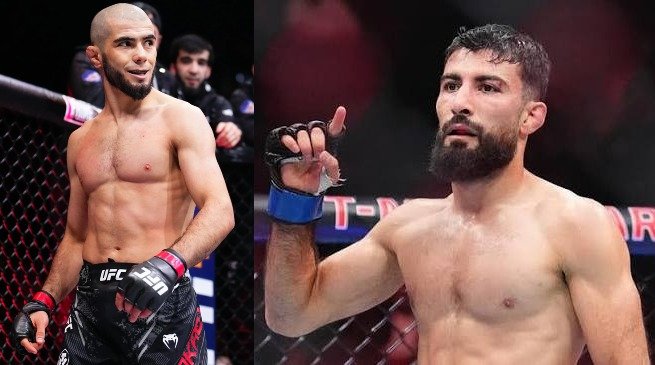
Muhammad Mokaev criticizes the UFC over Farid Basharat’s departure despite his undefeated 7-0 Octagon record.
Muhammad Mokaev has reignited his feud with the UFC after defending Farid Basharat following the promotion’s decision not to re-sign the undefeated bantamweight. Mokaev believes the way the UFC handles fighter departures can damage reputations and potentially make it harder for athletes to secure contracts with rival promotions.
Basharat left the UFC despite compiling a 7-0 record inside the Octagon, raising questions about why an unbeaten fighter would not receive a new deal. UFC CEO Dana White suggested there was “definitely a reason” behind the decision but denied that Basharat’s fighting style was responsible.
The controversy has struck a personal chord with Mokaev, who also experienced an unexpected UFC departure despite maintaining an unbeaten professional record. The British-Dagestani fighter believes that successful athletes should be judged on their performances rather than being subjected to public criticism that could affect their future opportunities.
His comments have reopened a wider debate about the balance between competitive success, entertainment value and business decisions in mixed martial arts.
Muhammad Mokaev questions the UFC’s treatment of fighters
Mokaev took to X to express his frustration with what he considers an unfair approach to fighters leaving the promotion. His central argument was that the UFC should be free to release athletes but should avoid making statements that could harm their professional reputations.
“Release fighters if you want. Just don’t try to damage their careers on the way out,” Mokaev said.
He also raised concerns about reports of fighters being warned that their wrestling-heavy approach could put their UFC positions at risk.
“If you keep wrestling like that, you’re going to get cut,” Mokaev wrote, describing the kind of message fighters were allegedly receiving.
The criticism touches on one of MMA’s longstanding debates: how much should a promotion influence the way its athletes compete?
Wrestling is a fundamental part of mixed martial arts. Fighters use takedowns, positional control and ground grappling to neutralize opponents and win rounds. However, prolonged periods of control without frequent striking exchanges can sometimes draw criticism from spectators who prefer fast-paced action.
From a competitive perspective, effective wrestling can be a major advantage. From an entertainment perspective, some matchups may be less appealing when one fighter consistently prioritizes control over damage.
Mokaev believes those competing interests should not result in fighters being pressured to abandon an effective strategy simply to satisfy audience expectations.
His argument is not that the UFC must retain every successful athlete. Instead, he wants fighters to have the freedom to compete according to their strengths without fearing that their approach could jeopardize their careers.
Farid Basharat’s 7-0 UFC record raises questions
Basharat’s departure has attracted attention because of his undefeated record in the UFC. A 7-0 run inside the Octagon is a significant achievement in a competitive division, particularly for a bantamweight seeking to establish himself among the sport’s leading contenders.
An unbeaten record does not automatically guarantee a new contract, however. Promotions also consider matchmaking, commercial appeal, contractual circumstances, future plans and other factors that may not be visible to the public.
White’s comments added another layer to the situation. While the UFC chief indicated that a specific reason existed for the decision, he reportedly rejected the suggestion that Basharat’s fighting style was responsible.
That distinction matters. Mokaev’s criticism centres on the broader treatment of departing fighters, while the precise circumstances behind Basharat’s exit remain important to understanding the individual case.
Without a complete public explanation, it would be premature to conclude that Basharat was released because of his wrestling, his attitude or any other specific factor.
Nevertheless, the decision has prompted fans to question how the UFC evaluates undefeated prospects and whether a strong competitive record carries the same weight as other considerations when contracts are discussed.
For Basharat, the immediate priority will be finding a new opportunity where he can continue developing his career and competing against high-level opposition.
Ali Abdelaziz defends Basharat’s record and professionalism
Basharat’s manager, Ali Abdelaziz, has also pushed back against suggestions that the fighter was unwilling to accept challenging assignments.
According to Abdelaziz, Basharat accepted the opponents offered to him and behaved like a “company guy” throughout his UFC tenure.
The manager also highlighted a 2024 fight in which Basharat reportedly faced an opponent who missed the contracted weight limit by 10 pounds. Abdelaziz used the example to challenge any suggestion that his fighter had avoided difficult circumstances.
Weight misses can create serious competitive disadvantages. A fighter who makes the agreed limit may enter the cage against an opponent who has failed to meet the same requirement, potentially affecting fairness and preparation.
Abdelaziz’s defence is therefore central to the discussion surrounding Basharat’s professional reputation. His position is that the fighter demonstrated a willingness to compete and should not be portrayed as difficult without a clear explanation.
However, the competing claims should be distinguished from established facts. The manager’s account represents Basharat’s side of the dispute, while the UFC has not publicly provided a complete explanation of every consideration behind its decision.
The disagreement illustrates how quickly a contract decision can develop into a public debate about a fighter’s character, professionalism and future prospects.
Mokaev’s own UFC exit adds context to the controversy
Mokaev is particularly outspoken about the issue because his own relationship with the UFC ended in 2024, despite his unbeaten professional record.
At the time, his departure generated considerable discussion among MMA fans. His exit demonstrated that an undefeated record alone does not guarantee a long-term place on the UFC roster.
Since moving on, Mokaev has continued to build his reputation outside the promotion. His experience has shaped his criticism of how fighters are evaluated and how public statements can influence perceptions of athletes after they leave.
That history also explains why he sees parallels between his situation and Basharat’s departure.
Still, the two cases should not automatically be treated as identical. Contract negotiations, relationships with promotion officials and other circumstances can differ significantly from one fighter to another.
Mokaev’s broader point is about the consequences of public narratives. In a sport where athletes depend on promoters, managers, sponsors and rival organizations for future opportunities, reputational damage can become a genuine professional concern.
A fighter who leaves the UFC may seek contracts with another major promotion or compete on regional circuits while working toward a return to the highest level. How potential employers perceive that fighter can influence the opportunities available.
For that reason, Mokaev believes promotions should exercise caution when discussing athletes who are no longer under contract.
Dana White and the wider debate over UFC business decisions
The UFC operates in a competitive entertainment market, and its decisions are shaped by more than wins and losses. Matchmaking, audience interest, broadcast considerations and long-term roster planning can all influence how a promotion manages its fighters.
That creates an ongoing tension between sporting merit and commercial priorities.
Supporters of the UFC’s business model argue that the promotion must make difficult roster decisions to maintain a competitive product. An unbeaten record is impressive, but it does not necessarily mean a fighter will receive a new contract or a particular level of promotional support.
Critics, meanwhile, argue that athletes should receive greater transparency when major career decisions are made. They also believe public comments from powerful executives can carry consequences beyond the immediate dispute.
Mokaev’s concerns about wrestling highlight another complication. Grappling-heavy fighters may use strategies that maximize their chances of winning but do not always produce the kind of action casual viewers expect.
There is a difference, however, between encouraging entertaining performances and suggesting that athletes could lose their jobs for using a legitimate part of the sport. Whether such pressure occurred in the circumstances described by Mokaev remains an allegation rather than an established explanation for Basharat’s exit.
The controversy also raises questions about how much control fighters have over their professional identities. Promotions can decide whom to sign, but an athlete’s reputation often follows them long after a contract ends.
What happens next for Farid Basharat?
Basharat’s next move will determine how quickly he can return to competition and continue building his record. His unbeaten run gives him a compelling starting point when approaching potential employers, although his next contract will depend on the opportunities available and the terms offered.
Other MMA promotions could provide a platform for him to maintain momentum, test himself against new opponents and demonstrate his value outside the UFC system.
For Mokaev, the controversy has provided another opportunity to challenge the promotion that once employed him. His comments are likely to resonate with fighters who believe contractual decisions should remain separate from public judgments about their character.
At the same time, the debate will not be settled by social media statements alone. More clarity about Basharat’s departure would help establish whether the criticism reflects the circumstances of his individual case or a broader problem within the sport.
For now, the key question remains whether an undefeated record and a reputation for professionalism are enough to secure opportunities at the highest level of MMA.
Stay tuned to ROKOCRICKET for more breaking combat sports news, fighter updates and the latest developments from the UFC. Subscribe to stay informed as the Farid Basharat controversy continues to unfold.