Jason Gillespie Makes Shocking PCB Claim: ‘Thousands of Dollars Still Unpaid’
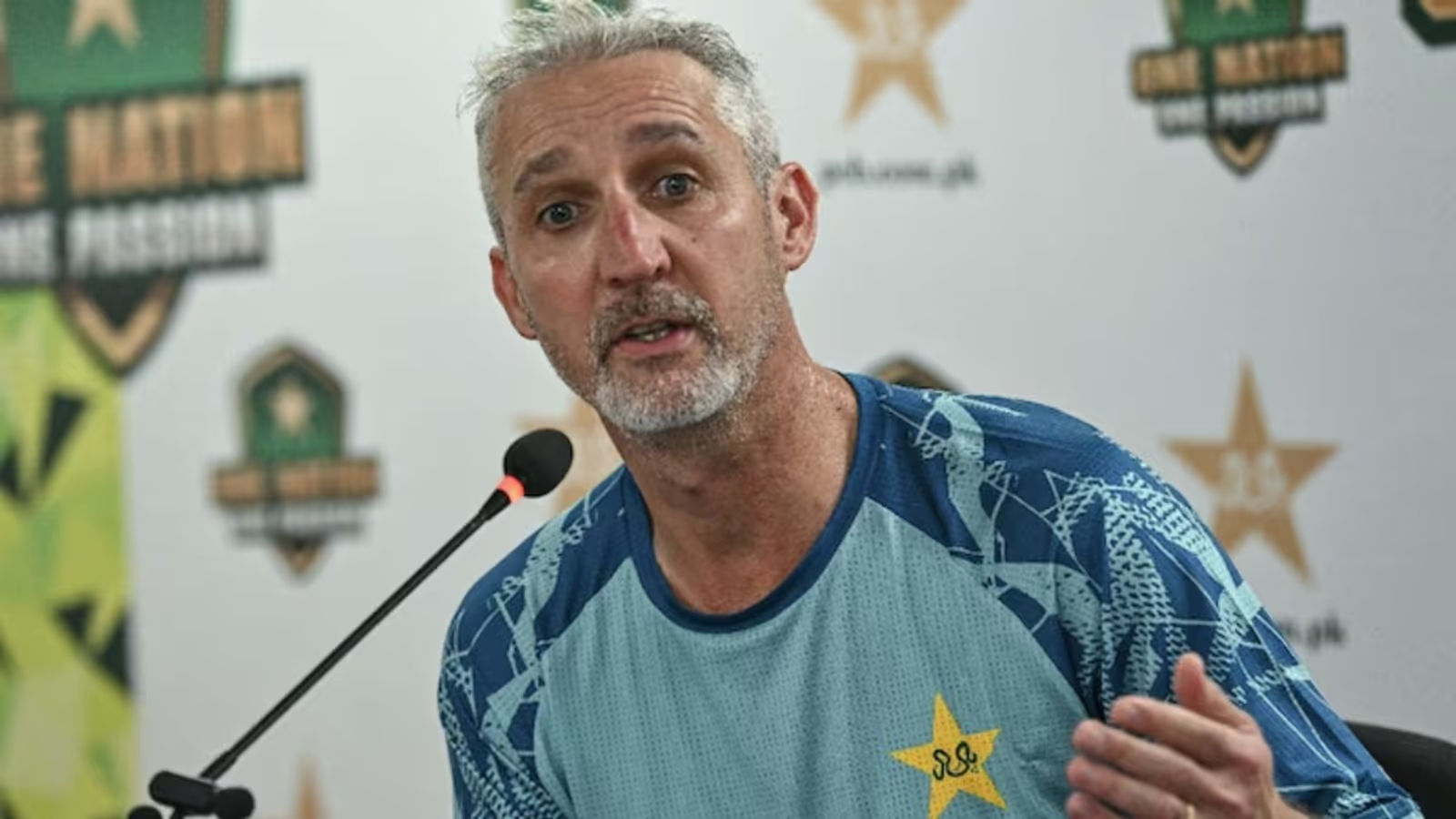
Jason Gillespie during his tenure as Pakistan Test coach amid his claims against the PCB
Former Pakistan Test coach Jason Gillespie has opened up about his difficult experience with the Pakistan Cricket Board (PCB), and his latest comments have certainly raised eyebrows. Gillespie claims that the board still owes him thousands of dollars, despite the fact that he left his position nearly two years ago.
The former Australia fast bowler was Pakistan’s Test head coach from April to December 2024. His stint, however, ended well before the completion of his contract. Gillespie has now revealed more details about what happened behind the scenes, saying he felt disrespected and undermined during his time with the Pakistan team.
According to Gillespie, remaining silent could have helped him keep the job and continue receiving payments. But that was never an option for him.
For Gillespie, apparently, saying yes to everything was not part of the coaching manual.
Jason Gillespie Says PCB Still Owes Him Thousands of Dollars
Speaking to The Telegraph, Gillespie claimed that the PCB has still not settled all of the money owed to him.
The Australian reportedly said that thousands of dollars remain outstanding, even though his association with Pakistan cricket ended in 2024.
Gillespie also made it clear that he would not compromise his principles simply to protect his position or secure his payments.
He explained that he has never been someone who simply agrees with everything put in front of him. According to the former Pakistan coach, maintaining his principles was more important than keeping his job.
That stance, he believes, ultimately played a role in the end of his time with Pakistan.
The comments give a fascinating glimpse into the problems Gillespie says he encountered away from the cricket field. While Pakistan’s results during his tenure attracted plenty of attention, the former coach suggests that the bigger problems were related to the way the team and cricket operations were being managed.
‘If I Had Stayed Quiet, I Would Have Kept Getting Paid’
Perhaps the most striking part of Gillespie’s comments was his suggestion that staying quiet could have changed the outcome.
The former Australia international believes that if he had simply accepted the situation and avoided speaking out, he might have remained in the job and continued earning money.
But Gillespie says doing that would have gone against everything he had stood for throughout his career.
That is where the story gets particularly interesting.
Coaching international cricket is not just about tactics, team selection and preparing players for the next match. Coaches also have to deal with boards, administrators and different opinions behind the scenes.
Gillespie’s version of events suggests that his relationship with the PCB became increasingly difficult because he was unwilling to simply nod along.
He also claimed that he eventually realised his contract would not run its full course.
For a coach who had arrived with considerable expectations, the early departure was clearly a frustrating conclusion.
Gillespie Says He Was ‘Disrespected and Undermined’
Gillespie did not stop at the issue of unpaid money.
The former Pakistan coach also spoke about the personal impact of his experience.
He claimed that he was disrespected and undermined during his time with the Pakistan setup. Gillespie specifically mentioned former Pakistan coach and selector Aaqib Javed while discussing the experience.
According to Gillespie, what happened affected him so deeply that it made him question whether he wanted to remain involved in coaching.
That is a significant admission from someone who spent years at the highest level of international cricket.
Gillespie said the experience shook him and affected him mentally. He even reached a point where he began questioning himself and wondering whether he should continue working in the game.
For any professional coach, that kind of situation can be extremely difficult.
It also shows that the disagreement was not simply a routine difference of opinion between a coach and a cricket board. At least from Gillespie’s perspective, the experience became much more personal.
Why Did Jason Gillespie Leave Pakistan Cricket?
Gillespie’s Pakistan tenure began with optimism.
The former fast bowler was appointed Test coach as Pakistan looked to rebuild its red-ball cricket setup. Gillespie brought significant international experience to the position, having played a major role in Australia’s highly successful Test side.
However, his time in Pakistan eventually became complicated.
The Australian had reportedly been unhappy with several aspects of the cricketing structure and decision-making process. His relationship with the PCB deteriorated, and he eventually stepped away before his contract was completed.
The latest comments suggest that Gillespie believes his willingness to challenge decisions contributed to his departure.
Whether the PCB agrees with his version of events is another matter.
At this stage, Gillespie’s comments represent his account of what happened, and the PCB’s perspective would be needed for a complete picture.
Gillespie Was One of Australia’s Best Fast Bowlers
Long before becoming a coach, Gillespie built an impressive reputation as one of Australia’s leading fast bowlers.
He played 71 Tests for Australia, taking 259 wickets at an average of 26.13. In 97 ODI appearances, he claimed another 142 wickets.
During Australia’s dominant era in international cricket, Gillespie formed part of a formidable bowling attack.
His experience of international cricket eventually led him into coaching, where he worked with teams and players in different parts of the world.
That background made his appointment as Pakistan’s Test coach an intriguing move.
But his time in Pakistan ended far earlier than expected.
Pakistan Cricket Again Faces Questions Over Administration
Gillespie’s latest comments are likely to reignite debate around the administration of Pakistan cricket.
The country has produced some of the most naturally talented cricketers in the world, but its cricketing structure has frequently faced criticism for instability, frequent leadership changes and disagreements between coaches, players and administrators.
A coach leaving before completing his contract is not unusual in international sport. However, claims involving unpaid money and allegations of disrespect naturally attract much more attention.
The financial aspect will particularly interest fans because Gillespie says the PCB still owes him thousands of dollars.
If the matter remains unresolved, it could become another unwanted talking point for Pakistan cricket.
The Bigger Question: What Went Wrong?
Perhaps the biggest takeaway from Gillespie’s comments is not the money itself.
It is the former coach’s description of how the experience affected him.
Gillespie had already spent years dealing with the pressure of international cricket as a player. Yet he says his Pakistan experience left him questioning his future in coaching.
That tells us just how difficult the situation became from his point of view.
The former fast bowler has made it clear that he does not regret standing by his principles. His message is essentially that keeping quiet might have been financially beneficial, but it would have come at the cost of compromising his values.
Now, nearly two years after leaving Pakistan cricket, Gillespie has decided to speak publicly about his experience.
Whether the PCB responds to his claims could determine whether this story ends here—or becomes another chapter in the long-running debate over the management of Pakistan cricket.
For now, one thing is certain: Jason Gillespie’s time with Pakistan may have ended in 2024, but the fallout from that relationship is still very much alive.