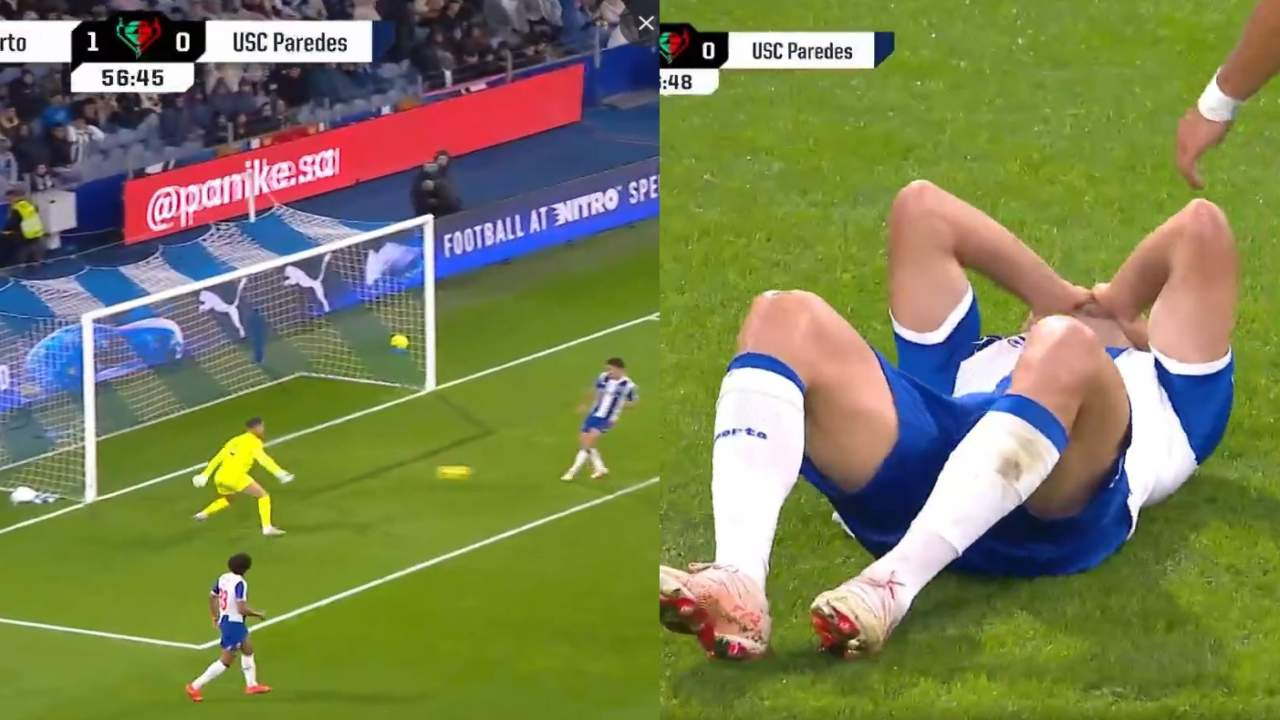
FC Porto’s Portuguese Cup encounter against third-division side USC Paredes took an extraordinary turn after defender Francisco Moura scored a bizarre own goal that left fans questioning what had happened at Estádio do Dragão. The shocking 57th-minute incident quickly went viral on social media, with some supporters making match-fixing allegations and demanding an investigation.
What should have been a routine cup fixture for Porto suddenly became a night of controversy, emotion and unexpected drama. Moura’s unfortunate mistake allowed Paredes to level the score at 1-1, putting the Portuguese giants under pressure in a match they were widely expected to control.
However, despite the online speculation, there has been no established evidence that the incident involved match-fixing. The goal was widely discussed as an inexplicable defensive error, and the distinction between fan allegations and proven wrongdoing is important.
Francisco Moura own goal: what happened against USC Paredes?
The incident occurred in the 57th minute of the fourth-round Portuguese Cup fixture on November 20, 2026. Porto had taken the lead through Seko Fofana, who found the net in the 41st minute after the home side created an attacking opportunity.
Paredes, however, refused to surrender. The third-tier side continued looking for an equaliser and created problems for Porto’s defence.
During one attacking move, Paredes forward Erik Santana directed an effort towards goal. Porto goalkeeper Cláudio Ramos managed to stop the initial attempt, but the ball remained dangerous inside the penalty area.
Francisco Moura attempted to intervene and clear the danger. Unfortunately for the Porto defender, his attempted clearance sent the ball into his own net, leaving Ramos with no chance of preventing the equaliser.
The score became 1-1, and the atmosphere inside Estádio do Dragão changed immediately.
The own goal was particularly difficult for Moura to accept. The defender appeared devastated, broke down in tears and asked to be substituted. Players from both teams offered words of comfort, while supporters inside the stadium responded with applause.
Moura eventually left the pitch in the 70th minute, with Jan Bednarek replacing him. The reaction from the crowd demonstrated that even in a high-pressure competitive environment, supporters recognised the emotional impact of such a difficult moment.
Match-fixing claims emerge after Francisco Moura’s viral mistake
The unusual nature of the own goal quickly made it a major talking point across social media.
Clips of the incident circulated online, with football fans expressing disbelief at how a Porto defender could put the ball into his own net in such circumstances. Some users described the incident as suspicious, while others demanded that football authorities investigate what happened.
The phrase “match-fixing” also appeared in online discussions, with some supporters questioning whether the mistake was intentional.
However, there is an important distinction between social media speculation and an established allegation supported by evidence.
At the time of writing, no verified evidence has established that Francisco Moura deliberately scored the own goal. Nor is there confirmed information establishing that authorities have opened a match-fixing investigation into the incident.
An unusual mistake, even one that looks extraordinary when replayed, does not automatically indicate wrongdoing.
For that reason, the incident should be understood as a controversial and widely discussed own goal rather than a proven match-fixing scandal.
Portuguese coverage also focused on the extraordinary nature of the error and the emotional reaction of the player, rather than establishing any wrongdoing.
Cláudio Ramos saves Porto with three penalty stops
While Francisco Moura’s own goal dominated the post-match conversation, Cláudio Ramos eventually became Porto’s biggest hero.
Neither side managed to find another goal during the remaining regular time. The match went into extra time, where both teams continued searching for a winner.
Paredes deserve credit for their performance. Despite competing against one of Portugal’s biggest clubs, the third-division outfit showed determination and organisation throughout the contest.
Porto struggled to put the tie beyond their opponents, and the match eventually went to a penalty shootout after 120 minutes of football.
That was when Cláudio Ramos produced a decisive performance.
The Porto goalkeeper saved three penalties to help his team secure a 3-1 victory in the shootout. His saves prevented an embarrassing cup exit and ensured that the Portuguese giants progressed to the next round.
Ramos’ contribution was especially important because Porto had failed to settle the contest during open play despite their advantage in quality and resources.
Porto face questions despite progressing in the competition
The result was a major relief for Porto, but the performance raised questions about the team’s ability to handle an opponent from a lower division.
Under manager Francesco Farioli, Porto entered the competition with an impressive domestic record. Their struggles against Paredes made the contest considerably more complicated than expected.
Seko Fofana provided the breakthrough, but Porto could not maintain their advantage. Moura’s own goal became the defining moment, while the team’s inability to score during extra time meant they had to depend on a penalty shootout.
For Paredes, the result was disappointing, but their performance will remain a memorable part of their Portuguese Cup campaign.
The third-division club pushed a major Portuguese football institution to the limit and came close to producing one of the competition’s biggest surprises.
Porto, meanwhile, secured their place in the round of 16, where they were scheduled to face the winner of the Union Leiria versus Leça tie between December 15 and 17.
Francisco Moura incident puts pressure on social media discussions
The Francisco Moura own goal is another reminder of how quickly an individual mistake can become a major talking point in modern football.
Social media platforms allow match footage to reach millions of viewers within minutes. A single unusual moment can generate thousands of reactions, comparisons and accusations before the full context of the incident is understood.
For a professional footballer, an own goal of this nature can be particularly difficult to process. Defenders regularly face split-second decisions inside their own penalty area, where even a slight misjudgment can produce an unfortunate result.
Moura’s emotional reaction showed just how painful the moment was for him.
The support he received from teammates, opponents and Porto supporters was equally significant. Rather than allowing the incident to define the entire evening, the football community also recognised the human side of the game.
Whether the video continues to attract attention or not, it is important that unverified match-fixing claims are not presented as established facts.
For now, the confirmed story remains straightforward: Francisco Moura scored an unfortunate own goal, Porto were taken to penalties by Paredes, and Cláudio Ramos rescued the Portuguese giants with three crucial saves.
The incident has certainly become one of the most talked-about moments of the latest Portuguese Cup round.
Stay tuned with ROKOCRICKET for more breaking football news, viral sporting moments, match reports and the latest updates from the world of sports. Don’t forget to subscribe and follow us for more updates.