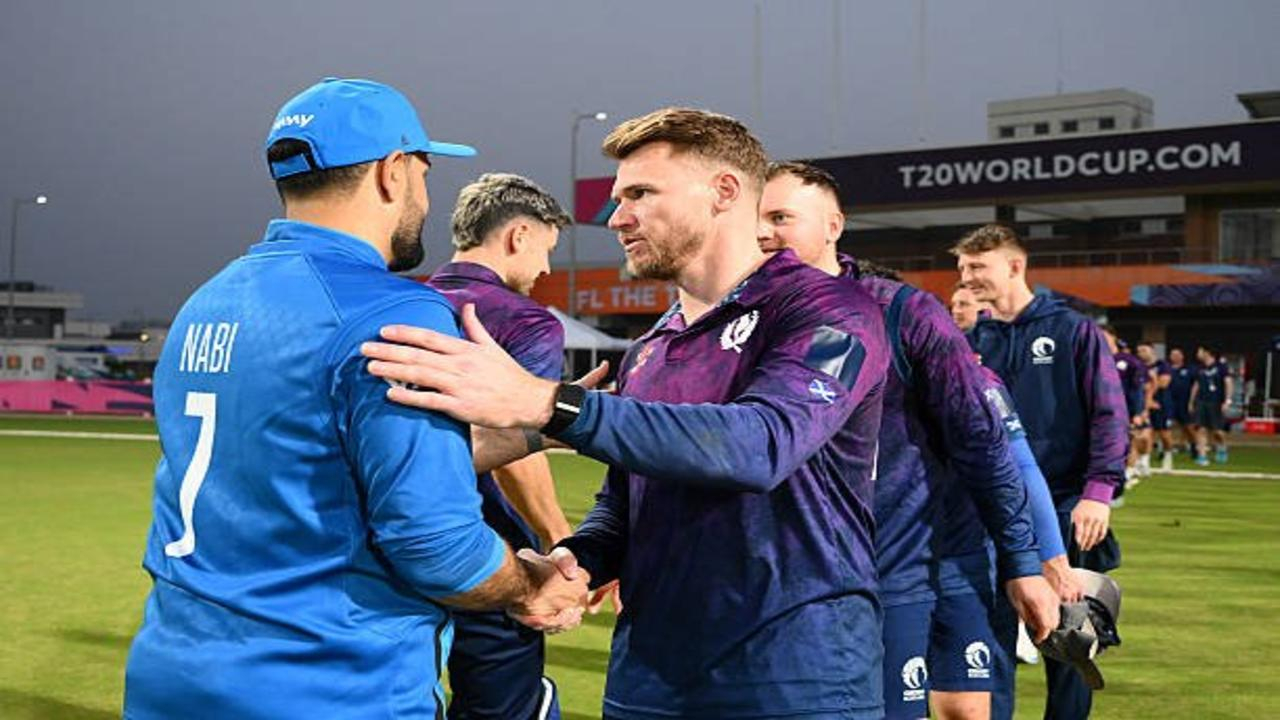
Cricket Scotland has announced a major change in its relationship with the Afghanistan Cricket Board (ACB), confirming that its men’s team will face Afghanistan only in International Cricket Council (ICC) tournaments. The decision, driven by concerns over the Taliban government’s treatment of women and girls, means Scotland will no longer proactively arrange bilateral series or participate in tri-series involving Afghanistan.
The Cricket Scotland Afghanistan boycott 2026 has added another chapter to the growing controversy surrounding Afghanistan’s place in international cricket. The Scottish governing body has also ruled out hosting training camps, practice matches and warm-up fixtures involving Afghanistan’s men’s team outside ICC competitions.
However, Scotland will continue to play Afghanistan whenever the two sides meet in ICC events under tournament regulations. The board has stressed that fulfilling these international commitments should not be interpreted as an endorsement of the current Afghan regime or its policies.
The decision puts Cricket Scotland alongside Cricket Australia and the England and Wales Cricket Board (ECB), which have also taken steps to restrict bilateral cricketing relations with Afghanistan over concerns about women’s sporting rights.
Why Scotland will not play Afghanistan bilaterally
The main reason behind the decision is the treatment of women and girls in Afghanistan following the Taliban’s return to power in August 2021.
Restrictions imposed on women’s education, employment and participation in public life have also affected organised sport. Afghanistan currently does not have an active women’s national cricket team competing in international cricket.
Cricket Scotland said its review considered the humanitarian situation in Afghanistan, the treatment of women and girls, and the board’s commitment to developing women’s and girls’ cricket.
The governing body also consulted relevant government authorities and examined the positions adopted by other major cricket boards before reaching its decision.
Explaining its position, Cricket Scotland stated that it would not proactively schedule bilateral series or participate in tri-series involving Afghanistan Men.
The board added that a return to voluntary cricketing engagements would require a material change in circumstances concerning women’s cricket and wider human rights concerns in Afghanistan.
This makes the Scotland Afghanistan cricket relations issue bigger than a disagreement over the international calendar. It raises questions about how cricket authorities should respond when the sporting opportunities available to men and women in a country are significantly different.
What does Cricket Scotland’s Afghanistan policy mean?
Under the new policy, Scotland’s engagement with Afghanistan will be restricted to ICC-governed competitions.
The decision covers several areas of international cricket. Scotland will not arrange independent bilateral series against Afghanistan or participate in tri-series involving the Afghan men’s side. It will also not host or participate in pre-tour training camps, practice matches or warm-up fixtures outside ICC events.
However, ICC tournaments remain an exception.
If Scotland are scheduled to face Afghanistan in an ICC competition, the team will fulfil the fixture according to the tournament’s regulations.
This distinction is important because Cricket Scotland has not announced a complete sporting boycott of Afghanistan. Instead, it has decided to withdraw from voluntary bilateral engagements while continuing to honour its international tournament obligations.
The board also confirmed that its policy will be reviewed annually or following a significant ICC decision or material change in circumstances.
George Munsey’s Afghanistan Premier League NOC explained
Another important development involves Scottish batter George Munsey and his potential participation in the Afghanistan Premier League (APL).
Munsey was the only Scottish cricketer selected in the league’s recent player draft, creating questions about whether Cricket Scotland’s new position would prevent him from taking part.
The governing body has clarified its stance on the George Munsey Afghanistan Premier League NOC issue.
Cricket Scotland said it would fulfil its contractual obligations to players and issue the necessary No-Objection Certificate (NOC), provided the tournament receives the required ICC sanction.
An NOC is formal permission from a player’s national cricket board to participate in an overseas league or tournament.
The Scottish board also made clear that granting permission to an individual player would not represent institutional support for the current Afghan regime.
This approach separates the professional commitments of Scottish cricketers from the governing body’s policy on bilateral international cricket.
For Munsey, the final position will depend on the tournament receiving the necessary approval and the relevant player and board arrangements being fulfilled.
Cricket Australia Afghanistan cricket boycott and ECB restrictions
Cricket Scotland’s decision follows similar positions taken by Cricket Australia and the England and Wales Cricket Board.
The Cricket Australia Afghanistan cricket boycott has been one of the most prominent examples of the debate, with Australia declining to proceed with bilateral men’s cricket engagements against Afghanistan because of concerns about restrictions on women and girls.
The ECB has also adopted a position against arranging bilateral cricket with Afghanistan, making the ECB Afghanistan bilateral cricket ban another important part of the wider international discussion.
These decisions highlight the growing divide between Afghanistan’s participation in international tournaments and its bilateral cricketing relationships with individual countries.
Afghanistan remains an ICC Full Member, having received that status in 2017. Its men’s team continues to compete at the highest level, including major international tournaments.
However, the absence of a functioning women’s national cricket programme remains a significant concern for several cricket governing bodies.
The situation creates a difficult challenge for international cricket administrators. ICC competitions bring teams together under a common framework, while bilateral series are arranged independently by individual boards.
As a result, Afghanistan can continue to participate in ICC events even when some countries choose not to organise separate series against its men’s team.
How the decision could affect Afghanistan cricket
The Cricket Scotland Afghanistan boycott 2026 could further limit Afghanistan’s opportunities to arrange bilateral cricket against certain international opponents.
Bilateral series are important for international teams because they provide regular opportunities to prepare for major competitions, test combinations and develop players in different conditions.
The absence of these fixtures does not prevent Afghanistan from competing in ICC tournaments, but it can affect the team’s wider international schedule.
For Scotland, the new policy provides a clear framework for future engagements with the ACB while maintaining its commitment to ICC competitions.
The decision also puts renewed attention on the Afghanistan cricket bilateral series controversy, particularly the question of how international sporting bodies should balance tournament obligations with concerns about equal participation in sport.
Cricket Scotland has indicated that its position is not necessarily permanent. A material change in circumstances could lead to another review of the policy.
For now, however, the message is clear: Scotland will continue to face Afghanistan in ICC competitions but will not voluntarily schedule bilateral or tri-series cricket with the Afghan men’s team.
Stay tuned with ROKOCRICKET for the latest cricket news, international developments, breaking stories and exclusive updates. Subscribe to stay informed about everything happening in the world of cricket.