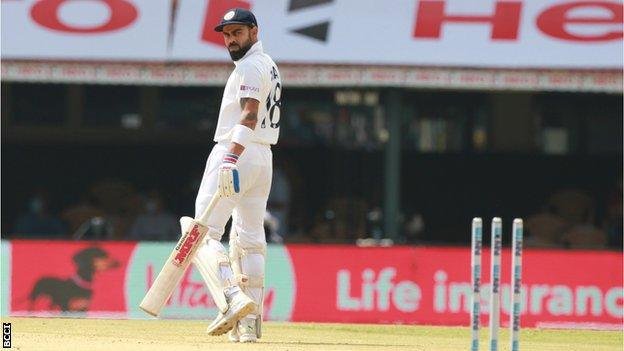

Cricket has introduced an important change to one of its most familiar dismissal rules, and it could save batters from being given out in an unusual situation. Under the revised Law of Cricket, a batter cannot be dismissed as bowled if the ball first strikes the non-striker’s stumps before rebounding or rolling back to hit the striker’s wicket.
The change has been introduced by the Marylebone Cricket Club (MCC), the custodian of the Laws of Cricket. It forms part of the updated 2026 edition of the laws, which came into effect on October 1, 2026. The International Cricket Council (ICC) has also incorporated the relevant changes into its playing conditions for international cricket.
The decision follows an unusual incident in a junior county cricket match, where a batter played a straight drive that hit the non-striker’s stumps before returning towards the striker’s end and dislodging the bails. Under the previous interpretation of the law, the batter was given out. The revised rule addresses this unusual chain of events and makes the position clear for umpires, players and cricket fans.
Why the MCC changed the bowled dismissal rule
According to reports explaining the MCC’s decision, the incident took place in an under-18 match between Gloucestershire and Somerset. A Gloucestershire batter played a powerful straight drive, but the ball missed the bowler and struck the non-striker’s stumps. It then rebounded towards the striker’s end and hit the wicket there as well.
The unusual sequence raised a question about how Law 32, which governs the bowled dismissal, should apply. The updated law now explicitly clarifies that contact with the non-striker’s stumps before the striker’s wicket is broken prevents the striker from being dismissed as bowled. The change removes uncertainty surrounding an incident that could easily confuse players and spectators.
It is worth understanding one important distinction: this does not mean a batter can no longer be dismissed if the ball hits the stumps after touching something else. The circumstances of the contact matter, and other dismissal laws may still apply. For example, the batter could be liable to be run out or given out for obstructing the field if the relevant conditions are satisfied.
The change is therefore a clarification of a specific situation, not a general relaxation of the bowled rule. In normal circumstances, when a legal delivery breaks the striker’s wicket without first contacting another player or an umpire, the batter can still be given out bowled.
Other major cricket rule changes from October 1
The bowled rule is only one part of the MCC’s wider revision of the Laws of Cricket. The club announced its fourth edition of the 2017 Code in February 2026, with the updated laws taking effect on October 1. The new edition includes 73 material changes, alongside wording updates intended to make the rules clearer and more suitable for modern cricket.
Here are some of the other important changes that cricket fans should know about.
1. Five-run penalty for batters wasting time
The ICC has introduced a clearer system to deal with batters who deliberately delay their readiness to face the next delivery. Under the updated international playing conditions, the first offence brings a warning, the second results in a final warning, and the third and subsequent offences lead to five penalty runs for the fielding side.
The measure is designed to prevent unnecessary delays and maintain the pace of the game. Repeated offences may also lead to action under the applicable Code of Conduct. The revised conditions apply to international series beginning on or after October 1, 2026; series already in progress continue under their previous regulations. Source: ICC.
2. Pink ball allowed in daytime Test matches
Another notable development concerns the use of the pink ball in traditional daytime Test cricket. Under the ICC’s new trial, teams may agree to use a pink ball in a daytime Test to help reduce the loss of playing time caused by poor light.
However, the decision must be made before the Test begins and must apply for the entire match. Teams cannot start with a red ball and then switch to a pink ball after play has started. The move could provide an additional option when visibility becomes a concern, although its adoption will depend on the teams agreeing to the arrangement.
3. Play can continue after a wicket falls in the final over
Test cricket has also changed how the end of a day’s play is handled when a wicket falls during the final over. Previously, the fall of a wicket could bring the day’s play to an early close even if deliveries remained in the over.
Under the revised playing conditions, the incoming batter must take their place, and the remaining deliveries can be bowled if conditions permit. This prevents the batting side from avoiding the challenge of facing the rest of the over simply because a wicket has fallen. It can also give the fielding team a further opportunity to take advantage of the new batter’s arrival.
4. Greater clarity on run-outs and stumpings
The updated international playing conditions also clarify what it means for a fielder to have control of the ball when breaking the wicket with a hand or arm. For a run-out or stumping completed in this manner, the fielder must have complete control of the ball in the hand or wicketkeeper’s glove.
Simply touching the ball while breaking the stumps is not sufficient in these circumstances. However, this should not be confused with a ball directly striking and breaking the wicket. The ICC has explained that the new requirement concerns a fielder breaking the wicket with their hand or arm while holding the ball, rather than every situation in which the ball reaches the stumps.
What these changes mean for cricket
Cricket is a sport built on tradition, but its laws must also account for situations that arise as the game evolves. The latest revisions address unusual incidents, improve clarity for officials and introduce measures intended to make matches fairer and more efficient.
For batters, the revised bowled law provides clarity in a rare situation where the ball hits the non-striker’s stumps before reaching the striker’s wicket. For teams, the updated time-wasting penalties place greater responsibility on batters to be ready when play is due to resume. Meanwhile, the changes to Test cricket could affect how teams approach the closing moments of a day’s play and deal with interruptions caused by poor light.
These adjustments do not change the basic nature of cricket. Instead, they define how specific situations should be handled so that players, umpires and spectators have a clearer understanding of the game.
For fans, the key takeaway is simple: if the ball hits the non-striker’s stumps first and then breaks the striker’s wicket, the striker will not be out bowled under the revised law. Other dismissal methods may still be relevant depending on what happens next.
Stay tuned to ROKOCRICKET for the latest cricket news, rule updates, match reports and expert analysis. Subscribe and follow us for more updates on the developments shaping international and domestic cricket.