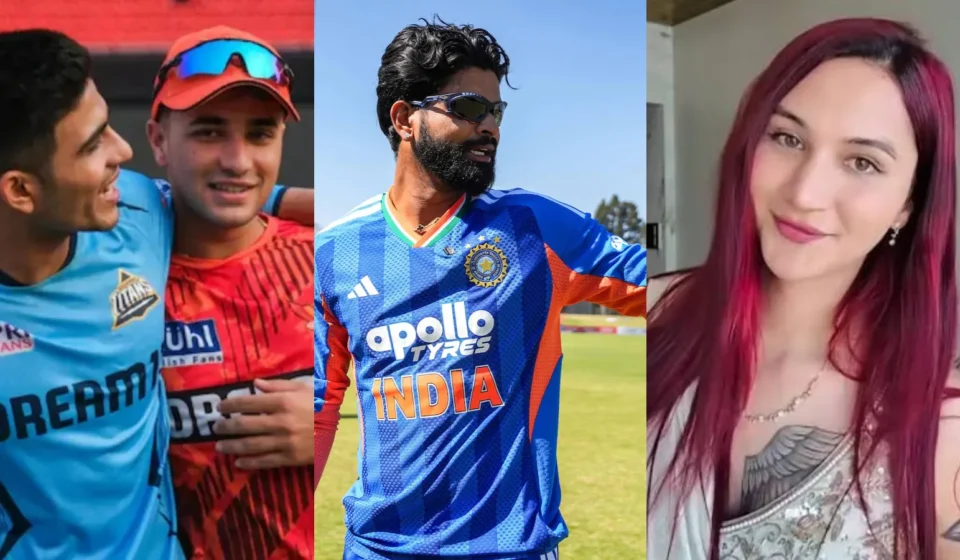
Anaya Bangar’s viral cricket interview: Shreyas Iyer, Abhishek Sharma and Shubman Gill choices explained

A video featuring Anaya Bangar, daughter of former India cricketer and coach Sanjay Bangar, has attracted attention on social media after she was asked to choose between Shreyas Iyer, Abhishek Sharma and Shubman Gill in a playful “Kill, Marry, Hook Up” interview question.
When asked to make her choices during an interview on Krishnank Atrey’s YouTube channel, Anaya responded: “Kill Shreyas Iyer, marry Abhishek Sharma and hook up with Shubman Gill.” Her answer quickly became a talking point among cricket fans, bringing the three Indian batters into the online conversation for reasons unrelated to their performances on the field.
However, the viral clip is only one part of Anaya’s wider story. Beyond the light-hearted interview, she has been speaking publicly about her ambition to return to competitive cricket, her experience following gender-affirming surgery and the need for clear policies governing transgender athletes in women’s sport.
Anaya Bangar’s viral video puts three Indian cricketers in the spotlight
The interview question presented Anaya with three prominent names in Indian cricket: Shreyas Iyer, Abhishek Sharma and Shubman Gill. Her answer was direct, and the informal nature of the question helped the clip attract attention online.
Such interview segments often generate engagement because they reveal a different, more personal side of people associated with professional sport. In this case, the discussion also drew attention to Anaya, whose cricketing ambitions and advocacy have become important parts of her public story.
Shubman Gill is known for his technically sound batting and leadership responsibilities in Indian cricket. Abhishek Sharma has built a reputation as an aggressive batter, particularly in the shortest format, while Shreyas Iyer has established himself as a capable middle-order option across formats.
Anaya’s comments were made in a playful interview setting. They should not be confused with any professional assessment of the three players or their cricketing abilities.
Who is Anaya Bangar?
Anaya Bangar is the daughter of Sanjay Bangar, the former India all-rounder who later worked as a batting coach for the national team. She previously played age-group men’s cricket in Mumbai before beginning her gender transition in 2022.
Anaya underwent gender-affirming surgery in March 2026, according to the account provided in the interview coverage. Since then, she has spoken about her personal experiences, the challenges of facing online abuse and her determination to continue pursuing cricket.
Her story has attracted attention because it brings together professional sporting ambitions, questions about inclusion and the wider debate over eligibility rules in women’s cricket.
For Anaya, the goal is not simply to remain connected to the sport through interviews and public appearances. She has expressed a desire to return to competitive cricket and is planning to move to Australia to explore opportunities to resume her playing career.
Anaya Bangar urges BCCI to consider transgender cricket policies
One of Anaya’s key requests has been directed at the Board of Control for Cricket in India (BCCI). She has urged the Indian cricket governing body to consider a clear framework that would establish a pathway for transgender athletes seeking to compete in women’s cricket.
She pointed to Cricket Australia’s approach as an example that Indian cricket officials could study.
“If BCCI can follow what Australia has done, that would be a wonderful thing,” Anaya said, according to an interview with Hindustan Times.
Her comments highlight a broader question facing sporting organisations: how can governing bodies develop eligibility policies that consider inclusion, competitive fairness, athlete welfare and the integrity of women’s competitions?
There is no single policy that automatically applies across every cricket board or tournament. Eligibility requirements can differ depending on the governing organisation, the competition and the applicable regulations. Consequently, any potential return to professional women’s cricket would depend on the relevant rules and Anaya’s eligibility under those rules.
Her appeal to the BCCI reflects her hope that the board will establish a transparent process rather than leave athletes uncertain about their future in the game.
What Anaya said about scientific testing and athletic performance
The debate surrounding Anaya’s cricketing ambitions intensified after Cricket Australia introduced an eligibility pathway for transgender players, prompting criticism from some figures in women’s cricket.
South Africa all-rounder Marizanne Kapp publicly objected to the decision, describing it as “Absolutely ridiculous” and arguing that it should not be allowed.
Anaya responded by explaining that her case involved medical and athletic testing. She said a 12-week assessment programme conducted with the Manchester University Institute of Sport examined her athletic capabilities after she had undergone hormone replacement therapy for a year.
According to Anaya, the assessment concluded that her physical parameters fell within the range observed among cisgender female athletes. She cited those findings as evidence supporting her position that eligibility decisions should consider individual circumstances.
It is important to distinguish her account of the testing from a universal scientific conclusion. One athlete’s assessment does not, by itself, establish the performance implications for every transgender athlete or resolve every question concerning eligibility in elite women’s sport.
The wider debate involves several factors, including the effects of hormone therapy, changes in muscle mass and strength, endurance, the sporting discipline involved and the evidence used by governing bodies when developing regulations.
For cricket administrators, the challenge is to establish policies that are evidence-based, transparent and consistent while respecting the dignity of everyone involved.
Anaya speaks about online abuse and physical changes
Anaya has also discussed the personal difficulties she has faced since undergoing gender-affirming surgery. Speaking about online criticism, she said: “They haven’t experienced what I have.”
Her remarks underline the emotional burden that can accompany public scrutiny, particularly when an athlete’s personal life becomes the subject of widespread debate.
She has also described physical changes following surgery and hormone treatment, including a reduction in muscle mass and stamina. Anaya said her testosterone level was 0.6 nanomoles and that she had experienced bone-density loss and bone discomfort.
These are her reported personal experiences, rather than findings that should automatically be generalised to all transgender women. Individual medical outcomes vary, and specific health concerns require assessment by qualified healthcare professionals.
Her account nevertheless illustrates why discussions about eligibility can have consequences beyond the playing field. For athletes, questions about competition rules may intersect with physical health, career planning, identity and access to sporting opportunities.
Anaya has argued that regulations should account for differences between individuals rather than assume that every transgender woman has the same athletic characteristics.
What happens next in Anaya Bangar’s cricket journey?
Anaya’s plans to move to Australia could become an important step in her effort to return to competitive cricket. However, her future participation will depend on the applicable eligibility rules, the opportunities available to her and the requirements of the relevant cricket authorities.
Her case also places a spotlight on the decisions facing cricket administrators in India and elsewhere. As the sport continues to discuss inclusion and competitive fairness, governing bodies will need to communicate their policies clearly and explain how eligibility assessments are conducted.
For now, the viral interview has introduced Anaya to a wider audience, but her long-term ambitions extend well beyond a social media moment. Her stated objective is to continue playing cricket while encouraging a more clearly defined pathway for transgender athletes.
Whether the BCCI eventually adopts a policy similar to Australia’s remains to be seen. Any such decision would require careful consideration of sporting regulations, scientific evidence and the interests of athletes competing at the highest level.
Stay tuned with ROKOCRICKET for the latest cricket news, player stories, viral interviews and major developments from the world of sport. Subscribe for more updates and follow the stories shaping cricket beyond the boundary.