Kapil Dev Breaks Silence on India-Pakistan No Handshake Row, Says Players Have ‘No Choice’ If Government Decides

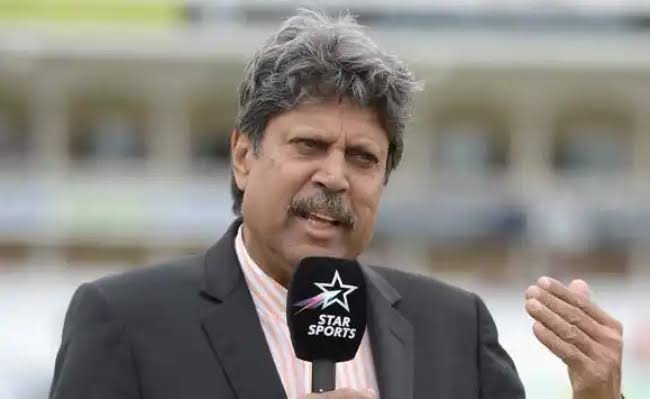
The India-Pakistan cricket rivalry has once again found itself at the centre of a debate that goes far beyond what happens with bat and ball. Former India captain and 1983 World Cup-winning skipper Kapil Dev has now spoken about the ongoing no-handshake issue involving Indian and Pakistani cricketers.
Speaking to India Today, Kapil Dev said that if the government has taken a decision regarding handshakes with Pakistani players, Indian cricketers have little choice but to follow it. His comments come days after another Asia Cup trophy presentation involving an Indian team became a talking point.
“If the government has taken a decision not to shake hands with Pakistani players, then the players have no choice,” Kapil Dev told India Today.
His remarks have brought the focus back to the events of the Asia Cup 2025, when India and Pakistan met in Dubai against the backdrop of heightened tensions between the two countries.
How the India-Pakistan no-handshake row began
The no-handshake episode first grabbed major attention during the India-Pakistan group-stage match at the 2025 Asia Cup.
India captain Suryakumar Yadav did not shake hands with Pakistan captain Salman Ali Agha during the toss. The same pattern continued after India’s seven-wicket victory, with the Indian players heading towards their dressing room instead of taking part in the customary post-match handshake.
Pakistan head coach Mike Hesson later said his team had been ready to shake hands and described the way the match ended as disappointing. Pakistan captain Salman Agha also skipped the post-match presentation.
The incident happened after the Pahalgam terrorist attack in April 2025, which killed 26 people, and the subsequent military tensions between India and Pakistan. Suryakumar explained after the match that the team wanted to stand in solidarity with the victims and their families.
The issue did not end with one match.
India and Pakistan met again in the Super Four stage, and the no-handshake stance continued. Ahead of that match, Salman Agha said he had never experienced a competitive cricket match where teams did not shake hands at the end.
The dispute also reached the International Cricket Council after the Pakistan Cricket Board complained about match referee Andy Pycroft. Pakistan alleged that Pycroft had been involved in the handshake decision, although reports from the Indian side disputed that account.
What Kapil Dev said about the players
Kapil Dev’s latest comments are significant because they place the spotlight on the position of the cricketers themselves.
According to the former India captain, players cannot independently decide how to handle such matters if the government has established a position.
His message was straightforward: if the government takes a decision, the players are expected to follow it.
This also fits with the broader position explained by BCCI secretary Devajit Saikia before the 2025 Asia Cup. Saikia said India had no restriction on playing Pakistan in multinational tournaments, while bilateral sporting ties remained a separate matter.
That distinction is important. India continued to play Pakistan in multinational competitions, but the sporting interaction between the players became a separate issue.
And that is precisely what made the handshake controversy so unusual.
The teams still played the match. The players still competed against each other. But the traditional gesture of shaking hands before or after the game was absent.
The trophy controversy made things even bigger
The handshake issue was only one part of the wider India-Pakistan cricket tensions during the 2025 Asia Cup.
After India defeated Pakistan by five wickets in the final, the Indian team did not accept the trophy from Mohsin Naqvi, who is the Pakistan Cricket Board chairman and Asian Cricket Council president.
The presentation ceremony ended without the Indian players lifting the trophy on the podium.
The situation eventually developed into a separate dispute over the whereabouts of the Asia Cup trophy. BCCI secretary Devajit Saikia later said the two boards had been discussing ways to resolve the matter and bring the trophy back to India.
But the story did not end there.
India Women face another trophy presentation dilemma
Almost a year later, history repeated itself.
India’s women’s team defeated Sri Lanka by 72 runs in the Women’s Asia Cup 2026 final in Dubai. Shafali Verma scored 68, Smriti Mandhana made 59 and Shree Charani took four wickets as India won the tournament for a record-extending eighth time.
Yet the trophy presentation became the main talking point after the match.
The Indian team did not accept the Asia Cup trophy from Mohsin Naqvi, who was again present in his role as ACC president and is also Pakistan’s interior minister and PCB chairman. Reuters reported that the Indian women’s team refused to accept the trophy from him after winning the final.
This time, however, the BCCI’s position had reportedly been communicated to the ACC before the final.
BCCI secretary Devajit Saikia said the decision had been taken in advance, while head coach Amol Muzumdar also confirmed that the team stood by the board’s decision.
So, what began with a handshake in 2025 has now developed into a much broader discussion around sporting ceremonies, official interactions and the relationship between India and Pakistan.
What happens next?
For Indian cricket fans, the immediate question is simple: when will the Asia Cup trophies actually return to India?
BCCI secretary Devajit Saikia has said that efforts are being made to resolve the trophy issue. Reports indicate that the board is working towards bringing both the men’s and women’s Asia Cup trophies back.
At the same time, the Kapil Dev comments have added another layer to the discussion.
The former captain did not frame the matter as a decision individual players should make on their own. Instead, he stressed that players would follow the government’s position.
That is likely to keep the India-Pakistan handshake debate alive whenever the two sides meet in future multinational tournaments.
For now, the cricket itself continues to take place. But the moments before and after India-Pakistan matches have become almost as closely watched as the action in the middle.
And with the rivalry unlikely to disappear anytime soon, every handshake, presentation ceremony and interaction between the two teams will continue to attract attention.
Stay tuned with ROKOCRICKET for the latest cricket news, India-Pakistan updates, match stories and major developments from the world of cricket. Don’t forget to subscribe and keep following us for more.