Indian Cricket Workload: Sunil Gavaskar Asks ICC One Tough Question Ahead of 2027 Calendar
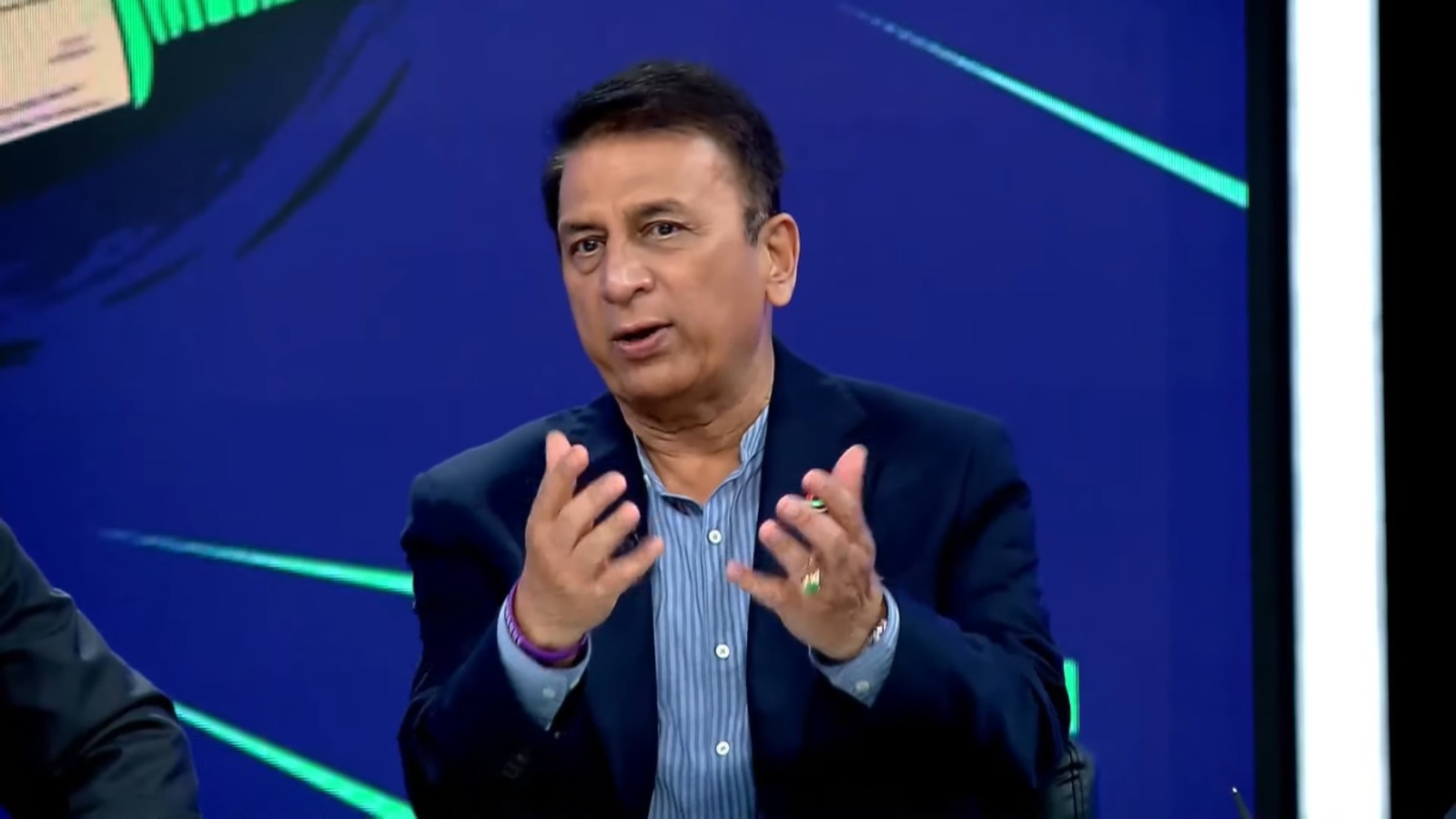
Sunil Gavaskar questions Indian cricket workload and ICC 2027 calendar
Sunil Gavaskar has raised a serious concern about the Indian cricket workload, questioning how long players can continue handling an increasingly packed international schedule.
The former India captain believes the International Cricket Council (ICC) needs to think beyond simply fitting more matches into the calendar. As the next four-year international cricket cycle is discussed for 2027 onwards, Gavaskar wants the workload, recovery time and physical limits of players to become a major part of the conversation.
His message is blunt: Indian cricketers are human beings, not machines that can keep running without a break.
Writing in his Sportstar column, the former India opener pointed towards what has become a familiar problem in modern cricket — players finishing one series and quickly moving into another tournament, often with very little time to recover.
Gavaskar compared the situation to repeatedly squeezing sugarcane for every last drop of juice.
“Indian cricketers are neither machines nor sugarcane to be squeezed continuously.”
That line sums up his frustration with the current cricket calendar.
The Indian cricket workload problem is getting harder to ignore
Indian cricket has become one of the busiest sporting ecosystems in the world. The national team regularly moves between formats, bilateral series, ICC events and major domestic competitions.
For players who represent India across formats, the schedule can become particularly demanding. Even those who are rested from one series may soon find themselves preparing for another assignment.
The concern is not simply about the number of matches. It is also about travel, training, recovery, preparation and the mental pressure that comes with playing elite sport throughout the year.
In recent years, injuries have also become a recurring issue for Indian cricket. BCCI secretary Devajit Saikia has previously pointed towards the growing number of matches as one of the factors behind increasing injuries in Indian cricket.
That makes Gavaskar’s warning especially relevant as the ICC prepares to discuss the next four-year calendar.
The question is no longer whether players can physically play more cricket. The bigger question is whether playing more cricket is always good for the players, the teams and the sport itself.
Gavaskar wants the ICC to consider that before finalising another packed cycle.
India’s cricket team is not Indian cricket, says Gavaskar
Gavaskar’s argument goes beyond workload.
The former India captain also questioned the way Indian cricket is increasingly viewed through the success of the national team.
According to him, the Indian cricket team is the result of the country’s cricket system, not the entire system itself.
His point was clear: “India cricket team is not Indian cricket. India cricket team is a by-product of Indian cricket.”
It is an important distinction.
India’s international team gets most of the attention, but behind it sits a massive domestic structure involving state teams, the Ranji Trophy, age-group cricket, domestic white-ball competitions and countless players trying to make the next step.
If that foundation becomes weaker, the national team will eventually feel the impact.
This is why Gavaskar believes the conversation about Indian cricket should not stop with how many international teams India can theoretically field at the same time.
There has often been talk about India’s enormous bench strength and the possibility of putting out two or even three competitive teams simultaneously.
On paper, that sounds impressive.
But Gavaskar appears to be asking a more uncomfortable question: does having a large pool of players automatically mean Indian cricket is producing world-class cricketers consistently?
For him, the answer cannot simply be based on the number of available players.
Domestic cricket needs more attention
Gavaskar believes the long-term answer lies in strengthening domestic cricket.
International success may grab the headlines, but domestic cricket is where future stars are developed. It provides players with the competitive environment required to improve their technique, fitness and temperament before they step onto the international stage.
A busy international calendar can also create a difficult situation for domestic cricket.
If established players spend most of the year travelling with India or playing franchise cricket, finding enough space for them to participate in domestic competitions becomes complicated.
At the same time, young players need regular opportunities in domestic cricket to develop.
That is why Gavaskar’s argument is not simply about asking India to play fewer international matches.
He is effectively asking for a better balance.
Players need adequate recovery time. International cricket needs a sensible schedule. Domestic cricket needs room to grow. And the entire system needs to work together rather than treating the India team as the only priority.
More cricket does not automatically mean better cricket
There is another side to the workload debate.
Cricket has grown enormously, particularly in the T20 era. More matches mean more opportunities for players, broadcasters, boards and fans.
But quantity and quality are not necessarily the same thing.
When players are constantly travelling and competing, fatigue can affect performance. Injuries can become more frequent. Young players may be pushed into international cricket before they are fully prepared, while established stars may struggle to maintain peak performance across the entire year.
For fans, too, an overloaded calendar can eventually reduce the excitement surrounding individual matches.
When there is always another series around the corner, even a major contest can start feeling like just another fixture.
That is the challenge the ICC faces while designing the 2027-2031 international calendar.
The aim should not simply be to find space for every possible series. It should be to create a calendar that allows players to perform at their best and gives major matches the importance they deserve.
Gavaskar’s warning comes at an important time
Gavaskar’s comments arrive at a point when workload management has become one of the biggest talking points in international cricket.
Indian cricket has an enormous talent pool, but talent alone cannot solve every problem.
If players are constantly pushed from one assignment to another, the system may eventually pay the price through injuries, burnout and inconsistent performances.
The former captain’s broader message is therefore worth considering.
India does not need to prove its strength simply by playing more cricket or claiming that it can produce multiple international-quality teams.
The real test is whether Indian cricket can continue producing world-class players year after year while protecting the players already carrying the national team’s expectations.
The upcoming four-year ICC calendar could provide an opportunity to get that balance right.
Gavaskar’s message is essentially simple: don’t squeeze the players until there is nothing left.
Indian cricket needs a calendar that respects the human beings behind the jerseys, gives domestic cricket enough space and protects the long-term health of the game.
After all, the strength of Indian cricket should not be measured only by how many matches Team India can play.
It should also be measured by how strong the entire system remains when the next generation arrives.