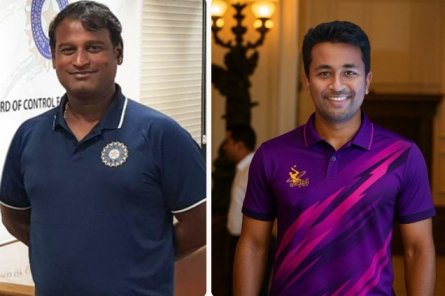

Pragyan Ojha has reportedly been appointed chairperson of the Indian men’s cricket selection committee, with former India cricketers Shiv Sundar Das, Rudra Pratap Singh (RP Singh), Ajay Ratra and Ramesh Powar also named as members of the panel. The reported changes have drawn attention among Indian cricket fans, as the selection committee plays a crucial role in shaping Team India’s future across international formats.
According to the reported team list, Ojha will lead the five-member committee, which includes former international players with experience in batting, bowling and wicketkeeping. The reported development also raises questions about Ajit Agarkar’s position, as Ojha is said to be replacing him as chairman.
However, the new committee’s composition and the status of the reported appointments should be verified against an official BCCI announcement before being treated as confirmed. The following report examines the names involved, their cricketing backgrounds and what such a change could mean for Indian cricket.
India’s reported new selection committee
The reported five-member selection committee consists of:
- Pragyan Ojha — Chairperson
- Shiv Sundar Das — Member
- RP Singh — Member
- Ajay Ratra — Member
- Ramesh Powar — Member
If confirmed, the panel would bring together former Indian cricketers with experience in different areas of the game. Their collective responsibility would include evaluating domestic performances, identifying international prospects and helping build competitive squads for India’s upcoming assignments.
The selectors’ decisions can influence everything from team combinations and player rotation to the development of young talent. Their challenge is to balance immediate results with the long-term needs of Indian cricket.
Who is Pragyan Ojha?
Pragyan Ojha is a former Indian international cricketer who made his name as a left-arm orthodox spinner. He represented India in Test matches, ODIs and T20 internationals and became particularly effective in conditions that offered assistance to spin bowling.
One of the most memorable performances of Ojha’s career came during Sachin Tendulkar’s farewell Test against the West Indies at Mumbai’s Wankhede Stadium in November 2013. Ojha took 10 wickets across the match as India secured an innings victory, making the occasion even more memorable for Indian supporters.
He announced his retirement from international and first-class cricket in February 2020. His experience as an international player could offer valuable insight into the demands of top-level cricket, particularly when assessing spin bowlers and evaluating performances under pressure.
If his reported appointment is confirmed, Ojha’s biggest responsibility will be to ensure that selection decisions are based on performance, team requirements and a clear long-term vision.
Shiv Sundar Das brings batting experience
Shiv Sundar Das is a former India opening batter who represented the country in Test and ODI cricket. As a top-order batter, he experienced the technical and mental challenges associated with facing quality international bowling.
His playing background could be useful when assessing emerging batters, particularly those looking to move from domestic cricket to the international stage. Opening batters must demonstrate patience, sound technique and the ability to adapt to different conditions.
Das has also worked in Indian cricket’s coaching and development setup, giving him experience beyond his playing career. That background could help the committee evaluate young players more comprehensively, considering not only statistics but also technique, temperament and potential.
RP Singh adds fast-bowling knowledge
Rudra Pratap Singh, widely known as RP Singh, was an important member of India’s pace attack during his international career. The left-arm fast bowler played a significant role in India’s successful 2007 ICC Men’s T20 World Cup campaign.
His experience could be particularly relevant when the selectors assess India’s fast-bowling resources. Pace, control, fitness, workload and the ability to perform in different conditions are all important factors when choosing a balanced bowling attack.
India has continued to develop fast bowlers for different formats, but maintaining depth remains essential because of injuries and a demanding international schedule. A selector with international pace-bowling experience can contribute useful perspective when comparing established performers with emerging domestic prospects.
Ajay Ratra’s wicketkeeping background
Ajay Ratra is a former India wicketkeeper who represented the country in Test and ODI cricket. His experience behind the stumps gives him a different perspective from the other reported members of the committee.
Wicketkeepers have responsibilities beyond catching and stumping. They must communicate with bowlers, read match situations and contribute to the team’s tactical planning. When selectors assess wicketkeepers, they must consider these skills alongside batting performances and consistency.
Ratra’s background could therefore be useful when evaluating wicketkeeping options and determining which players best fit the requirements of particular formats.
Ramesh Powar joins the reported panel
Ramesh Powar, another former India spinner, completes the reported five-member group. Powar represented India in international cricket and later gained coaching experience, including working with the Indian women’s national team.
His coaching background could provide an additional perspective on player development, preparation and team balance. In modern cricket, selectors must consider more than individual statistics. They also need to understand a player’s role, adaptability and ability to perform under different tactical demands.
With Ojha and Powar both having experience as spinners, their involvement could contribute to discussions about spin combinations and bowling depth. However, effective selection depends on the collective judgment of the entire panel rather than the background of any one member.
Stay tuned with ROKOCRICKET for the latest Team India selection news, cricket updates and breaking sports stories. Subscribe to ROKOCRICKET to keep up with the latest developments from Indian and international cricket.