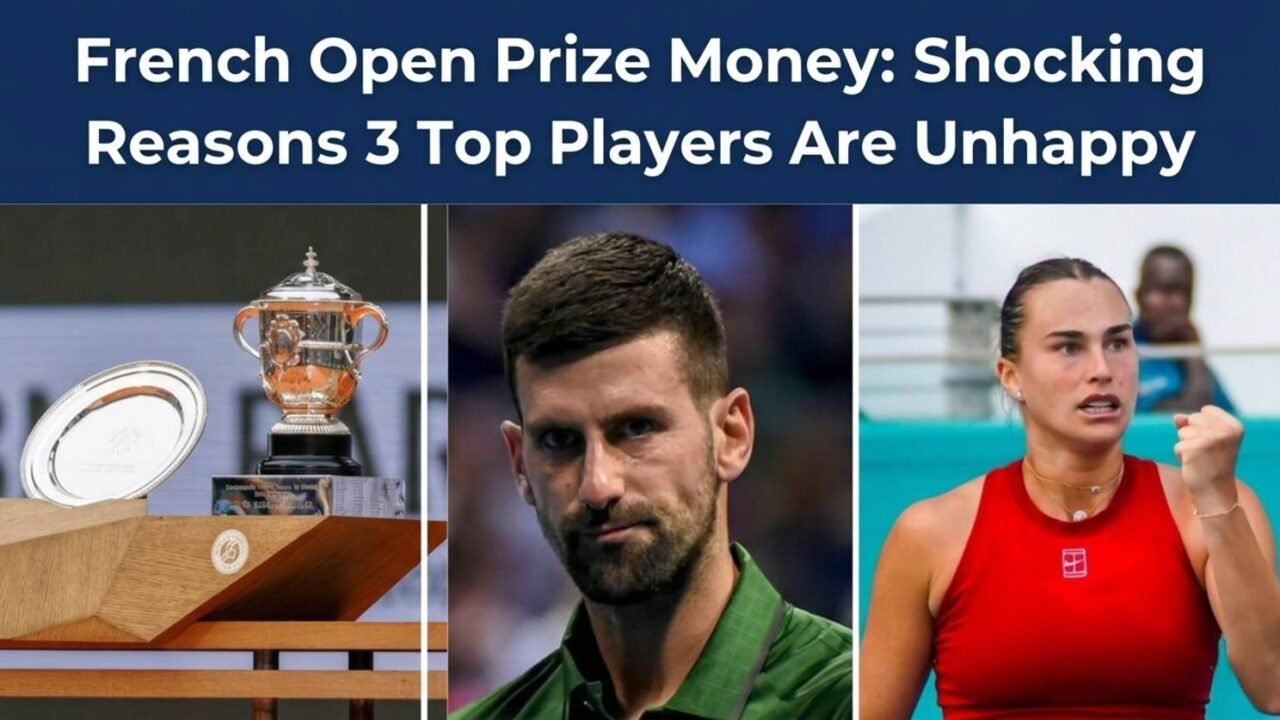




French Open Prize Money controversy grows as Djokovic, Sabalenka and other stars criticize payout structure, revenue share, and lack of player involvement in decisions.
French Open Prize Money has become the center of a major controversy as top tennis stars have openly expressed dissatisfaction with the current payout structure at Roland Garros. Leading players believe that despite rising revenues, their share remains unfairly low.
Points to Watch Out
| Key Issue | What Players Are Saying |
|---|---|
| Revenue Share | Players want at least 22% of total revenue |
| Prize Money Growth | Increase seen as insufficient compared to revenue rise |
| Player Welfare | Lack of focus on health and long-term benefits |
| Scheduling | Players demand a stronger voice |
| Governance | No formal consultation system in place |
Top Players Raise Their Voice
Several high-profile tennis stars, including Novak Djokovic, Jannik Sinner, Aryna Sabalenka, and Coco Gauff, have jointly criticized the French Open Prize Money structure.
These players, part of the world’s top 20 rankings, issued a collective statement highlighting their concerns over declining revenue share and lack of involvement in decision-making processes.
Their message is clear: the system needs reform.
Why French Open Prize Money Is Under Fire
The controversy around French Open Prize Money stems from a mismatch between tournament earnings and player compensation.
The organizers of French Open announced a 9.5% increase in total prize money, bringing it to €61.7 million. Winners in both men’s and women’s singles will earn €2.8 million.
However, players argue this increase does not reflect the tournament’s financial growth.
In 2025, Roland Garros generated €395 million in revenue—a 14% increase. Yet, prize money rose by only 5.4%, reducing the players’ share to around 14.3%.
Comparison With Other Grand Slams
The dissatisfaction with French Open Prize Money becomes even clearer when compared to other tournaments.
For example, the US Open implemented a 20% prize money increase last year.
Players argue that Grand Slams should align with ATP and WTA standards, where players typically receive a higher percentage of total revenue.
Currently, athletes are pushing for a 22% share, but the French Open remains well below that mark.
Beyond Money: Bigger Issues at Stake
While French Open Prize Money is the headline issue, players have raised deeper concerns.
They are demanding:
- Better player welfare programs
- Pension and long-term financial security
- Reduced workload through improved scheduling
- A formal system to include player voices in decision-making
According to their statement, the absence of these reforms shows a system that does not fully represent players’ interests.
Lack of Player Consultation
One of the strongest criticisms revolves around governance.
Players claim that decisions regarding French Open Prize Money and tournament operations are made without consulting them.
This lack of transparency has led to frustration among top athletes, who feel they are central to the sport yet excluded from key decisions.
What Happens Next?
The debate around French Open Prize Money is expected to intensify during the Italian Open.
Players like Ben Shelton and Jessica Pegula are likely to speak out publicly, increasing pressure on Grand Slam organizers.
If the situation remains unresolved, it could lead to larger conflicts between players and tournament authorities.
Impact on Tennis
The ongoing dispute over French Open Prize Money could reshape professional tennis.
If players succeed in pushing for higher revenue shares and better governance, it may lead to structural changes across all Grand Slams.
On the other hand, resistance from organizers could widen the gap between players and authorities, potentially affecting the sport’s global image.
The French Open Prize Money controversy highlights a growing divide in tennis.
Players are no longer just competitors—they are stakeholders demanding fair compensation and a voice in the system.
As revenues continue to rise, the pressure to address these concerns will only grow stronger.
💬 What do you think about the French Open Prize Money controversy? Should players get a bigger share of revenue? Comment your opinion below!
[…] Novak Djokovic Left Serbia: 1 Shocking Reasons Behind His Controversial Exit French Open Prize Money: Shocking Reasons 3 Top Players Are Unhappy IPL Girlfriend Rules Shock: 5 Big Changes BCCI May Enforce Next Season Why Football Is Called […]