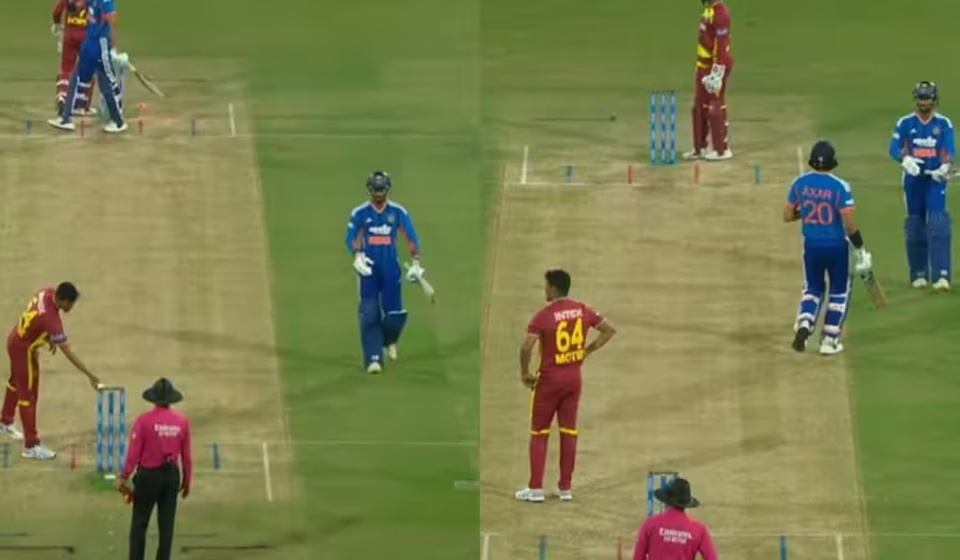
Tilak Varma run out vs WI 3rd t20i: Why the bizarre dismissal sparked a debate over sportsmanship

The Tilak Varma run out vs WI 2nd t20i search has drawn attention to a controversial moment in India’s ongoing T20 series against West Indies. However, the incident described in the available match reports happened during the third T20I in Indore on October 11, 2026.
The dismissal sparked debate among cricket fans, with questions being raised about the spirit of the game and whether West Indies should have handled the situation differently. Yet, there is an important distinction between a dismissal being legal under cricket’s laws and the opposition choosing to withdraw an appeal on sporting grounds.
What happened during the India vs West Indies third T20I?
The incident occurred in the 17th over of India’s innings, with Gudakesh Motie bowling. Axar Patel played the ball towards the leg side, and a West Indies fielder, Kamil Pooran, dived to stop it before it could reach the boundary.
Both Indian batters initially appeared to believe the ball had crossed the boundary. Their attention shifted away from the immediate situation, creating an opportunity for the West Indies fielders to attempt a run-out.
Wicketkeeper Shai Hope collected the ball and threw it towards Motie. Axar Patel managed to get back into his ground in time, but Tilak Varma was caught out of his crease. Motie broke the stumps at the non-striker’s end, and the third umpire confirmed the dismissal after reviewing the footage.
Tilak’s innings ended on 28 runs from 16 deliveries, including four boundaries. It was a frustrating end to a useful contribution at a stage when India needed runs in the closing overs.
Was Tilak Varma actually out?
The central question is whether the dismissal was legitimate under cricket’s laws. Based on the reported sequence of events, the third umpire ruled Tilak out because he was outside his ground when the wicket was broken.
Under Law 38 of the Marylebone Cricket Club’s Laws of Cricket, a batter can be given out run out when the ball is in play, the batter is outside their ground and a fielder fairly breaks the wicket, subject to the law’s exceptions.
The important point is that a batter cannot assume the ball is dead simply because it looks as though a boundary has been scored. If the fielder stops the ball before it reaches the boundary and play remains live, the fielding team can continue the play.
That is why the distinction between a legal dismissal and good sportsmanship matters here. The decision may be correct under the laws even if supporters believe the fielding team could have shown greater consideration for the batters’ misunderstanding.
There is no need to claim that Tilak was wrongly given out to understand why the incident attracted attention. The debate is about whether West Indies should have appealed, not simply whether the dismissal was permitted.
Why the sportsmanship debate has intensified
Cricket has always placed considerable importance on fair play alongside the laws of the game. The MCC’s explanation of the Spirit of Cricket stresses the responsibility of captains to ensure that matches are played within both the laws and the spirit of the sport.
From the Indian supporters’ perspective, Tilak’s dismissal looked harsh because the batters believed the ball had reached the boundary. They were not necessarily attempting to steal an extra run; instead, they appeared to have lost track of the ball’s actual position.
West Indies, on the other hand, were entitled to continue playing while the ball remained live. In a competitive international match, fielders are expected to pursue every opportunity, and a run-out is not automatically unfair simply because the batter has made a mistake.
The criticism therefore centres on judgement rather than a clear breach of the rules. Some fans may argue that the West Indies captain could have withdrawn the appeal, while others will say that international cricket requires batters to remain alert until the umpire signals that the ball is dead.
There is also an important procedural detail. Under MCC Law 31.8, the fielding captain can withdraw an appeal with the relevant umpire’s consent, provided the withdrawal occurs within the prescribed time.
In other words, cricket allows room for a captain to choose sportsmanship over a dismissal. It does not mean that every legal run-out must be reversed.
MS Dhoni and the famous Ian Bell incident
The incident has brought back memories of one of the most discussed examples of sportsmanship in Indian cricket.
During the 2011 Nottingham Test between India and England, Ian Bell left his ground after believing the ball had reached the boundary. The ball had actually been stopped, and India appealed after the bails were removed. The third umpire initially gave Bell out.
Indian captain MS Dhoni subsequently agreed to withdraw the appeal, allowing Bell to return to the crease. The decision was widely remembered as an example of the spirit of cricket taking priority over a potential advantage.
The episode remains relevant because it demonstrates that captains have a choice when an unusual dismissal occurs. Dhoni’s decision did not establish that Bell was technically not out; it showed that a captain can reconsider an appeal in the interests of fair play.
The comparison with the Tilak Varma run out vs WI 2nd t20i search trend is understandable, even though the latest incident took place in the third T20I. Both situations involve batters believing the ball had reached the boundary and a debate over whether the fielding side should have exercised discretion.
However, the circumstances and decisions were not identical. Dhoni chose to withdraw India’s appeal, while the third umpire upheld Tilak’s dismissal after reviewing the play. The comparison is about sportsmanship, not proof that the two decisions had to be the same.
What the incident means for India and West Indies
The dismissal was an important reminder for India’s batters to remain alert until the ball is genuinely dead. Even experienced international players can lose concentration for a moment, and in a T20 match, that lapse can cost a valuable wicket.
For West Indies, the incident created a debate that extended beyond the immediate contest. The team had an opportunity to complete a run-out within the laws, but the reaction from fans showed that sporting decisions are also judged by how they look and what they communicate about the game.
Neither side’s position needs to be exaggerated. Tilak made a costly error by assuming the ball was no longer in play, while West Indies chose to pursue the dismissal rather than allow him to continue batting. The umpire then applied the relevant law.
The bigger lesson is that awareness and sportsmanship are separate responsibilities. Batters must know when play has stopped, and captains can still consider the wider spirit of cricket when deciding how to respond to an unusual situation.
For readers following the India vs West Indies T20 series, this incident is another reminder that cricket’s most talked-about moments are not always sixes, wickets or match-winning performances. Sometimes, a single decision can trigger a much larger discussion about how the game should be played.
Stay tuned to ROKOCRICKET for more cricket news, match updates, player stories and analysis. Subscribe and share your thoughts: Should West Indies have withdrawn the appeal against Tilak Varma, or was the run-out fair because the ball was still in play?