
The Hansie Cronje match fixing scandal remains one of the darkest chapters in international cricket history. What began with allegations against one of South Africa’s most respected sporting figures in April 2000 quickly developed into a sprawling investigation involving bookmakers, players, police agencies, cricket administrators and national governments.
Cronje was not an ordinary cricketer. He was South Africa’s captain, a central figure in the country’s cricket revival after isolation and a player widely admired for his leadership. That reputation made the revelations even more difficult for the cricket world to absorb.
In the space of a few months, Cronje went from denying every allegation to admitting that he had accepted money from bookmakers. The King Commission hearings then exposed a much larger picture, with several South African players giving evidence about approaches, payments and offers to influence matches.
The scandal eventually cost Cronje his international career. On October 11, 2000, the United Board of Control for Cricket in South Africa imposed a life ban on him.
The story did not end there. Indian investigators continued examining the allegations for years, players were questioned long after Cronje’s ban, and in 2013 the Delhi Police filed a chargesheet naming Cronje in connection with the 2000 match-fixing case.
The official King Commission records provide an important window into the affair. Its investigation found, among other things, that Cronje had been in contact with Indian bookmaker Sanjay Chawla around several matches during South Africa’s 2000 tour and that there had also been an earlier proposal involving a payment to deliberately lose an ODI in Mumbai in 1996.
Here is the complete story of how one of cricket’s biggest scandals unfolded.
| Point | What happened |
|---|---|
| April 7, 2000 | Delhi Police accused Hansie Cronje of involvement in match-fixing allegations |
| April 11, 2000 | Cronje admitted to the South African board that he had been dishonest |
| June 2000 | King Commission hearings produced damaging testimony |
| June 15, 2000 | Cronje admitted taking around $100,000 from gamblers since 1996 |
| October 11, 2000 | Cronje received a life ban from cricket |
| June 1, 2002 | Cronje died in a plane crash aged 32 |
| 2004–2007 | Indian police continued questioning people connected with the investigation |
| July 22, 2013 | Delhi Police chargesheet named Cronje in the match-fixing case |
The first blow
On April 7, 2000, the scandal exploded.
Delhi Police accused South African captain Hansie Cronje of fixing matches during South Africa’s ODI series against India in March. Investigators also released transcripts of an alleged conversation between Cronje and Indian businessman Sanjay Chawla, who was described as a bookmaker.
The conversations were damaging because they appeared to involve information about team selections, players and payments.
Cronje immediately denied the allegations.
At the time, there was still considerable disbelief around the story. Cronje was one of the most established names in international cricket and had built a reputation as a disciplined leader.
The South African cricket establishment initially stood behind him.
But the allegations refused to disappear.
The transcripts created questions that could not simply be dismissed, particularly because they appeared to contain discussions about players and financial arrangements.
Just two days later, Cronje publicly repeated his denial.
Cronje’s denial
On April 9, Cronje held a press conference and strongly rejected the allegations.
He insisted that he had not received money during the ODI series and denied asking members of his team to deliberately lose matches.
His position was clear: the allegations were false.
That stance would change within days.
The speed of what followed became one of the most extraordinary aspects of the entire scandal.
On April 11, Cronje contacted United Board of Control for Cricket in South Africa managing director Ali Bacher in the early hours of the morning.
During that conversation, Cronje admitted that he had been dishonest.
He acknowledged receiving between $10,000 and $15,000 in connection with the tour, although he initially characterized the payments as being for providing information and forecasts rather than fixing matches.
The South African board reacted immediately.
Cronje was removed as captain and effectively suspended from the game while the investigation began.
The player who had only days earlier been publicly denying the allegations had now admitted taking money from bookmakers.
That was the moment the story became much bigger than a police accusation.
The Centurion Test comes under investigation
The investigation quickly expanded beyond the India ODIs.
Attention turned toward the controversial fifth Test between South Africa and England at Centurion in January 2000.
The match had ended unusually after both teams forfeited an innings, following discussions involving Cronje.
The circumstances were already unusual. Once the match-fixing allegations emerged, investigators wanted to establish whether the Centurion Test had any connection to betting or manipulation.
The South African board announced that the match would be examined as part of its wider inquiry.
What had initially appeared to be an isolated allegation was beginning to look like a pattern that required a much deeper investigation.
India launches a wider investigation
On April 28, 2000, the Indian government ordered the Central Bureau of Investigation to investigate the allegations.
The CBI was asked to determine whether Indian cricketers, officials or other individuals had been involved.
That decision ensured that the scandal would not remain an internal South African cricket matter.
It had become an international investigation involving two major cricket nations.
Meanwhile, the South African authorities established the King Commission, headed by Justice Edwin King, to investigate the allegations.
The hearings would eventually provide some of the most damaging testimony of the entire affair.
The King Commission changes everything
By June 2000, the investigation had reached a crucial stage.
Former South African players and members of the team were called to testify.
On June 7, former international cricketer Pat Symcox told the King Commission that Cronje had approached him about throwing a match against Pakistan during the 1994-95 season.
Symcox also testified about an incident during South Africa’s 1996 tour of India.
According to the evidence, an offer of approximately $250,000 had been discussed for South Africa to lose a one-day international.
The official King Commission material contains details of an alleged proposal made by bookmaker Mukesh Gupta to Cronje around the end of the third Test in Kanpur in December 1996. The proposal involved payment for South Africa to deliberately lose the final ODI of that tour in Mumbai.
That testimony was particularly significant because it suggested the problem had started years before the scandal became public.
It was no longer simply a question of what happened during the 2000 India tour.
The investigators were now examining Cronje’s relationships with bookmakers over a much longer period.
Herschelle Gibbs makes a damaging admission
June 8 brought another major development.
Herschelle Gibbs, one of South Africa’s most talented batsmen, admitted that Cronje had approached him about deliberately restricting his scoring in a match in India.
Gibbs acknowledged accepting an offer of $15,000 to score fewer than 20 runs.
The testimony was devastating for Cronje because it provided evidence from inside the South African dressing room.
The scandal was no longer based only on police transcripts or allegations made outside the team.
Players themselves were describing conversations about manipulating performances.
The picture emerging from the hearings was becoming increasingly difficult for Cronje to defend.
More players testify
The following day produced further revelations.
Nicky Boje, one of the players whose name had appeared in the allegations, denied being involved and said Cronje had never approached him with an offer to deliberately play badly.
Henry Williams, however, testified that Cronje had offered him $15,000 to bowl expensively during an ODI in India.
Pieter Strydom also revealed that he had been offered money before the first Test against India in Mumbai.
The testimony demonstrated why the investigation was becoming so serious.
Different players were describing different approaches, while some strongly denied any involvement.
The King Commission had to separate allegations, admissions and denials while attempting to establish exactly how far the corruption network extended.
Cronje is offered immunity
After several days of damaging testimony, Cronje was offered immunity from criminal prosecution in South Africa if he made a full disclosure about his involvement.
It was an extraordinary development.
The captain who had initially denied receiving money was now being given an opportunity to tell investigators everything he knew.
The decision reflected the seriousness of the investigation.
Authorities wanted information about the bookmakers, the payments and the players who may have been approached.
Cronje’s evidence could potentially reveal the structure behind the operation.
Kallis and other players provide further evidence
Jacques Kallis later corroborated evidence from Mark Boucher and Lance Klusener concerning an approach made by Cronje before the second Test against India in Bangalore in March 2000.
The accumulation of testimony was making the scandal impossible to contain.
One of the most damaging elements was that several respected South African players were appearing before the commission and describing what they had seen or been told.
The investigation was becoming a public examination of the team’s internal environment.
Cronje finally admits taking large sums
On June 15, Cronje made one of the most significant admissions of the scandal.
He acknowledged receiving approximately $100,000 from gamblers since 1996.
He still maintained that he had not deliberately thrown or fixed matches.
But the distinction became increasingly difficult to sustain in the eyes of the public.
Cronje also made a serious allegation against former India captain Mohammad Azharuddin.
He claimed Azharuddin had introduced him to a bookmaker who offered money to throw a Test match during South Africa’s tour of India in 1996.
Azharuddin rejected the allegation as rubbish.
The accusation added another international dimension to the case and demonstrated just how complicated the investigation had become.
The allegations were no longer restricted to South Africa.
They now involved prominent figures from Indian cricket as well.
Cronje breaks down during the hearings
The emotional climax came on June 23.
After three days of cross-examination, Cronje was led away in tears.
He acknowledged accepting money from bookmakers and spoke about the conflict between his love for cricket and his desire for money.
His testimony was a dramatic fall from grace.
Only months earlier, Cronje had been one of the most respected captains in world cricket.
Now he was sitting before a commission explaining his relationship with bookmakers and admitting that his decisions had been influenced by money.
The King Commission hearings exposed not just alleged corruption but also the human side of the scandal: greed, pressure, deception and the collapse of a carefully built public reputation.
The ICC responds
On June 26, Sir Paul Condon, the former Commissioner of the Metropolitan Police, was appointed director of the ICC’s anti-corruption investigation.
The appointment showed that cricket’s governing authorities understood the wider implications of the scandal.
This was not simply about one player or one series.
Cricket was confronting the possibility that betting syndicates could influence international matches and gain access to players.
The Cronje affair became a major turning point in the development of cricket’s anti-corruption structures.
Gibbs and Henry Williams are banned
On August 28, 2000, Herschelle Gibbs and Henry Williams were banned from international cricket until December 31 of that year for their involvement in the scandal.
Pieter Strydom was acquitted of conspiring to bet on the outcome of the Centurion Test.
The punishments reflected an important distinction within the investigation.
Not every player mentioned in allegations was found guilty.
Some players admitted wrongdoing, others denied involvement and some were cleared.
The King Commission’s work therefore became crucial in separating established facts from accusations.
The life ban that ended Cronje’s career
On October 11, 2000, the United Board of Control for Cricket in South Africa imposed a life ban on Hansie Cronje.
It was the ultimate sporting punishment.
Cronje was banned from all cricket activities under the South African board and its affiliates.
His international career was over.
The man who had once represented South African cricket’s leadership now represented one of the most damaging scandals the sport had ever experienced.
The life ban also became a symbol of cricket’s changing attitude toward corruption.
The message was clear: involvement with bookmakers and attempts to influence cricket could destroy a player’s career permanently.
What made the Cronje scandal so damaging?
The Hansie Cronje match fixing scandal was bigger than the fall of one captain.
It damaged the public’s trust in cricket.
Fans generally assume that the contest they are watching is genuine. Players are expected to compete to the best of their ability, and captains are trusted to make tactical decisions for sporting reasons.
The scandal attacked that basic assumption.
If a captain could secretly communicate with bookmakers, accept money and approach teammates, then supporters had every reason to wonder what was happening behind closed doors.
That is why the Cronje story continues to be remembered decades later.
It also forced cricket administrators to confront the reality that bookmakers could target international players with enormous financial incentives.
The King Commission evidence suggested that approaches were not necessarily limited to one match or one tournament. The official report records allegations and evidence concerning contacts between Cronje and bookmakers during different periods, including the 1996 India tour and the 2000 series.
Cronje’s life after the ban
After receiving the life ban, Cronje largely disappeared from international cricket.
His name remained permanently connected with the scandal, but he attempted to build a life away from the sport.
He did not get the opportunity to return to international cricket.
The punishment remained in place until his death.
Then, on June 1, 2002, tragedy struck.
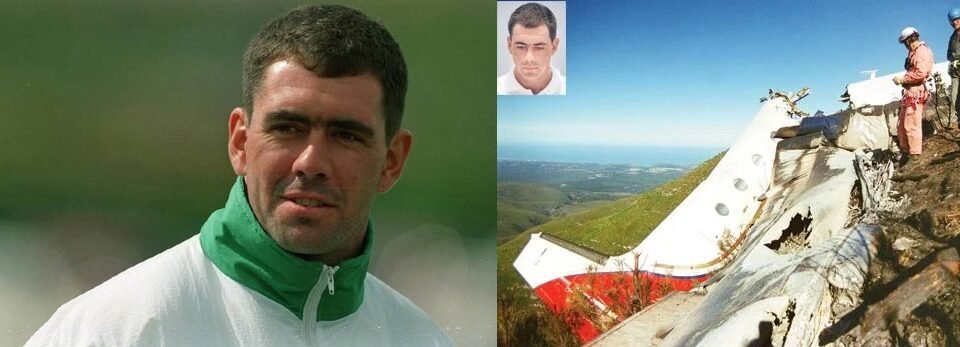
Cronje died at the age of 32 when the light aircraft in which he was travelling crashed into mountains near George in South Africa in bad weather.
His death came less than two years after his life ban.
It brought another dramatic and unexpected chapter to a story that had already seen his career collapse.
An inquest conducted several years later concluded that pilot negligence had caused the crash.
Cronje was only 32.
The investigation continues after Cronje’s death
Cronje’s death did not immediately close the match-fixing investigations.
Indian authorities continued examining the allegations.
In November 2004, Nicky Boje withdrew from South Africa’s Test tour of India after concerns that he could be detained by Indian police in connection with the investigation.
In October 2006, Delhi Police questioned Herschelle Gibbs for more than two hours.
Gibbs was reported to have made allegations concerning former South African spinner Derek Crookes.
Crookes rejected the claims and pointed out that he had been cleared by the King Commission.
A day later, Crookes again maintained his innocence and offered to cooperate with Delhi Police.
The fact that investigators were still questioning former players years after the original scandal showed how difficult the case had become.
Nicky Boje is questioned in India
In December 2007, Boje was questioned by Delhi Police while playing in India in the Indian Cricket League.
It was his first appearance in India since the original scandal in 2000.
Boje continued to deny any involvement in match-fixing.
The investigation therefore remained alive long after Cronje himself was gone.
Cronje denied a place in South Africa’s Hall of Fame
In March 2008, Cronje was denied posthumous induction into South Africa’s Sports Hall of Fame.
The decision underlined the lasting damage caused by the scandal.
Even years after his death, Cronje’s sporting achievements could not be separated from his involvement with bookmakers.
That is one of the most difficult parts of the Cronje story.
He had been a hugely successful cricketer and an important South African captain, but his legacy became dominated by the events of 2000.
The 2013 chargesheet
More than 13 years after the scandal first erupted, the case produced another major development.
On July 22, 2013, Delhi Police filed a chargesheet relating to the 2000 match-fixing investigation.
Cronje was the only cricketer named in the chargesheet, alongside several alleged bookmakers.
By then, Cronje had been dead for more than a decade.
The development demonstrated just how long the legal and investigative consequences of the scandal continued.
The lasting legacy of the Cronje scandal
The biggest legacy of the Hansie Cronje match fixing scandal is arguably not the life ban itself.
It is the change in the way cricket views corruption.
The scandal exposed how vulnerable professional players could be when bookmakers offered large sums of money in exchange for information or influence.
It also showed that corruption does not necessarily begin with a player agreeing to lose a match.
The allegations and evidence surrounding Cronje included the sharing of information, approaches to teammates, proposed payments and discussions about manipulating performances.
That distinction is important.
A player does not have to deliberately lose an entire match for the integrity of the sport to be compromised.
Information about team selections, player fitness, conditions or expected performance can be extremely valuable to betting markets.
The Cronje case helped cricket administrators understand that corruption had to be tackled before a match was actually fixed.
It also demonstrated the importance of independent investigations.
The King Commission provided a formal setting where players could testify under examination, while the ICC subsequently strengthened its focus on anti-corruption work.
For cricket fans, however, the emotional impact was simpler.
They had trusted Hansie Cronje.
Then they discovered that the captain they admired had secretly accepted money from bookmakers.
That betrayal is why the story remains so powerful.
From hero to cautionary tale
Cronje’s career had almost everything a sporting biography could ask for.
He was talented, competitive and successful. He became captain of South Africa and helped lead the team during an important period in the country’s cricket history.
But the scandal changed the way his entire career is remembered.
His statistics remain in the record books.
His victories remain part of South African cricket history.
His captaincy remains part of the game’s past.
But alongside all of those achievements is the same unavoidable chapter: the match-fixing scandal.
The most striking element is perhaps how quickly everything changed.
On April 7, 2000, Cronje was denying allegations.
On April 11, he admitted receiving money.
By June, players were giving evidence against him.
In October, he had received a life ban.
Less than two years later, he was dead.
That extraordinary sequence transformed Hansie Cronje from an admired international captain into one of cricket’s most famous cautionary tales.
The official King Commission records remain important because they provide a documented historical record of the allegations and evidence presented during the inquiry. The South African government still hosts the commission’s interim reports, including its first and second interim reports.
Why the story still matters today
More than two decades later, the Cronje scandal still matters because cricket continues to fight against corruption.
Modern anti-corruption units monitor players, educate teams and investigate suspicious approaches. Players are expected to report contact from bookmakers, while cricket authorities have increasingly focused on preventing information from reaching betting networks.
Those measures exist partly because scandals like Cronje’s demonstrated what could happen when corruption was allowed to operate behind the scenes.
The lesson is not simply that one captain made terrible decisions.
It is that the integrity of sport depends on everyone involved — players, officials, administrators, investigators and governing bodies — taking corruption seriously.
The Cronje story also provides a warning about reputation.
A career built over years can disappear in a matter of weeks.
For Cronje, the consequences went far beyond losing the captaincy.
He lost his international career, received a life ban and became permanently associated with one of cricket’s biggest scandals.
His death in 2002 ended the possibility of any further sporting redemption, but it did not erase the questions surrounding his actions.
The investigations continued.
The allegations continued to be examined.
And the name Hansie Cronje remained attached to the match-fixing era that shook international cricket at the beginning of the 21st century.
Today, whenever cricket faces another corruption allegation, the Cronje scandal is often remembered.
It remains a reminder that cricket’s greatest asset is not simply its records, trophies or famous players.
It is trust.
Once that trust is broken, rebuilding it can take generations.
Stay tuned with ROKOCRICKET for more detailed cricket history stories, major scandals, forgotten matches and the untold stories behind the biggest moments in the game. Subscribe and keep following us for more cricket stories that go beyond the scorecard.