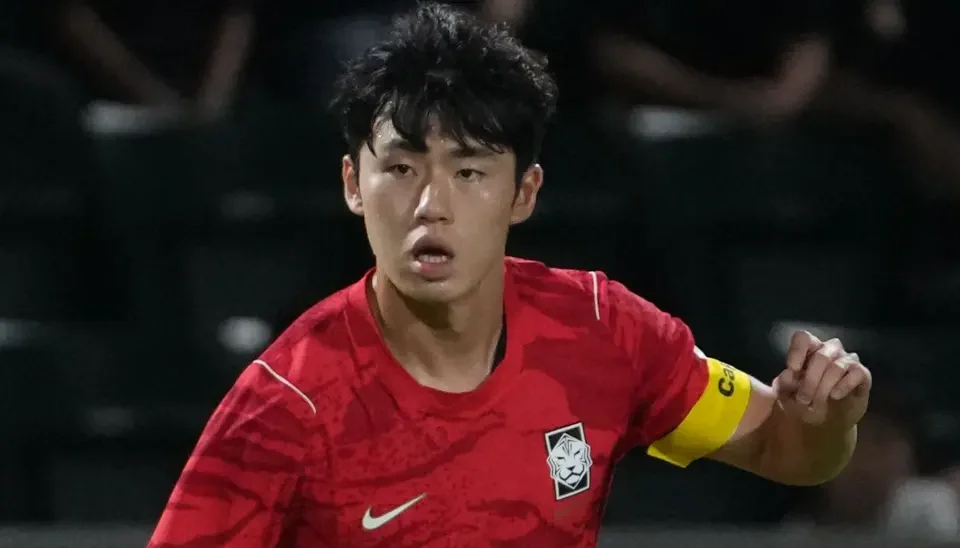
South Korea captain Lee Gi-hyuk has apologised after his comments about mandatory military service caused a backlash following the country’s Asian Games football triumph.
Lee and his teammates had every reason to celebrate after beating hosts Japan 1-0 in the men’s football final in Toyota, Aichi, securing South Korea’s fourth consecutive Asian Games gold medal. But the celebrations quickly became overshadowed by remarks about the military-service benefit attached to the victory.
After the final, the 26-year-old Gangwon FC defender held up his gold medal and told reporters, “I’m not going to the military.”
The comment was made in the immediate aftermath of an emotional victory, but military service is an extremely sensitive subject in South Korea. The remark therefore attracted criticism, with particular attention paid to the fact that millions of South Korean men are required to complete military service.
Lee later acknowledged that he had spoken without thinking carefully enough and issued a public apology.
Lee Gi-hyuk apologises after Asian Games celebration
In his apology, Lee said he regretted his behaviour and accepted that, as captain, he should have been more responsible with his words.
He explained that he had been caught up in the happiness, adrenaline and excitement of winning the gold medal. However, he admitted that this did not excuse what he said.
Lee also directly addressed South Korean fans who are currently serving in the military.
He expressed his regret to those completing their military obligations and apologised to supporters who had backed the national team throughout the tournament.
The apology came as criticism spread beyond Lee himself. Other members of the South Korean squad also faced criticism over comments and social-media activity related to the military benefit.
South Korea’s victory itself was historic. The team defeated Japan 1-0 thanks to Eom Ji-sung’s second-half goal, extending the country’s remarkable run of four consecutive Asian Games football titles dating back to the 2014 tournament.
That achievement was expected to be the main story. Instead, discussion quickly shifted towards the players’ attitudes towards military service.
Why does an Asian Games gold medal affect military service?
South Korea has compulsory military service for able-bodied men, with the length depending on the branch. The standard active-duty period is generally around 18 to 21 months.
However, the country’s military-service system provides special treatment for athletes who achieve certain results at major international competitions.
An Asian Games gold medal can provide an athlete with a special military-service benefit. Olympic medal winners can also qualify, regardless of medal colour. Rather than completing the normal period of active-duty service, eligible athletes undergo basic military training and then fulfil their alternative obligations under the relevant system.
The distinction is important because the benefit is often described simply as a “military exemption”, although technically the athletes still have obligations under the system.
Historical reporting has noted that medal-winning athletes typically complete basic training rather than serving the conventional active-duty period. More recent reporting also says eligible athletes undertake additional community-service obligations.
For professional athletes, the difference can be enormous. A lengthy interruption to a footballer’s career during his physical prime can affect club opportunities, fitness, contracts and international prospects.
That is one reason why the Asian Games football tournament has become particularly important for South Korean players approaching the age at which military service becomes an issue.
Son Heung-min provides a famous example
One of the best-known examples is Son Heung-min.
The former Tottenham Hotspur star helped South Korea win men’s football gold at the 2018 Jakarta-Palembang Asian Games. That victory allowed him to avoid the full period of mandatory military service.
Son subsequently completed only a short period of basic military training in 2020, rather than serving the conventional active-duty period.
His case has become one of the most recognisable examples of how important an Asian Games football gold medal can be for South Korean players.
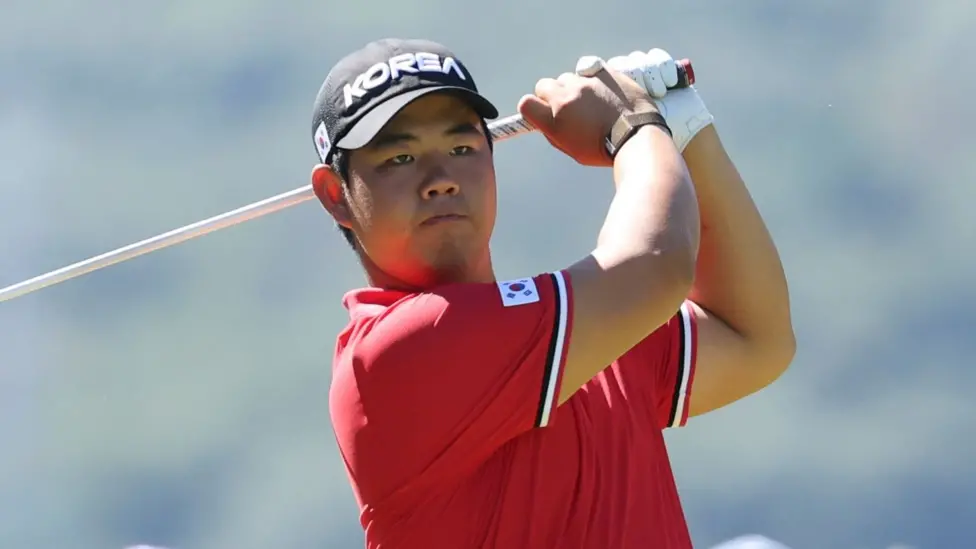
Other high-profile footballers have also benefited from the system, while golfer Tom Kim became another major name to secure the benefit after winning individual men’s golf gold at the 2026 Asian Games. Kim finished three shots clear after shooting a final-round 64 and secured a major personal milestone alongside his Asian Games title.
For athletes competing at the highest professional level, the opportunity can therefore be about far more than simply adding another medal to their collection.
Why Lee’s comment caused such a strong reaction
The backlash was not primarily about Lee receiving the benefit.
The bigger issue was the way the military exemption was discussed immediately after the final.
Military service is a shared obligation for a large part of South Korean society, and many citizens spend a significant period away from their careers, education and families while completing it.
As a result, comments that appear to celebrate avoiding military service can easily be interpreted as insensitive towards those who have already served or are currently serving.
South Korean media reported that criticism quickly expanded into a wider debate over whether athletes should continue receiving special military-service treatment for sporting achievements.
The discussion is not entirely new.
Questions about the fairness of the system have surfaced repeatedly, particularly as South Korea faces demographic changes and a declining pool of potential military recruits. Recent reporting has highlighted concerns over the country’s shrinking active-duty military population and renewed calls to reconsider the exemption system.
Some critics have also questioned why exceptional achievements in areas such as music and entertainment do not result in the same benefit, pointing to internationally successful Korean artists who have completed military service.
That wider debate means Lee’s comments landed in an already sensitive environment.
A huge victory overshadowed by one sentence
For Lee Gi-hyuk and South Korea, the Asian Games campaign was ultimately a sporting success.
The team entered the tournament with enormous expectations and delivered by beating Japan in the final. Winning four consecutive Asian Games football titles is a significant achievement, particularly with the added pressure associated with playing in a competition where military-service benefits can have a major impact on players’ careers.
Lee was one of the three over-age players permitted in the Under-23 competition and brought senior experience to the squad. His role as captain also meant that his words received additional attention.
His subsequent apology appears to recognise that responsibility.
Rather than defending the comment, Lee accepted that he should have considered his words more carefully. His apology specifically acknowledged people currently fulfilling their military duty, which was at the heart of much of the criticism.
The episode is a reminder of how quickly a celebration can change when a sensitive social issue becomes part of the conversation.
South Korea will still celebrate a historic fourth straight Asian Games football gold, but the debate surrounding military-service benefits is unlikely to disappear immediately.
For Lee, the focus now will be on moving beyond the controversy and allowing his football achievement to speak for itself.
Stay tuned with ROKOCRICKET for more breaking sports news, major Asian Games updates and stories from the world of football and cricket. Subscribe and keep following us for the latest developments.
What do you think about Lee Gi-hyuk’s apology and South Korea’s military-service benefit for Asian Games gold medallists? Share your opinion in the comments.
The ROKO CRICKET author is a passionate cricket enthusiast and sports writer dedicated to bringing readers closer to the game they love. With a keen interest in cricket history, match analysis, player stories, records, rankings, and the latest developments, the author focuses on delivering informative and engaging content in a simple, reader-friendly style. From iconic moments of the past to breaking cricket updates, every story aims to offer useful insights while keeping fans connected to the sport. At ROKO CRICKET, the author believes cricket is more than just numbers and scores—it is about the stories, emotions, rivalries, and unforgettable moments that make the game special.