Shadab Khan’s 113 powers Pakistan to dramatic win after DRS controversy against England
Shadab Khan celebrates his unbeaten 113 after Pakistan beat England by one wicket following a dramatic DRS controversy in Lahore.
Pakistan all-rounder Shadab Khan produced a remarkable comeback innings of 113 off 96 balls to guide his team to a dramatic victory over England in the fourth ODI of the tri-series in Lahore on Sunday. However, the match will also be remembered for a controversial LBW decision that briefly appeared to hand England a win before a third-umpire review changed everything.
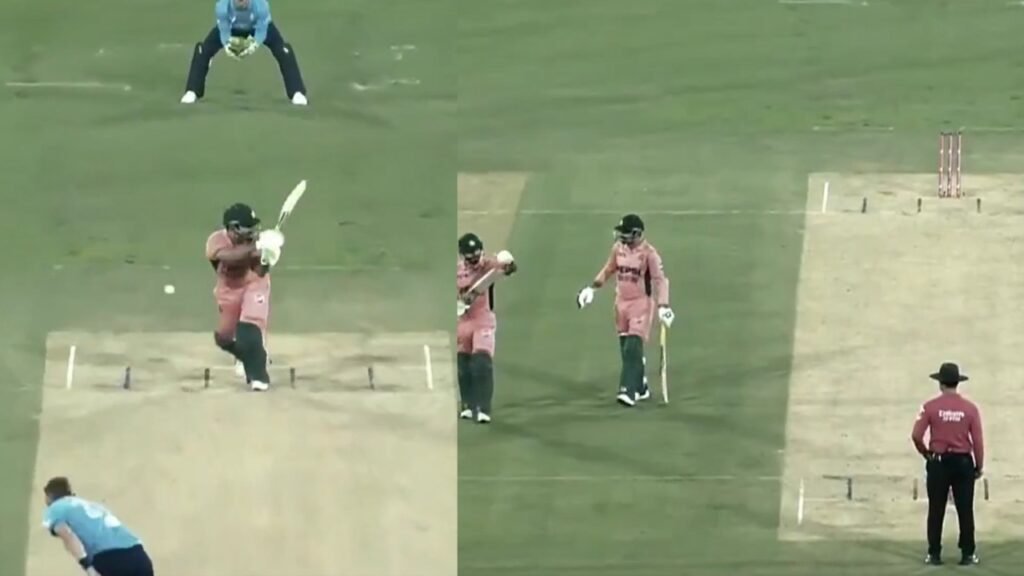
With Pakistan needing 21 runs to win and just one wicket remaining, Gus Atkinson trapped Shadab in front of the stumps. The on-field umpire raised his finger, Shadab appeared to accept his fate, and players from both teams began shaking hands. The broadcast even flashed a result showing England as 20-run winners.
But the celebrations proved premature. A review of the dismissal revealed a slight inside edge off Shadab’s bat, overturning the decision and keeping Pakistan’s hopes alive. The dramatic intervention sparked widespread debate among cricket fans, with questions initially raised over whether Shadab had actually requested a Decision Review System (DRS) review.
Shadab Khan LBW controversy takes an unexpected turn
The incident unfolded when Pakistan were on the verge of defeat after losing nine wickets for 154 runs. Shadab had carried the batting effort almost single-handedly, but England appeared to have found the breakthrough needed to close out the contest.
When Atkinson appealed for LBW, the umpire ruled Shadab out. The Pakistan all-rounder struck his bat against the ground and began exchanging handshakes with England’s players, seemingly convinced that his innings was over.
However, another camera angle subsequently showed that Shadab had called for a review. Pakistan still had one review available, and the decision was sent upstairs for examination.
UltraEdge, the technology used to detect contact between the bat and ball, showed a small spike as the delivery passed the bat. That evidence indicated an inside edge, meaning the ball had made contact with the bat before reaching the pad.
The third umpire overturned the on-field decision, allowing Shadab to continue his extraordinary innings. The sequence created one of the most dramatic moments of the match, turning what appeared to be an England victory into a contest that Pakistan could still win.
The episode also highlighted why players must complete the review process before a dismissal can be considered final. Even when a batter looks convinced that he is out, technology can reveal crucial evidence that is difficult to detect in real time.
Shadab and Haris Rauf complete Pakistan’s remarkable recovery
Shadab’s century was the defining performance of the match, but his partnership with Haris Rauf proved equally important. With Pakistan down to their final wicket, the pressure was enormous, and England needed only one more breakthrough to seal the victory.
Instead, Haris stayed with Shadab and contributed a valuable 7 runs from 19 balls. Although his score was modest, his ability to remain at the crease gave Shadab the opportunity to control the chase and take Pakistan closer to the target.
Shadab acknowledged Haris’ contribution after the match, explaining that tailenders often feel compelled to attack when the team is under pressure. He praised their partnership and said both players helped guide each other through a difficult situation.
“Obviously, you only enjoy an innings when the team wins,” Shadab said, expressing his happiness at turning his century into a match-winning performance.
He also suggested that Haris deserved considerable credit for staying calm and supporting him during the tense closing stages.
Pakistan’s position at 154/9 had made defeat look almost inevitable. Yet Shadab refused to abandon hope, demonstrating the importance of composure, strike rotation and calculated aggression when a team has very little batting left.
Why Shadab kept believing when Pakistan were 154/9
Shadab explained that his approach was shaped partly by a previous experience against Australia, when he continued batting until the end but could not guide his team to victory.
This time, he focused on remaining at the crease and putting England’s bowlers under pressure rather than allowing the situation to dictate his decisions.
He also pointed to the conditions in Lahore, including the presence of dew, as a factor that influenced the contest. Shadab believed England’s bowlers could come under pressure if Pakistan continued fighting, potentially allowing him to exploit deliveries that suited his batting style.
His innings underlined the value of experience in difficult run chases. Rather than attempting to finish the match with every delivery, Shadab built the recovery around staying alive at the crease and making the most of his remaining partner.
The effort earned him the Player of the Match award and delivered a significant result for Pakistan in the tri-series.
What the result means for Pakistan and England
Pakistan’s victory officially secured their place in the tri-series final, while England were left facing the prospect of elimination. The result was especially damaging for England because they had appeared to have the match under control after reducing Pakistan to nine wickets down.
For Pakistan, the comeback offered a major boost ahead of the final. Shadab’s performance demonstrated that the side could recover from a difficult position, while the partnership with Haris showed how lower-order contributions can change the outcome of a match.
England, meanwhile, will have plenty to reflect on after coming so close to victory. The overturned LBW decision attracted much of the attention, but Pakistan’s resistance was ultimately what kept the contest alive.
The DRS incident also served as a reminder that matches are not over until the final decision is confirmed and the last run is scored. In a game that seemed finished, one small edge changed the story.
Stay tuned to ROKOCRICKET for the latest cricket news, match reports, player performances and major developments from international cricket. Subscribe and follow us for more updates as the tri-series reaches its decisive stage.