PCB reportedly demands $25,000 per Pakistani player for Nepal Premier League NOCs
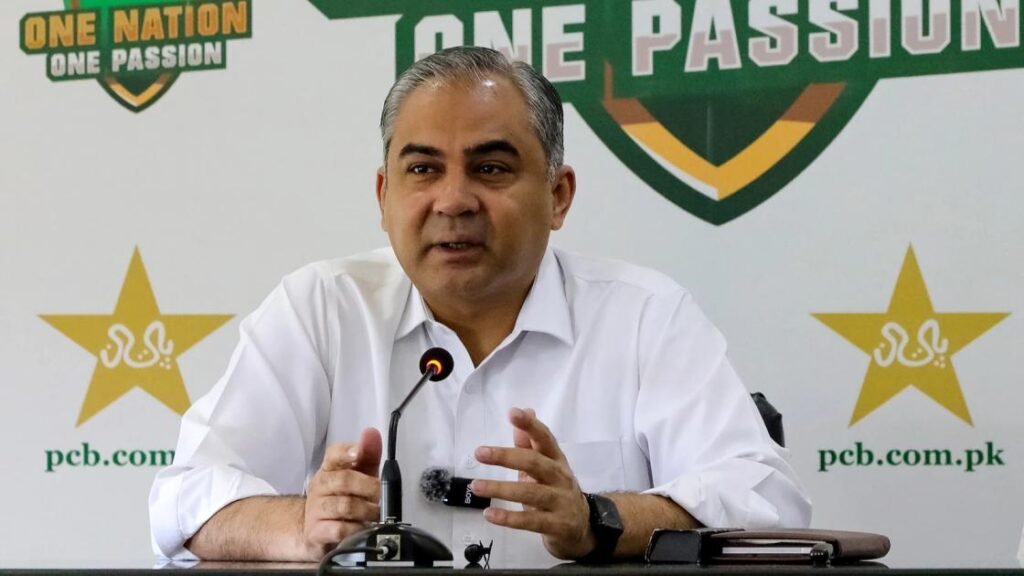
Mohsin Naqvi and Pakistan cricket players amid the reported $25,000 PCB NOC fee controversy ahead of Nepal Premier League 2026
The Pakistan Cricket Board (PCB), led by chairman Mohsin Naqvi, is reportedly seeking $25,000 for each Pakistani cricketer participating in the Nepal Premier League (NPL), raising questions over player clearances ahead of the tournament. According to reports, Nepal Premier League officials have alleged that the PCB is withholding No Objection Certificates (NOCs) unless the requested payment is made.
The reported demand has created uncertainty for several Pakistani players who have signed contracts with NPL franchises. With the tournament approaching in Kathmandu, the delay could affect team preparations and leave franchises waiting for clarity on the availability of their overseas recruits.
The allegations have not been independently confirmed, and the PCB has not publicly clarified the reported fee or explained whether it applies to all Pakistani players seeking permission to participate. The situation remains unresolved, making the issuance of NOCs a key issue ahead of the competition.
Which Pakistani players could be affected?
Several recognised Pakistani cricketers have signed up for the Nepal Premier League, including Pakistan T20 captain Sahibzada Farhan, Iftikhar Ahmed, Hasan Ali, Haider Ali, Hussain Talat, Usama Mir and young fast bowler Hunain Shah.
Their participation would give NPL franchises access to players with international experience across batting, bowling and all-round roles. Farhan offers an attacking presence at the top of the order, while Iftikhar is known for his middle-order hitting. Hasan Ali brings international pace-bowling experience, and Usama Mir provides a spin option.
According to the reports, some Pakistani players have already arrived in Nepal, while others are waiting for the necessary clearance before travelling. Any prolonged delay could complicate franchise planning, particularly if teams have to reconsider their combinations or prepare contingency options.
For the players, the uncertainty is equally significant. Overseas franchise commitments involve travel arrangements, training schedules and coordination with team management. A delay in receiving an NOC can disrupt those plans even when a player has already signed a contract.
Why does the PCB’s NOC matter?
A No Objection Certificate is an official clearance that allows a player to participate in an event outside the arrangements covered by their existing board commitments. For international cricketers, permission from their national cricket board can be an important part of joining an overseas franchise league.
The reported $25,000 demand is therefore significant because it could add a financial condition to the process of clearing Pakistani players for the NPL. However, the available allegations do not establish whether the amount is an administrative fee, a proposed commercial condition or a charge connected to a particular agreement.
That distinction matters. Without an official explanation from the PCB or confirmation of the precise terms communicated to the Nepal Premier League, it would be premature to conclude that the board has introduced a blanket fee for every Pakistani player competing abroad.
The issue also raises questions for franchise organisers, who need clear rules when signing overseas professionals. If additional costs arise after contracts have been agreed, teams may face unexpected expenses and uncertainty over their final squads.
Can the PCB stop Pakistani players from playing in the NPL?
The central question is whether Pakistani cricketers can participate in the Nepal Premier League without receiving the required clearance. While the absence of an international fixture clash could make participation easier to accommodate, it does not automatically remove the need to comply with applicable PCB rules and contractual conditions.
The supplied report indicates that the players involved are not currently required for Pakistan’s Test or ODI assignments. It also states that Pakistan does not have an immediate T20 international commitment scheduled in the period under discussion.
That could reduce concerns about players missing national-team duties. However, the domestic board’s regulations, individual contracts and any applicable franchise-league clearance policies remain relevant.
The PCB’s reported contractual framework has been discussed in connection with greater opportunities for Pakistani cricketers to play in overseas T20 leagues, provided their commitments do not conflict with international cricket. The precise terms of those arrangements, including how NOCs and any associated charges are handled, would need to be confirmed before drawing a definitive conclusion.
In practical terms, players and franchises will need clarity from the board. If the NOCs are issued, the affected cricketers could join their teams according to the tournament schedule. If the disagreement continues, franchises may have to wait longer or consider replacement options.
What this means for the Nepal Premier League
The controversy arrives at an important stage for a tournament that relies on overseas players to strengthen its teams and attract international attention. Pakistani cricketers bring recognised T20 experience, and uncertainty over their availability could affect squad balance and preparations.
For the NPL organisers, a resolution would help teams finalise their combinations and avoid last-minute changes. For the PCB, an official clarification could address questions about the reported payment demand and the conditions under which its players can participate in foreign leagues.
At this stage, the alleged $25,000-per-player fee remains a reported claim rather than an officially established policy. The next significant development will be whether the PCB responds to the allegations and whether the outstanding NOCs are issued.
Stay tuned to ROKOCRICKET for the latest cricket news, breaking updates, player developments and Nepal Premier League coverage. Subscribe to ROKOCRICKET to follow the story as more details emerge.