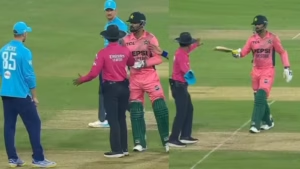
Bangladesh spinner Aliss Al Islam reported for suspect bowling action on ODI debut
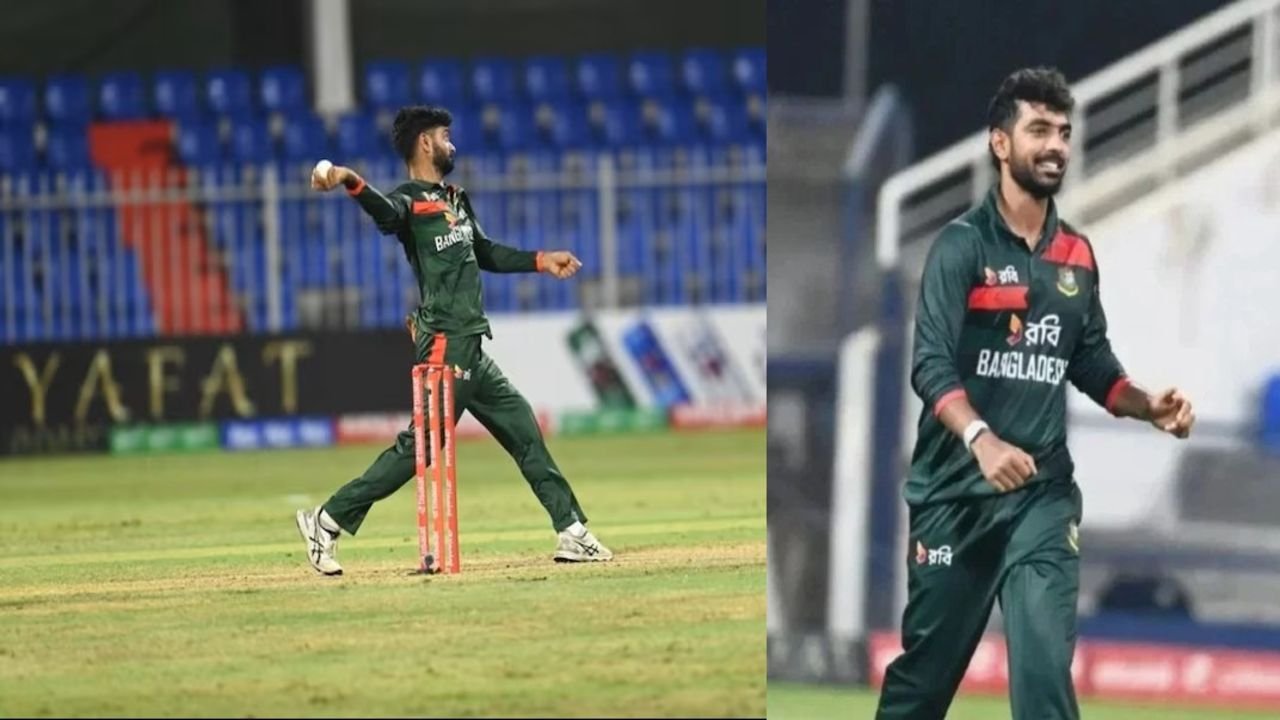
Bangladesh off-spinner Aliss Al Islam during the ODI tri-series match against Afghanistan in Sharjah on October 21, 2026.
Bangladesh spinner Aliss Al Islam has been reported for a suspected illegal bowling action following his One-Day International debut against Afghanistan in Sharjah on October 21. The 29-year-old off-spinner now faces an independent assessment under the International Cricket Council’s (ICC) regulations, putting the spotlight on his bowling technique just as he begins his ODI career.
Aliss made his first appearance in the 50-over format during Bangladesh’s ODI tri-series campaign against Afghanistan and Zimbabwe. However, his debut ended without a wicket as Bangladesh suffered a seven-wicket defeat against Afghanistan. Match officials subsequently raised concerns about the legality of his bowling action, prompting the ICC’s assessment process.
The report does not mean Aliss has been found guilty of an illegal action. His bowling technique must be examined at an ICC-accredited testing centre before a final determination can be made.
Why Aliss Al Islam’s bowling action is under scrutiny
The ICC has established procedures to assess bowlers whose actions are reported by match officials. In Aliss’s case, the concern centres on whether his elbow extension during the delivery falls within the limits permitted under international cricket regulations.
Under the ICC’s bowling-action rules, a bowler may not straighten the bowling arm’s elbow by more than 15 degrees between the point at which the arm reaches horizontal and the point at which the ball is released. The rule applies to different bowling styles, including off-spin, leg-spin and fast bowling.
An independent assessment typically involves specialist analysis of a bowler’s action to determine whether the elbow movement complies with the regulations. The process is designed to distinguish between a legitimate bowling action and an action that exceeds the permitted limit.
For Aliss, the outcome will be important because this is his first major step in ODI cricket. A favourable assessment would allow him to move forward without the reported concern hanging over his international career. If the assessment identifies an illegal action, he could face restrictions on bowling in international cricket until the issue is addressed in accordance with ICC procedures.
Importantly, a reported action and a confirmed illegal action are two different things. The assessment, rather than the initial report, will determine whether his technique complies with the rules.
Aliss Al Islam’s numbers from his ODI debut
Aliss was given an opportunity to bowl during Bangladesh’s meeting with Afghanistan in Sharjah. He delivered 8.3 overs, conceded 47 runs and finished without taking a wicket.
Although the figures did not produce a breakthrough, the result of the match and the report over his action have made the debut particularly challenging for the Bangladesh spinner.
Afghanistan secured a seven-wicket victory, handing Bangladesh another setback in the tri-series. The defeat was Bangladesh’s second consecutive loss in the competition after an earlier defeat against Zimbabwe.
For a side looking to find consistency in the 50-over format, the results have added pressure to an already disappointing campaign. Bangladesh will need to assess its bowling combinations and identify ways to restrict opponents more effectively as the series progresses.
Aliss’s situation adds another individual storyline to the team’s wider difficulties. The spinner will now have to wait for the assessment process while continuing to focus on his development as an international cricketer.
What happens next under ICC rules?
The next major step is an assessment at an ICC-accredited testing centre. Specialists will examine Aliss’s bowling action using the procedures established for reported bowlers.
The central question will be whether the straightening of his bowling elbow exceeds the permitted 15-degree limit. The assessment is not simply a judgement based on how unusual or difficult a delivery looks to a batter. It is intended to establish whether the bowler’s action complies with the technical requirements of the regulations.
Under the ICC’s procedures, a player reported for a suspected illegal bowling action is not automatically barred from bowling in international cricket. A reported bowler can generally continue bowling while awaiting the assessment, subject to the applicable regulations and any subsequent decision.
If the assessment confirms that his action is legal, the concern can be resolved. If it identifies an illegal action, the relevant ICC procedures may prevent him from bowling in international matches until he has corrected his technique and satisfied the required reassessment process.
The distinction is particularly important for spin bowlers, whose variations often depend on changes in wrist position, finger pressure, release point and trajectory. Those variations are permitted, but the bowling arm must still comply with the rules.
For Bangladesh, the outcome will determine whether Aliss remains available as a bowling option without further action-related restrictions. For the player himself, it will be an important early test in an international career that has only just begun in the ODI format.
A mystery spinner with a promising domestic record
Despite the questions surrounding his action, Aliss arrives in international cricket with encouraging domestic numbers. He has built a reputation in Bangladesh’s domestic circuit for his mystery spin and carrom ball, a variation in which the ball is released using the fingers to produce a different direction of movement.
According to the career figures provided, Aliss has taken 39 wickets in 35 Bangladesh Premier League (BPL) matches. His List A record is also notable, with 35 wickets from 20 matches and a best return of six wickets for 21 runs.
Those performances help explain why he has attracted attention as a potential bowling option for Bangladesh. Domestic success, however, does not remove the requirement to meet international bowling-action standards. Every reported bowler must go through the applicable process, regardless of reputation or previous performances.
The assessment could therefore become a defining moment in Aliss’s early international career. His ability to translate domestic success into consistent international performances will depend not only on his variations and control but also on resolving the questions raised over his technique.
Bangladesh face questions after consecutive defeats
The timing of the report is far from ideal for Bangladesh, who have struggled to gain momentum in the ODI tri-series. Consecutive defeats against Zimbabwe and Afghanistan have left the team searching for answers, particularly with the ball.
Aliss’s assessment will be one issue to follow, but Bangladesh’s broader challenge is to improve its overall performance. The team will need stronger bowling spells, better control during the middle overs and more effective partnerships if it hopes to recover from its difficult start.
For now, there is no basis to conclude that Aliss has been found to have an illegal action. The report is the beginning of an assessment process, and its outcome remains the key development to watch.
His ODI debut may not have gone as planned, but the next stage of the process will be more significant than the figures from a single match. A clear assessment will establish where he stands under the regulations and what steps, if any, he needs to take.
Stay tuned to ROKOCRICKET for the latest cricket news, ICC updates, Bangladesh team developments and in-depth coverage of international cricket. Subscribe and keep following us for timely updates as more details emerge about Aliss Al Islam’s bowling-action assessment.