Phil Vickery bodybuilding transformation at 50: England rugby legend opens up on fitness and probable CTE diagnosis
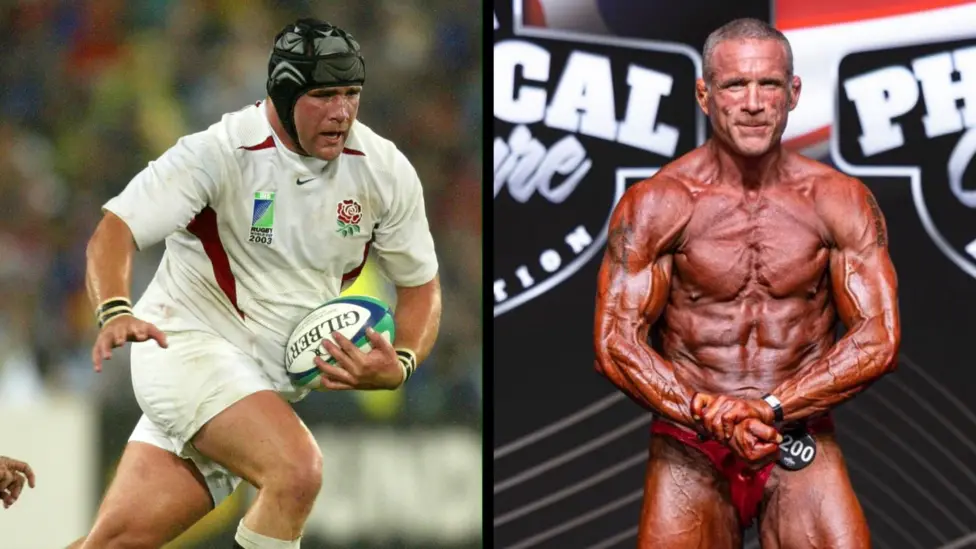
Phil Vickery displays his bodybuilding transformation at age 50 after competing at the Physical Culture Show in Hull.
Phil Vickery bodybuilding transformation: Former England rugby captain Phil Vickery has surprised the sporting world by stepping onto a bodybuilding stage at the age of 50. The 2003 Rugby World Cup winner recently competed at the Physical Culture Show in Hull, England, marking another significant chapter in his life after professional rugby. However, behind his impressive physical transformation lies a more personal story involving mental health, the challenges of retirement and his diagnosis of probable chronic traumatic encephalopathy (CTE).
Vickery, who spent years competing at the highest level of international rugby, has discovered a new purpose through bodybuilding. What began as an effort to improve his fitness has developed into a serious commitment that demands discipline, preparation and the willingness to push through uncomfortable moments.
For a former professional athlete accustomed to the pressure of major international matches, the bodybuilding stage offered a different kind of challenge. This time, there was no team to rely on and no opponent to defeat. The only person he needed to measure himself against was himself.
Phil Vickery reveals the pressure of bodybuilding competition
Vickery’s appearance at the Physical Culture Show in Hull brought back memories of the nervous anticipation he experienced before major rugby matches. Despite his experience at the highest level, standing backstage before a bodybuilding competition created a similar sense of uncertainty.
The former England prop admitted that the experience left him questioning whether he belonged there. Yet, after months of preparation, he reminded himself that he had completed the necessary work and deserved the opportunity to compete.
The familiar pressure of competition was still present, even though the sport had changed completely.
Vickery entered bodybuilding after a challenge from his friend Lee Powell, with physical trainer Dave Campbell helping him prepare for the event. His decision demonstrated that the competitive spirit developed during a professional sporting career does not necessarily disappear when an athlete retires.
Instead, it can find a new direction.
Vickery explained that bodybuilding had reawakened the discipline he developed during his rugby career. Early mornings, demanding training sessions and the commitment to follow a structured plan became central to his preparation.
He also highlighted one of the biggest differences between rugby and bodybuilding. Rugby is a team sport in which players depend on one another, while bodybuilding places the individual under direct scrutiny.
On stage, the athlete’s physique reflects the training, preparation and effort invested before the competition. There is nowhere to hide and no teammate to share the responsibility.
For Vickery, that honesty is one of the most challenging but rewarding aspects of the sport.
Probable CTE diagnosis and mental health struggles
While Vickery’s bodybuilding transformation has attracted attention, his journey is also connected to the difficulties he has experienced since leaving professional rugby.
The former Gloucester and Wasps prop earned 73 caps for England and made five appearances for the British and Irish Lions. His career reached its peak when England won the 2003 Rugby World Cup in Australia, defeating the hosts in the final.
He also captained England at the 2007 Rugby World Cup and later established himself outside rugby, including winning Celebrity MasterChef.
However, retirement brought challenges that success on the field could not prepare him for.
Vickery has spoken openly about his mental health struggles and his diagnosis of probable chronic traumatic encephalopathy, commonly known as CTE. The condition is associated with repeated head impacts and can involve progressive changes in the brain.
He is also involved in ongoing legal proceedings concerning alleged failures by rugby governing bodies to protect players from neurological injuries. The governing bodies have denied wrongdoing.
His experience highlights a difficult issue facing contact sports: the long-term consequences that some athletes may experience after years of physical competition.
Vickery has explained that exercise now plays an important role in managing his mental and physical well-being. Although his body has been affected by the demands of his playing career, the gym provides him with a structured environment in which he can work towards achievable goals.
One of his biggest struggles after retirement was finding a reason to train.
During his professional career, training had a clear purpose. Every session contributed towards preparing for the next match, improving performance or earning a place in the team. Once that routine disappeared, finding the motivation to continue became more difficult.
Bodybuilding helped him rediscover that sense of direction.
The process gave him a goal, a plan and a deadline. He could prepare, remain committed, complete the challenge and then decide what came next.
For Vickery, that cycle has become an important part of moving forward.
From a 135kg rugby player to a leaner bodybuilder
The physical difference between Vickery’s rugby days and his bodybuilding appearance is striking.
During his playing career, he said his weight fluctuated between approximately 118kg and 135kg. That size was part of the physical demands of playing as a prop, a position that requires strength, stability and the ability to withstand powerful contact in scrums.
At the Hull bodybuilding competition, Vickery said he weighed around 99kg.
The lower weight and more defined physique reflected a different training objective. Rather than preparing for the collisions and physical battles of international rugby, he was working towards presenting a leaner, more muscular physique on stage.
His current routine includes three or four weight-training sessions each week, daily walks as part of his cardio work and a protein-rich diet.
The preparation requires consistency beyond the gym. Nutrition, recovery and the ability to maintain a structured routine all contribute to the final result.
However, Vickery has been honest about the physical demands of bodybuilding. Looking his best on stage does not necessarily mean feeling his best, particularly when preparing for a competition requires significant changes to training and diet.
His experience also offers an important reminder that bodybuilding and rugby demand different physical qualities. The muscular definition required for a bodybuilding competition is not the same as the strength, endurance and functional power needed in professional rugby.
At 50, Vickery is not attempting to recreate the player he once was. He is exploring what his body can achieve at this stage of his life.
He has also made it clear that age is not a reason to stop challenging himself. Although he jokes that he still feels 27, he recognises that his body tells a different story.
Whether he enters more competitions remains to be seen, but he has expressed hope that this will not be his final appearance.
Phil Vickery’s message: find a purpose and keep moving
Vickery does not expect to become an elite bodybuilder, and he has no intention of measuring his success solely by trophies or rankings.
His priority is personal improvement.
He believes people can benefit from finding activities that challenge them physically and mentally, particularly when life changes make familiar routines impossible to maintain.
For former professional athletes, retirement can mean losing the structure, competition and shared purpose that once shaped everyday life. The same challenge can affect anyone who has built their identity around a career, a sporting ambition or a particular stage of life.
Vickery’s approach is to use the skills he developed in rugby in a different setting. Discipline, preparation and commitment remain valuable, even when the original goal is no longer achievable.
He also regularly shares aspects of his health and fitness journey on social media. Although he does not particularly like being labelled an influencer, he believes everyone can influence others through their actions and attitudes.
His message is straightforward: make a plan, commit to it and give yourself something meaningful to work towards.
His bodybuilding journey is not a claim that exercise can cure CTE or replace professional medical care. Rather, it illustrates how a structured activity can provide purpose and support well-being while someone navigates difficult personal circumstances.
At 50, Vickery has entered a new competitive arena, one in which progress is measured differently from the way it was during his international rugby career.
His latest challenge may not carry the significance of a World Cup final, but it has given him another reason to train, compete and keep moving forward.
Stay tuned to ROKOCRICKET for more sports news, exclusive sporting stories and updates from the world of cricket and beyond. Subscribe to our latest coverage to stay informed about the athletes making headlines on and off the field.