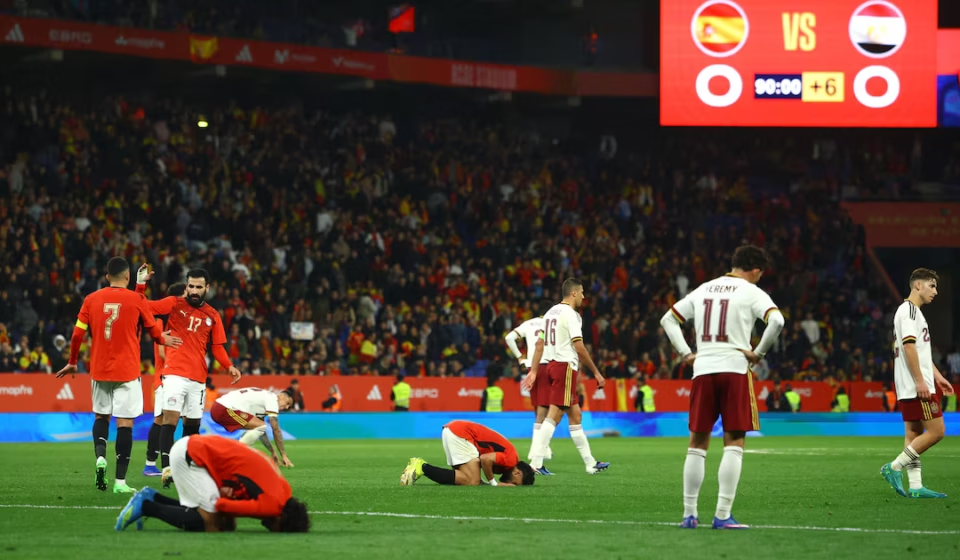

Spain have been ordered to play their next international friendly with 15% of the stadium closed after supporters were heard singing discriminatory chants targeting Muslims during the goalless draw against Egypt on 31 March. FIFA has also fined the Spanish Football Association (RFEF) $20,000 following the incident at the RCDE Stadium in Barcelona.
The disciplinary decision follows an investigation into chants heard during the international fixture, which prompted condemnation from Spanish football officials and the Egyptian Football Association. FIFA considered the incident serious enough to impose both a partial stadium closure and a financial penalty on the RFEF.
The ruling sends a clear message about the responsibilities of national football associations when discriminatory behaviour occurs among supporters at international matches.
FIFA punishes Spain over discriminatory chants against Egypt
The incident took place during Spain’s 0-0 draw with Egypt on 31 March. A section of the home crowd was heard chanting around the 10th minute of the first half, with similar chants reportedly heard again at the beginning of the second half.
The situation prompted stadium officials to display an anti-discrimination message on the big screen at the RCDE Stadium. The warning was repeated early in the second half, although some spectators responded with whistles.
FIFA subsequently opened disciplinary proceedings against the RFEF over what it described as Islamophobic and xenophobic chants. The case examined the behaviour of supporters and the Spanish federation’s response to the incident.
Following its investigation, FIFA ordered Spain to close 15% of the stadium for its next international friendly. The affected areas must primarily be located in the stands behind the goals.
Spain have also been fined $20,000, equivalent to approximately £15,000. The sanctions mean the incident will have consequences beyond the match itself, with the national federation facing both a financial cost and restrictions on stadium attendance at a future fixture.
Why FIFA rejected Spain’s argument
One of the most significant aspects of the case was the position taken by the Spanish Football Association during the disciplinary process.
Following the incident, the RFEF publicly condemned the anti-Muslim chants. Spain head coach Luis de la Fuente also criticised the behaviour, describing it as “intolerable” and warning that violent people use football to create space for themselves.
However, in its written submissions to FIFA, the federation argued that the chants did not amount to discriminatory conduct.
That argument was rejected by FIFA’s disciplinary committee. According to the committee’s written reasoning, the RFEF could not convincingly maintain that the chants were entirely harmless while also activating anti-discrimination measures in response to them.
The committee’s reasoning highlighted the contradiction between the federation’s defence in the proceedings and the measures taken at the stadium during the match.
The ruling also underlines the importance of consistency when football authorities respond to discriminatory incidents. Public condemnation and stadium announcements may demonstrate an effort to address a problem, but they do not automatically remove the possibility of disciplinary action.
For Spain, the punishment now creates a practical consequence for a future home international, even though the offending chants came from a section of the crowd rather than the entire stadium.
Spain’s next friendly could be affected
Spain’s next potential international friendly window is in June. However, the timing of the sanction depends on the national team’s schedule and its involvement in the Nations League.
If Spain qualify for the Nations League finals, the stadium closure will be postponed until one of the available dates during Euro 2028 qualifying next autumn.
The precise fixture in which the punishment will be implemented therefore depends on the competition calendar and FIFA’s application of the disciplinary decision.
Under the ruling, 15% of the stadium must remain closed, with the restrictions concentrated primarily in the stands behind the goals. This will reduce the number of ordinary spectators permitted to attend the affected match.
There is, however, a provision that could allow some of those seats to be used differently. Subject to FIFA’s approval, the RFEF may fill the designated areas with community groups or special-interest organisations, including families, students and anti-discrimination groups.
Such an arrangement would not simply restore normal ticket sales. Instead, it would allow the federation to use the space for groups that could support an inclusive message while complying with the terms of the sanction.
The final arrangements will depend on FIFA’s approval and the federation’s implementation of the punishment.
Egypt condemns the incident but protects football relations
The Egyptian Football Association strongly condemned the chants following the match, describing them as an unacceptable and repugnant act of racism.
Despite its criticism, the Egyptian federation also made clear that the conduct of a small group of supporters should not damage the wider relationship between the Spanish and Egyptian football authorities.
The response was significant because the fixture ended without a goal, yet the controversy surrounding the crowd’s behaviour became the main talking point after the final whistle.
Spain and Egypt have their own footballing identities and supporter communities, but the incident demonstrated how discriminatory behaviour in the stands can overshadow events on the pitch.
The Egyptian federation’s statement also drew a distinction between the actions of individual supporters and the relationship between the two national organisations. Its position was that the behaviour should be condemned without allowing the incident to define the broader sporting relationship.
What the punishment means for Spanish football
The FIFA sanction comes amid continued efforts across international football to tackle racism, xenophobia and other forms of discrimination at stadiums.
Football governing bodies have various disciplinary measures available when incidents occur, including fines, stadium restrictions and other sanctions under the applicable regulations. The measures imposed in individual cases depend on the findings of the disciplinary process.
In Spain’s case, the combination of a partial stadium closure and a financial penalty gives the decision a direct impact on the RFEF. The federation will have to ensure that the restrictions are properly implemented when the sanction takes effect.
The case also raises an important issue for clubs, national associations and supporters: responding to discriminatory behaviour requires more than a public statement after an incident. Stadium announcements, preventive measures and cooperation with disciplinary authorities all form part of the wider response.
For supporters, the message is equally straightforward. Football stadiums should be places where fans can support their teams without targeting others on the basis of religion, nationality or background.
The punishment does not suggest that every Spain supporter was involved in the incident. It does, however, place responsibility on the national federation to comply with FIFA’s decision and take the necessary steps to prevent similar situations.
Spain’s 15% stadium closure punishment serves as a reminder that discriminatory chants can carry consequences well beyond the final whistle. The 0-0 draw against Egypt will now be remembered not only for the result but also for the controversy that led to FIFA’s disciplinary action.
With the sanction still to be implemented at a future international fixture, attention will turn to Spain’s schedule and the arrangements made by the RFEF to comply with the ruling.
Stay tuned to ROKOCRICKET for the latest football news, FIFA disciplinary updates, international match reports and major developments from the world of sport. Subscribe to ROKOCRICKET to keep up with the stories that matter on and off the pitch.